
The Price of Shame
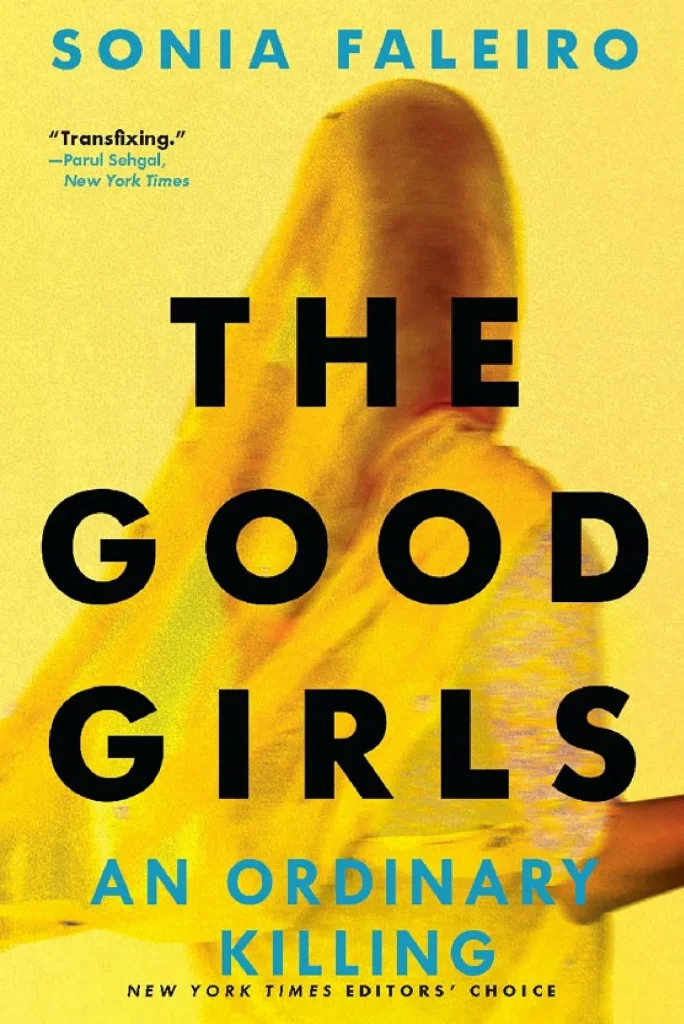
Two girls, hanging from a tree in a mango orchard, their families grieving silently by their dangling feet. This picture went on to shock the country and subsequently the world. There were numerous assumptions about what had happened and why this happened. Sonia Faleiro takes on these questions in her latest book, ‘Good Girls’, whilst telling the story of the two girls, Padma and Lalli (names changed by author in accordance with the Indian Law). And as she chases answers, the author also examines the price of human indignity, in what can only be called a commanding feminist text.
The story is set in the village of Katra Sadatganj, an eye blink of a village of some 3000 people, in the Badaun district of western Uttar Pradesh. The laws of Manu have long been disregarded in the world around them, but the rules haven’t changed much in these rural hamlets. Girls are still deprived of education, reared only to be married off to good families. Boys too aren’t free from the clutches of age-old values and customs. They are considered to be the sole breadwinners of the family at the mere age of twenty.
As she places each brick of her tale, Faleiro doesn’t blame a single person or the community, nor does she hold them accountable for the death of the children. Instead, she calls the reader’s attention to a much larger picture, where the systems that exist are at fault; where, to find a solution is to dismantle everything we have known and seen.
The book is investigative at its core, but what makes the book stand out is the sheer humaneness that Faleiro adds to the story. She builds up the world of Padma and Lalli so closely that we know them intimately before talking about what ‘happened’ to them. Faleiro gives us glimpses of who the girls were, snippets from their daily life, their likes and dislikes, their very ordinary lives, till they go missing and become anything but ordinary. More than just two bodies hanging from a tree, they are bought to life once again for the reader. It’s not just the girls that we get to meet, but their families and also everyone around the village (as it is said in the book a girl’s life was everyone’s business).
Even though the story has its roots in the 2014 Katra case, Faleiro traverses both the past and future. Through the uncomfortable lens of several other cases, she sheds light on the deeper problems that have taken root in our systems of judiciary, law and policing. Everything that can go wrong went wrong in the Katra case. Sometimes the events described are too fictional and farcical to believe (the post mortem is conducted by a sweeper with no medical knowledge or degree), but the reality hits you hard in the face. The candidness with which the activities are performed shocks the reader.
Girls are the honour of the family, is a refrain that runs through the book. Right from the beginning, when the book kicks off with a quote from Manusmriti, and till the end of the book, these words travel with the reader without change. Honour is as much as a character in the book, personified through girls, their bodies and their mind. Girls are the bearers of honour, while men are the protectors. Men go to any lengths to safeguard the honour of the family. Look at the exchange between the doctor and Lalli’s father Sohanlal at the polygraph testing. The doctor asks Sohan Lal what they would’ve done to protect the honour of the family if the girls were alive. He replies, ‘We would have killed them’.
This is a story about women in modern India. But it’s also about what it means to be poor – Faleiro writes at the end of the book. With every new case, protests are organized, the caste system is dismantled in 280 characters, and we all turn into crusaders of justice for a short while, until the blanket of complacency claims us. We forget and move on to the next big story, forgetting that at the heart of it everything comes down to the root problems. With the false promise of the politicians, the crumbling economy of the country, the poor condition of living in rural areas; it seems as if the situation is only getting worse. Faleiro calls out for the promised change and believes that the only hope we have left is immediate action.
Good Girls is among the best of narrative reportage that has come out recently and a page-turning read which will leave you shattered.