
Nothing is Missing
Arranged beauty, a vanishing self. Silent guns in the corner reveal an…
Read more →He could recite Urdu verses at will but none of his own poems in English. Ashwani Kumar on the contradictions and blazing beauty of Keki Daruwalla
Unlike native Anglophone Bombay poets, I met Keki Daruwalla late in his life and mine at a poetry reading in 2004 at India Habitat Centre.Though we were born in different eras but we belonged to same seasons of the ancient world of poetry. I had just returned from Oklahoma and was living an invisible migrant life of a poet and academic. He was pleasantly startled with my whimsy and shape-shifting verses, and listened to me like a Buddhist monk meditating over ‘silence of the frost or the language of rain’.
With deceptively gentle and lumbering voice, so quiet that as if silence were a kind of magical spell, he whispered “Ashwani, you know, ‘migrations are always difficult, ask any drought’. Unpredictably, I met him more frequently in Delhi than in Mumbai. This is how we began our friendship, absentmindedly admiring each other’s works though I was aware that he was a great poet with an acute sense of history and a knife-edge mastery over linguistic inventiveness.
Often tender, tensile, and satirical at once, Keki was a poet of imagistic magic realism with visions of blazing beauty. With a delightful mix of melancholia and child- like innocence, his humility was incredibly atmospheric and alchemical for any one who came across him. He was caring and affectionate to the fault. He never flaunted his bureaucratic background nor his legend-like stature in Indian poetry; he was remarkably shy of his accomplishments, a rarity in this age of narcissism! As time progressed rather geometrically, we became close enough that after usual bonhomie and culinary relish at India International Centre, he would tease me with his lilting Urdu shaayri saying ‘bhai saheb, इस अहद में इलाही मोहब्बत् को क्या हुआ” (what has happened to divine love in this era?).
I don’t know any poets writing in English so fluent and so rooted in Urdu as Keki Daruwalla. Sounds uncanny but perhaps it is not widely known that Keki who could memorize and recite Urdu verses at will but none of his own poems in English.
Also, unlike his contemporaries, he was deeply attached to mofussil towns of India. I remember travelling together to Patna Literature Festival in February 2019 at the invitation of Dr Ajit Pradhan, celebrated surgeon -singer and founder of Navras School of Performing Arts. As soon as he met him, he got so fascinated by Ajit’s rootedness in Dhrupad and thumri traditions of Bettiah and Gaya gharana that heimmediately reminded me that ‘Ashwani, I must go to Nalanda and Gaya”.
No wonder, though he was a city -poet, his poems smelt like the intoxicating ittar (perfume) from the forgotten vernacular world.
One day during our Patna stay, we talked about his recently published novel ‘Swerving to Solitude’ at the café in the hotel. He was excited and a bit anguished about his craft of novel writing. I remember telling him ‘your prose is lithe, liquid, and cerebral like your poems’. ‘But isn’t adventurous for a poet to write novels, I asked him?
Suddenly, there was a pause in our conversation; the noise from a distant political rally started fading. He looked into my disbelieving drooping eyes and said ‘I don’t know’. Then he gently tapped the table as if he was in a trance, and said wryly ‘Ashwani, you know, ‘even light can turn into a cage’. “And I don’t know who I will be next and, in that life, will you know me?
In this rare mnemonic reflection of his border-blurring collision and collusion with the seductive genre of novel, Keki Daruwalla unconsciously revealed a deeper truth that writing novel is a totemic residual desire in every poet!
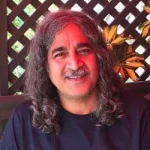
Ashwani Kumar is a poet, political scientist, and professor whose work has been widely published, anthologized, and translated into several languages. His poetry collections include My Grandfather’s Imaginary Typewriter, Banaras and Other Poems, and Map of Memories, and he is also the author of the acclaimed non-fiction work Community Warriors. He has edited major poetry anthologies, including Rivers Going Home, Scent of Rain, and River of Songs, co-founded the Indian Novels Collective, and edits the Hummingbirds Poetry Series in partnership with Red River. He was also a chief editor of Global Civil Society at the London School of Economics. He has held visiting appointments at leading international institutions, including Heidelberg University, the Korea Development Institute (KDI), and the German Development Institute (DIE). He also writes for publications such as The Indian Express, The Hindu, Financial Express, Outlook India, Scroll, and The Print. He lives in Mukteshwar and Mumbai.