
From
Then What Happened?
Who is Writing?
Through stories of loss, resilience, and displacement, this excerpt explores the ethics of writing about lives different from our own.
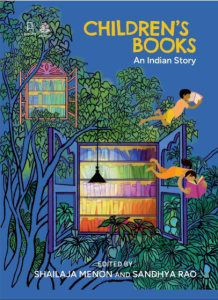
An excerpt from “Representing Diverse Childhoods” by Tultul Biswas from Children’s Books: An Indian Story, Ed. Shailaja Menon & Sandhya Rao, pp 236-238, Eklavya, Bhopal, India. Supported and anchored by Parag, An Initiative of Tata Trusts.
Relationships are empowering. Our one-to-one connections with each other are the foundations for change. Building relationships with people from different cultures is instrumental in building robust communities that can strive to achieve shared goals. As developmental psychologist Carol Gilligan, known for her feminist theory of moral development in children, shared: “The ethics of care starts from the premise that as humans we are inherently relational, responsive beings and the human condition is one of connectedness or interdependence. An ethics of care directs our attention to the need for responsiveness in relationships (paying attention, listening, responding) and to the costs of losing connection with oneself or with others.”21 But when we as adults write for or about children, what is the relationship that we have with the child characters in our story, or with the reader(s)? It is important to analyse how the social background of the author writing for or about children plays out in the story being told.
The rendering of Jamlo’s story by Samina Mishra deserves discussion here. The way both author and illustrator have been able to relate with this 12-year-old girl-walking home with hope among many others like her and yet all alone-is remarkable. Nowhere in the book is the fact stated in words that Jamlo didn’t finally reach home alive. It is tenderly expressed through Jamlo’s thoughts about falling yellow-dry leaves, through the image of her broken chappal, and her parents standing at the door at the end of a long and vacant lane. This careful treatment of the death of a fighter like Jamlo reflects deep respect for the protagonist and a sensitivity to her voice, which is what the reader hears while reading the book. Simultaneously, it reflects respect for the reader.
Pyari Madam, written in the form of letters from a schoolgirl to her teacher, portrays the interdependent relationship of the child with her teacher, with the author distinctly identifying with the teacher. The story depicts the life of a child facing displacement, a reality that Krishna Kumar writes about, saying, “Indeed, we may have to recognise new categories such as childhood under forced displacement, just as the United Nations has recognised childhood in difficult circumstances arising from war and endemic violence”22. While discussing the book with Rinchin, we explored the tricky question of representation of people, lives and cultures that the author is not a part of.
There are two schools of thought about this: one questions if an author can truly represent a group that s/he is not a part of. The argument is that only insiders can authentically capture the social worlds and lived experiences of any group. We need more women writing about women, Dalits writing about Dalits, children writing about children, as also Dalit adults writing for Dalit children. The other school argues that “what matters is not a question of perfect parallels between the author and the represented characters but what Henry James calls ‘the aesthetic heat of the creator’, the power of the author and/or the illustrator to shape language. and art to engage the readers’ mind and heart”23.
Elaborating on this point, Rinchin says that for her what is important is the honesty of the engagement with the people, their lives and their struggles – the very process that spurs her to write the stories she writes. She elaborates, “A big part of my concern is the question of appropriation of voices that I am not really a part of. But there are two things that I make sure of. First, that the stories come out of a long engagement with the people and their lives, and second, that I engage with the same issues in my private world. So, the attempt it to be honest in the real life engagement, in the first place, and then I feel the honesty flows in the writing too”.24
In the book, Rinchin asks in the child’s voice:
Dear Madam,
I am writing to you from so far. We have house, we will live here from grandmother’s house, we will live here from now. It takes three hours by bus to come to our village. You have to get off at Chora Mod. Then you will have to walk for 3 kms. Will you come?
In our conversation, she shares her reflections and concerns thus: “Sometimes when I see the end of the story, I wonder if the end is manipulative? Is it meant to move the readers emotionally? But it is also a constant reminder for me that this is what really happens. We move on, we get over things. But for the child, things still remain there, waiting, hanging in the air. It is a genuine question. It is a reminder for me to try and not just get over, move on and forget. Maybe that is why I could never change the end even after reviewing it so many times.”25 Writing in this manner, leads to the creation of “…literature of a parallel culture opening up the group’s heart to the reading public, showing their joy and grief, love and hatred, hope and despair, expectations and frustrations… Voices from the heart, once heard, can change other hearts.”26
References
21. “Interview with Carol Gilligan”. Ethics of Care, 16 July 2011, https://ethicsofcare.org/carol-gilligan/#~:text=An%20ethics%20of%20care%20direct,rather%20than%20deductive%20or%20mathematical.
22. Krishna Kumar, “Studying Childhood in India”, Economic & Political Weekly, vol 51, no 23, 2016.
23. Shelby A. Wolf, Darcy Ballentine and Lisa Hill, “The Right to Write: ‘Preservice Teachers’ Evolving Understandings of Authenticity and Aesthetic Heat in Multicultural Literature,” Research in the Teaching of English, vol 34, no 1, 1999, p 130-84.
24. Personal conversation with Rinchin help on 25th May 2022.
25. Ibid.
26. Mingshui Cai and Rudine Sims Bishop, “Multicultural Literature for Children: Towards a clarification of concept,” in Anne Haas Dyson and Celia Genisi, eds, The Need for Story: Cultural Diversity in Classroom and Community, National Council of Teacher of English, Urbana IL, 1994, p 66-68.
Children’s Books Cited
Rinchin and Shivatmika Lala (illus), Pyari Madam, Eklavya, Bhopal, 2019.
Samina Mishra and Tarique Aziz (illus), Jamlo Chalti Gayi, Eklavya, Bhopal, 2021.
