
Excerpt: Days of Recovery
Two poems from Nomita Kapur’s Days of Recovery, on facing fear and…
Read more →Facing a bureaucratic system that quantifies human worth, an elderly teacher confronts her limited future, revealing profound choices about dignity, friendship, and self-sacrifice.
Nora sipped her tea from the porcelain cup left by her grandmother, her lips avoiding the tiny chip in the rim. Her cat, Toby, made a fluffy crescent in her lap. They’d been together for twelve years now, Toby and Nora, and had adapted to each other’s odd ways. Nora knew to fill his food bowl by eight AM or receive an ankle nip. Toby understood that he could sleep in her bed, but snoring would get him booted. Would Toby miss her when she had to leave?
Her cell phone buzzed on the table beside her and she answered. “Hi, Zan.”
“Did you get it?”
Nora eyed the unopened envelope on the table. “Arrived this morning.”
“I knew after I got mine that you’d be next. Our birthdays are so close.”
Yes, they were. Both May babies, born seventy-two years ago, a day apart. They’d been friends since kindergarten, despite the differences: Zan from a wealthy family, attending the best schools, marrying the hedge fund manager and never needing to work. Nora, the daughter of a teacher, following in her mom’s footsteps, now retired and living on a pension. If only she’d made different choices, but when you’re young and idealistic, you want to shape young minds.
You want to make a difference.
“You may have more credits than you think,” Zan said.
“We both know I won’t have enough.” She sipped again. The tea had gotten cold.
Silence stretched taut between the old friends. “There’s always the lottery.”
“A one in a million chance? Yeah, let’s go with that.” Nora’s gaze, once again, fell on the envelope.
“Jeffrey said there’s a place online where you can buy credits. Illegal, of course, but you probably wouldn’t get caught.”
“Credits are traceable. Nobody’s allowed to allocate them except through the spousal exemption. Lottery tickets are the only thing you can transfer and nobody’s gonna let go of theirs. Have your boys had their interviews?”
“Jeffrey did. Said he was terrified he’d say the wrong thing. He’s so anxious these days.”
Nora knew Zan worried about her youngest, who at thirty-two, “hadn’t quite found himself yet.”
“And Martin?” Nora asked.
“Not yet. His dad has him so busy at the office he hasn’t scheduled it. But I’m so glad he and Call are getting along. It’s not easy, as you know.”
No, it wouldn’t be easy working with Zan’s mercurial husband. For forty years, Zan shifted her persona around Cal’s moods—tender when he needed that, distant when he needed space, and always blind to his affairs. It had to be exhausting. Nora’s husband, Michael, had been the opposite. Gentle, devoted, funny. So much laughter filled their home. He ruined her for any other man, so after the accident took him thirty years ago, Nora stayed single.
“And what about Cal?” Nora asked.
Zan let out an audible breath. “He’s meeting with them now.”
Someone pounded on her front door and Nora tensed. Toby hopped off her lap and wedged his massive body under the sofa. “Someone’s at the door. Hold on.”
More pounding—louder now. “Animal Patrol. Here to assess,” a man’s voice said.
Nora approached the door and peered through the peephole. The man wore a khaki jumpsuit and held a tablet. His black-rimmed glasses seemed too large for his face.
“Now’s not a good time,” she said through the door.
“I’m under orders. Nora Baxter, correct?”
“Yes,” she said through the door.
“You’ve received your summons?”
Nora glanced at the envelope. “Yes.”
“My report says you have one cat.”
“Yes. Just Toby.” She tried to get a better look at him. How old
was he? Nineteen?
“Size?”
“Twenty pounds. Why do you want to know? Why are you here?”
He removed his glasses. “I’m responsible for pet disposition. For after.”
“After? I’ve made arrangements. My neighbor will take Toby.”
He tapped something on the tablet. “People often offer to take pets to placate owners, but most end up on the streets. We can’t have that.”
“Abby wouldn’t— Look, Toby is taken care of.”
The man removed a card from his pocket and slid it under the door. “I know this is difficult. If you have any questions, give me a call.”
She watched the man—a boy, really—disappear down the hall.
She’d almost forgotten about the call. When she snatched up the phone, Zan said, “Animal Patrol? So soon?”
Nora sat back in her rocking chair and tried to calm her manic heartbeat.
Toby returned to her lap and she held him close. “I don’t want to think about it. I need distracting.”
“Don’t we all?”
“I mean it. Tell me some good news.”
Zan hesitated, then said, “Cal finally agreed to the house renovations.”
“You’re getting your new kitchen?” Nora couldn’t imagine planning for the future, but she didn’t have the hundreds of credits Zan did.
“Yes. They start next week. Cal brought the carpenter over yesterday to sign the contract. I swear, there were so many pages it was like closing on a house!”
Nora closed her eyes, trying to feign enthusiasm. “I hope the changes are glorious, Zan. You deserve it.”
Another long pause, then Zan asked, “When’s your appointment?”
Nora eyed the envelope. “I haven’t looked yet.”
Another beat of silence. “Let me know when you do.”
**
That evening, Nora sipped a glass of chardonnay as she finished her supper. She needed the wine for courage. The envelope waited, unopened.
How different things were now than when her mother was alive. After the stroke, they’d put Mom in a nursing home, but Medicare only paid for sixty days. They sold her house to pay for five more months, but she needed round-the-clock sitters they couldn’t afford.
Nora would go to the home after teaching and stay the night. She’d talk to her mother, reminiscing about the earlier days, then sleep in the chair beside her bed until it was time to dash home, change, and go to school. Exhaustion and stress overwhelmed her. There seemed to be no right answer. Her mother needed more than Nora had the strength or funds to give.
Nora came to learn she wasn’t alone—the strain and cost of eldercare posed horrific burdens on families. It was far worse for the elders who had nobody to help. The government funded long-term nursing home care for so few—the ones lucky enough to snag a precious Medicaid bed—and if the senior needed assisted living, they’d better be independently wealthy.
When her mother’s allotted nursing home days were up, Nora was sent to find an affordable placement. She visited several group homes that horrified her: several people cramped in each small, filthy bedroom. Meals straight from cans slapped on trays. The odors—God, the odors. Pee in the worst places, stale air in the best. Some smells lingered in her nose hours after she left. Then came her mom’s heart attack and sudden death. The loss that broke Nora was also a blessing. Mom died before she’d been placed somewhere to rot away.
The knock on her door: three fast taps, a pause, then the fourth, signaled the arrival of her neighbor Abby. Nora placed her plate in the sink and grabbed another glass before opening the door.
Abby held up a bottle of Josh cabernet. Only twenty-five, she had auburn hair and too many freckles to count. She arrived next door three years ago with two boxes, a tattered suitcase, and no clue how to cook or separate her laundry. Nora didn’t plan on adopting her, but Abby’s stubborn friendliness won her over.
Abby pushed her way into the apartment and grabbed one of the glasses. “I had my interview with your Delegate.”
“Shit.” Nora poured.
“It went okay. They asked a lot of ridiculous questions though. When do you go in?”
“I don’t know.”
Abby followed Nora’s gaze, which once again fixed on the envelope. “What? If you don’t open it, it will go away? That’s your plan?”
“It was, until you said it out loud.” Nora downed a large swallow.
Abby grabbed the piece of mail and handed it to her. Nora glared.
“Should I go pack an overnight bag? Because I’m not leaving here until you open that damn thing. You don’t want to miss the appointment.”
True. Missing the assigned meeting meant penalties she couldn’t afford. She drained her glass and pulled back the flap.
The summons was only two sentences, with Nora’s appointment time in bold. Friday, 2 PM. Two days away. “Helluva way to end my week.”
Abby sipped, head cocked to the side, watching her. “Wanna escape? We could go on the lam together. Head to California, or Canada even. They’d never find us.”
Nora smiled. “Tempting, I’m not ruining your life like that.”
“I told them I’d take care of you,” Abby blurted out.
“What?”
“The Delegate. I said you could move in with me. I’d make sure you had what you needed. You could stay as long as, well, forever.”
“Abby…” Nora felt the push of tears against her lids. This kid was so sweet. Well-meaning. Abby’s own mom—a marginally functional alcoholic now on her third husband—hadn’t had time or heart enough for Abby, who had somehow grown into this lovely girl.
Abby sighed. “The Delegate said it wasn’t an option. That I was young and not related to you. I said I felt related, but she didn’t care.”
Toby drifted in, ignored Nora, and hopped in Abby’s lap. She pulled him close, burying her nose in his pale gold fur. “Hey, handsome.”
“You said you’d take him when… you know.”
“Of course I’ll take him. He always liked me best anyway.”
“Shut your mouth.” Nora reached over and stroked him. “There’s money that comes with him. To pay for food and vet care. But some twelve-year-old from Animal Patrol came today and said giving him to you wouldn’t be allowed.”
“Well fuck that.” Abby looked away, the subject too raw for them both. “Besides, you haven’t even had your meeting. And there’s always the lottery.”
“God, you and Zan and your pipedreams. I have as much faith in the lottery as I do in a fairy godmother.”
“Cynic.” Abby set down her glass, leaned back, and studied her. “How are you handling all this? Seriously.”
“Seriously? I don’t want to think about it. I’ll go through the motions like thousands have done before me. And pray that when you’re my age, they have better solutions.” Nora looked at a photo of her and Michael, taken just weeks before the accident. A goofy smile lighting his face, his arm around her shoulder. We are a perfect fit, he used to say. And she’d answer, Good thing, because who else would put up with either of us?
Maybe I’ll see you soon, she whispered in her mind..
**
“Thank you for coming, Mrs. Baxter.” The Delegate was not what Nora expected. Mid-forties, she had very short black hair, wideset dark eyes, and a triangular face. She wore a navy suit, with a blood-red scarf frothing at the neckline. Her “office” was a gray cubicle. A leggy philodendron tentacled from the edge of a barren, industrial desk.
“Like I had a choice?” Nora tried to sound light, but anxiety trembled her words.
The Delegate lifted a finger. Her nails matched the scarf. “First, a few rules. Everything we discuss must remain in this room. Sharing information results in harsh penalties. In exchange for your confidentiality, I will answer all of your questions with complete honesty. Second, my role. I’m your advocate. You may be tempted to keep things from me—you don’t know me, and mistrust of the organization is normal—but believe me, that will only hurt you.”
“Okay.” Nora shifted in the uncomfortable chair.
“Now let me explain the System—how it came to be. How it works.”
“I know how—”
The Delegate lifted her brows as though not tolerant of interruptions. “Medical science is a marvel. It’s found so many ways to extend life. People can live well into their nineties. But science hasn’t reversed aging and its effects on the human body. While people could live a long time, they did not live well. Our country became burdened with frail seniors clinging to lives that, well, offered little in the way of quality.”
“Burdened?” Nora asked. “I never felt ‘burdened’ caring for my mother.”
The Delegate studied her. “Didn’t you? I read your file.” She clicked on the computer. “Four doctor visits in a month. Six prescriptions. Clearly, it was a very stressful time for you.”
Yes, it had been difficult. But her mother had taken care of her for eighteen years, had sacrificed for Nora to go to college, had taught her how love. That gift she could never repay.
“It must have been hard, seeing her suffer. Not having the resources to help her.” The Delegate’s gaze softened in practiced sympathy.
A familiar pain rose in Nora’s chest. How trapped she’d felt, when faced with no right answers.
“I’m sorry if I’m bringing back painful memories, but this is why the System was designed. It’s the only logical answer to our aging crisis.”
“The only answer?” Nora’s voice rose. “What about taking care of older people? What about increasing taxes or whatever the hell the government needs to do to let people live out their lives without suffering.”
The Delegate’s lips bent into an unnatural smile. “Do you have any idea how much that would cost? Are people willing to have their taxes increased by as much as thirty percent? I’ll tell you the answer, because the country voted on it four years ago. No. The American people were not willing to make that sacrifice.”
Nora knew. She’d been on the frontlines, picketing in support of the bill. She’d called voters and donated to candidates who advocated for the more compassionate answer. And they’d lost.
The Delegate cleared her throat. “The System uses advanced statistical formulas to compute the life expectancy of each person—based on a comprehensive medical history, genetics, lifestyle habits, etc. We pair this data with the person’s assessed resources. Their financial status: what care can they afford? Familial: who will provide caregiving? Impact: How has that person benefited the country? These are combined into a “credit” account. You’ve accumulated yours for twenty years.”
Nora pulled her purse close, wishing it was Toby in her arms. “I was a schoolteacher. I didn’t earn a lot. And I don’t have much family.”
“I’ve reviewed your file, and talked to your neighbor, Abigail Fortney, and a cousin, Lyle Baxter. Is there anyone else I need to interview?”
“No.”
The Delegate continued. “Your work as a teacher gave you fifteen credits—we value our civil servants. And you inherited thirty credits when your husband Michael Baxter passed away.”
Nora knew she’d receive what he’d earned. Sweet Michael. Always looking out for her. Of course, thirty credits on top of her sixty wouldn’t be enough.
“Unfortunately, you lose most of those because you didn’t have children. The System values procreation. Our future depends on it, doesn’t it?”
Nora sucked in a breath, stunned. How dare they take what Michael had given her?
The Delegate continued: “You lost twenty credits on your health report. Even though your health habits are commendable, you are a breast cancer survivor. There’s no dancing around that fact.”
No shit, Batman. Nora had lived through every moment of it. The chemo. The nausea and weight loss and fear until finally, she went into remission. Ten years with no recurrence, but that didn’t seem to count.
“Did you know that Ms. Fortney offered to give her credits to you? She’s young, and hasn’t earned many, and, well, we don’t allow that kind of thing, but it was a kind gesture, don’t you think?”
“Yes. She shouldn’t—she’ll need hers.” Damn that sweet, kind kid. Nora wanted to throttle her. And hug her. Thank God, they hadn’t accepted them.
“What happens when my credits run out? How does ‘The System’ take care of me?” Everyone asked this. Speculation abounded online. Some hypothesized that seniors were sent to a working farm to live out their days. No healthcare offered, but meals and a bed until nature took its course. That was the most humane theory. Others proposed Nazi-style death camps.
The Delegate folded her hands on the desk. She spoke in a soft, practiced tone. “Once the System assigns your date, you report to one of our “hubs.” You can wait till that day, or you can choose to go earlier—some do. Always surprises us when that happens, but I suppose they don’t see the point in waiting. Maybe it helps to take control.”
“What happens at this hub?”
“I ‘ve been assured that it’s quite humane. We end your life with as much grace and dignity as you’ve lived it. The System is designed to spare you the pain of decline, of growing too frail to be self-sufficient.”
“And to save the government the expense of taking care of me.” There it was then. Her death sentence. Her mind flashed on her mother. Even in her last days, she’d still held onto her sense of humor. The spark never left her eyes until they closed that last time.
When would Nora’s life “expire”? She mentally calculated her credits—did she have a year? Anger clawed up her throat at the unfairness of it. Of all of it.
“I have all the info I need. I’ve input all the data…” The Delegate clicked again on the computer. “And now the System is calculating—there. It’s done.”
Nora stared in disbelief. That was all it took?
The Delegate printed the information and slid it into an envelope. “Hold onto this. The calculation is inside, with the list of Hub Centers. And, of course, your lottery ticket.”
“Of course.” Nora felt sick.
“As you know, everyone who meets with a Delegate this week receives a lottery ticket. On Friday, the winner is chosen. They are granted a thousand credits—and a guarantee of exquisite care for as long as their natural life sustains them. The drawing is tonight. You can watch on TV.”
The most perverse reality show ever to air.
“Any questions?”
Nora shook her head.
“Good luck with the lottery, Mrs. Baxter. I’ll be rooting for you.”
**
Nora didn’t rush home. She rode through downtown Columbia on Bess, an old Schwinn given to her by Michael a million years ago. She stopped at the Riverfront Park, locking up the bike and walking the trail that paralleled the Congaree. A cool mist rose from the water. Gray clouds pushed down, pregnant with rain. She should hurry home to beat it, but she wanted to be here, by the water.
Time to savor every moment.
She and Michael loved to come here, especially on Saturdays. Michael would look like a mutant duck doing his “powerwalk” while Nora preferred a slow jog with frequent stops to watch a heron snag a fish or admire a fat bullfrog bellowing on a log. They’d meet back at the parking lot then grab a coffee. God, she missed him, especially his scruffy, unshaved Saturday self.
Would she see him again? She’d never been a spiritual or a religious person, but the thought that something happened after the end brought some comfort.
A fat raindrop plopped on her nose. She looked up as the deluge began, soaking her face, hair, and clothes, feeling oddly cleansing. Maybe it would wash away this day. A crack of thunder had her running to her bicycle. She pedaled as fast as she could, splashing through puddles and dodging cars.
Once back at her apartment, she secured Bess and hurried up the steps, anxious to shed the sopping wet clothes. But on the top stair sat Zan.
She wore a drippy orange raincoat. Her always perfectly coiffed hair lay slick down her face. A roller suitcase rested on the landing beside her. When she looked up at Nora, mascara tracks lined her cheeks.
“Zan? What’s wrong?”
Zan stood, clutching the stair rail with a shaky hand. “I just… need a friend.”
“And you have one. Come inside.” Nora guided her into the apartment, grabbing the luggage and tugging it behind them.
Zan removed her jacket and took the tissue Nora handed her. Zan had always been a proud, stoic woman. She’d only cried in front of Nora twice—once when her brother died, and once after learning about one of Cal’s affairs.
“Sit down,” Nora commanded. She hurried to the tiny bathroom for towels, tossing one to her friend. They both looked like half-drowned cats.
“How was your meeting with the Delegate?” Zan asked.
“About what you’d expect. And yours? Is that why you’re so upset?”
Zan closed her eyes. She looked lost and so un-Zanlike that it frightened Nora.
“I met with mine yesterday. A man. He was…polite, but cold. Almost robotic. Guess they have to be, given the job they have.”
“And what did he tell you?”
“And? And my life is a lie,” Zan whispered.
“What?”
“I’m such an idiot, Nora. I’ve looked away for so long. Tried to pretend…” More tears emerged.
“Pretend what?”
“That my marriage was savable. That if I took care of the boys, the home. Made Cal’s life as easy as I could, that he’d remember how to love me.”
“Oh, Zan.” Nora swallowed words she wanted to say. That Cal was a manipulator. That he’d never deserved Zan. “What happened at the Delegate’s meeting?”
“Two years. That’s what I get. Two years.”
“What the hell? You had what—seven hundred credits, right? That should be enough for you to live like a queen till you’re a hundred!”
“I had them, but not anymore. Because Cal… Cal’s moved on, Nora. He has a new girlfriend and they’re expecting a baby. Can you believe it?”
“What?”
“That’s not all. Apparently his company’s been struggling. There are two mortgages on the house. Our savings are practically gone. I told you about the kitchen renovation? Signing all those papers? Well, I didn’t read them, because I stupidly trusted my husband. Tucked in that stack was a certificate releasing my credits to Cal. He’s letting me keep a hundred, but he’s taken the rest. He said with the company in trouble and a new baby on the way, he has to be assured of a long life. Seems I’m expendable.”
Nora took in a long, slow breath. She wanted to pummel Cal. To punch his smug face. How dare he treat Zan this way? But really, it was typical of that narcissist. He only ever cared about himself, but Zan had been blind to it. “You can stay here. As long as you need to.”
“Thank you.” She wiped her face again. “I feel like such a fool.”
“Not a fool. A little naïve, but never a fool.” Nora went to the kitchen for a bottle of wine. She poured and raised her glass. “Welcome home, roomie.”
**
Later that evening, Nora invited Abby over to watch TV. When the doorbell rang, Abby held the large pizza box. “I cooked.”
“Did you know you have yellow paint in your hair?” Nora said with a laugh.
“It was on my sweater, my khakis, my skin. Six-year-olds and fingerpaint. What was I thinking?”
Nora coaxed Zan into eating while Abby entertained them with tales from her school. Abby reminded Nora of her mother—she had the same passion for kids.
When Zan excused herself to take a call from her younger son, Abby whispered, “I didn’t want to bring it up in front of your friend but I’m dying to know how it went with the Delegate.”
“I’m not allowed to talk about it, but it went as expected. Zan, however, got very bad news.”
Abby winced. “God, I’m so sorry. Anything I can do?”
“I don’t know what.”
Nora leaned back, listening to Zan’s muted voice. She didn’t want to eavesdrop, but she could tell from her tone that Zan had broken the confidentiality law again to comfort her son. She’d been the one to get life-ending news, yet put her energy into making Jeffrey, her youngest, the one who caused her the most worry, feel better.
When Zan returned to the room, Nora quirked her brows up in question.
“He’ll be okay. At least until—”
“You always say he’s stronger than he realizes.”
Zan reached for her glass. “I pray I’m right.”
Abby cleared her throat. “I hate to bring this up, but it’s almost time for The Lottery. Do you want to watch it?”
“I never have.” Nora had always thought the idea of a live television drawing that saved one person’s life perverse, yet it had the highest ratings of any show on television.
“Please, Nora,” Zan gripped her envelope, similar to Nora’s. The one that held the lottery ticket. “It’s my only chance.”
“Okay.”
Abby offered Nora more wine, but she declined. She needed a straight head for this. The show titles began—loud orchestral music and flashing lights that circled a large studio audience.
Nora sat forward. Everyone in the crowd looked to be older. Actually, they looked the same age as Nora. “Who are they?” she asked.
“Possible winners,” Zan said.
“Everyone invited to watch is someone holding a ticket,” Abby clarified.
“Dear God,” Nora exclaimed. As the host reviewed the rules, the camera focused on different faces: the mustached man who looked like he’d come straight from a dairy farm. The thin, silver-haired woman who clutched the cross around her neck. The bald guy in a business suit, as though he’d just left an important board meeting. Beneath the faces, Nora read pain, fear, and grief. All these people desperate to hold on, their fates in the hands of a man who would simply push a button.
She felt nauseous. What had they come to? Did nobody in this country have a soul anymore?
A woman with a microphone approached the audience, asking various members questions about what they’d do if they won. “I’d get to see my grandchild being born,” one woman said. “I’d finish the book I’ve been writing,” said another. “I’d go to the beach to live out my days,” a man said wistfully, until his voice broke.
“This is… disgusting,” Nora said. “Airing these people’s pain on national TV.”
“For ratings.” Abby sounded equally repulsed.
Finally, it was time for the drawing. The emcee approached a small computer. A pounding drumbeat accentuated the music as it grew louder, like a ticking bomb. He pressed a button, and the winning number emerged, its digits displayed in bold red across the screen.
Zan held up the paper from her envelope, her hand shaking.
“Well?” Abby asked.
She shook her head. “I didn’t win. Nora?”
Nora looked at hers and sighed. “Guess it wasn’t our night.”
The TV camera panned the audience again. People wept. One woman screamed, “But my child needs me!” A man stood frozen, his face corpse-pale. All these condemned people.
Abby’s lips quivered. Nora slipped an arm around her and pulled her close. “It’s okay. We knew what was going to happen.”
“It’s just so unfair.”
Zan swiped at her tears. “I promised I’d call Jeffrey. This will be so hard for him.”
“And I should get home. Is there anything you need, Nora?” Abby asked.
“I just need to know you’ll be okay.” Nora reached out and touched the yellow paint in her hair, hating the pain she saw in Abby’s eyes.
“Let me get back to you on that.” Abby hugged her, squeezing tight, then left.
As Nora leaned back on the sofa, Toby leapt into her lap. Nora scratched under his chin and whispered, “Well buddy—what do I do now?”
**
Sunrise filled her window with pink light. Nora rose, stretched, and gave Toby a morning kiss. She put on jeans and a sweater, then tiptoed into the kitchen for a cup of coffee from the programmed coffee maker. She heard no sounds from Zan’s room. Good.
She downed a quick breakfast then pulled out a sheet of paper and wrote two notes: one for Zan, one for Abby. She hoped they’d understand, but she wouldn’t be swayed from her decision.
Finally, she took her winning lottery ticket and folded it in Zan’s note. Zan could redeem it at the System office. She trusted Zan to honor what she’d requested: that she’d live a long, happy life in Nora’s apartment, away from Cal, and help Abby whenever she needed it.
That done, Nora stuffed a few belongings in a knapsack. She grabbed Toby and left the apartment for the very last time. She used her key to open Abby’s door, planted a kiss on Toby’s head, and slipped him inside. “Be happy, my love,” she whispered. “Hide if they come for you.”
She wiped away her tears, descended the steps, climbed aboard Bessie. She rode through crisp dawn air, smiling into the wind. She could ride forever. She pictured Michael’s face. She could almost feel his arms around her.
A perfect fit.
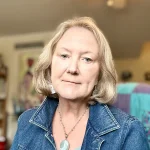
Carla Damron writes fiction on a mission. A social worker, advocate, and author, Damron uses her writing to put a human face on issues like drug abuse, mental illness, and human trafficking. She’s won multiple literary awards, including the Women’s Fiction Writers Association Star Award for Best Novel and the NIEA award for best suspense.