
✨ LATEST ISSUE •
From
Matchbox – August ’26
Review: Silence Has A Sound
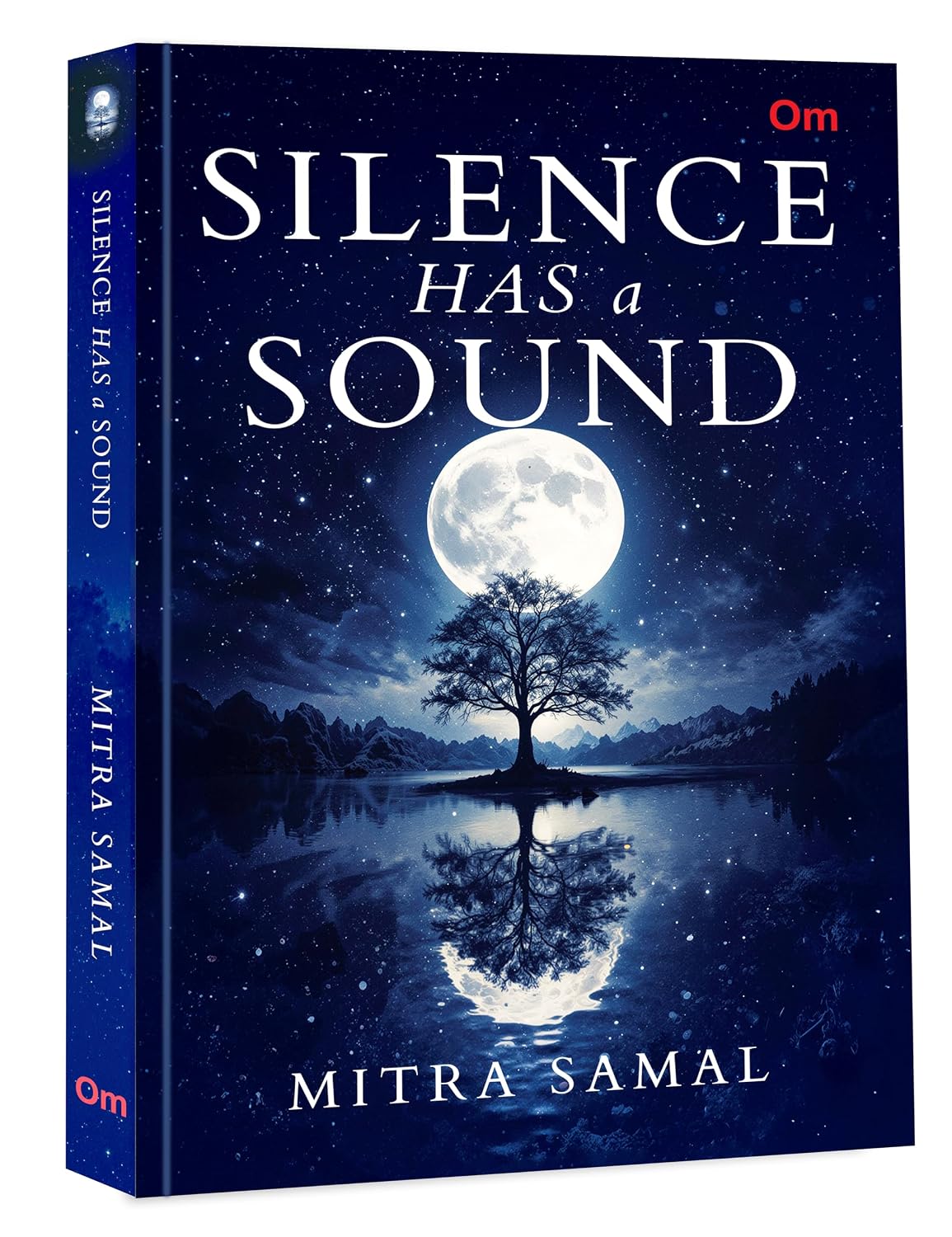
Mitra Samal’s Silence Has A Sound is a home to a warm collection of poems that turns the familiar emotional landscape into a theatre of unique reflective moments. When taking for the first time, after looking at the sombre cover, and reading the first sentence of the poetry collection:
If I ever have to leave this place,
I will carry with me a jar of soil,
maybe a few pebbles
and petals of dried flowers.
the first impression was an aching resurrection of nostalgia that transported me into the tranquil world. The book, till it’s very last symphony, functions as a cartography of movement across faiths, identity, despair, grief, memory, love, refuge and silence to name a few – concepts that have time and again refused a surface-level interpretation. Written in five-parts, Samal’s poetic strength travels from Nostalgic Reflections, Realities, Celebrating Nature, Yearnings to The Weight of Silence – acts that are not neutral. Drawing from Debord’s psychogeography and Merleau-Ponty’s phenomenology of place, this collection of poems treats the mental and physical landscape not only as a background but as a sentient interlocutor. What distinguishes this collection is how places are not only observed but also inhabited by emotions, personal conflict and socio-political ramifications. By refusing the picture-perfect postcard aesthetics, Silence Has A Sound, therefore, becomes a simmering narrative threaded together to make the reader more prone to vulnerability.
The poems If Death Were to Come to Me, Empty, The City Sleeps, Song of the Mountain and Seizure to name a few are united less by narrative than by emotional geography. Pegged on memory where river, birds, seasons, kitchens, gardens and the sea become repositories of identity, home, for Samal, is never merely a physical place but is reconstructed through smell, sound and fleeting sensory impressions. In Reminiscence, for instance, “the redolence of my land” rides on the wind, while “the sweet aroma of cookies/baked in distant cafes” unexpectedly returns the speaker to “my mother’s/petite kitchen.” The poems suggest that there is an exile that is not always geographical, but it can also threaten the familiar with distance and time. Across the collection, rather than dramatising the poetic voice, the collection seems to cultivate a certain lyricism. Natural imagery dominates the pieces and very poignantly etches out a language of remembrance, that ordinary speech may not always richly convey. There is also an understated ecopoetic sensibility, where the landscapes are inseparable from human feeling. This is where the collection’s greatest strength lies: in its sincerity. The voice does not strive for intellectual complexity; instead, it trusts sensory detail to carry poignant truths. The poems will not dazzle with high-form poetry or elaborate formal experimentation. The repeated return to spaces that appear physically intact but emotionally altered is a kind of reckoning. In Empty, the speaker surveys familiar surroundings only to discover that they have become repositories of absence.
My porch is empty
after discarding the shrivelled plants
you had abandoned
Transforming the domestic image into abandonment, this poem invokes the goldfish bowl, the crystal flower vase, the coffee mug, even the stripped walls of a room function as what theorists call memory objects – ordinary possessions whose significance exceeds their material existence because they preserve the emotional residue of relationships. The poem’s power lies in its refusal to dramatise grief. Grief, like it naturally does, settles into objects until the external landscape begins to resemble the speaker’s interior life. In Secluded, moonlight “dazzles on the flowing stream,” and birds prepare “to welcome dawn”. The natural world and the daily objects present a promise of renewal. This resisting of a pastoral idealisation by acknowledging that retreat into nature cannot entirely erase human corruption. Calling, on the other hand, becomes a call for return. The recurring imperative, “Come”, structures the poem like a litany:
Come for the flowers
Come to feel the golden rays of the sun
Come for the moon.
This repetition may carry the undercurrents of how healing may not always be spontaneous nor guaranteed. And healing always requires repeated acts of choosing nourishment of mind and body despite consistent disappointment. Further in the collection, a similar economy characterises Seizure, which is perhaps the most psychologically strong poem. Here, the metaphors are visceral and the poem’s movement from suffocation towards the return to light represents a fragile reconstruction of selfhood. Particularly striking is the understated conclusion: the speaker finds themselves “breathing hard, head buried in my hands.” The restraint in this imagery grants it a greater temperamental authority.
Collectively, these poems read like entries from an emotional atlas where landscapes, memories, personal histories, identity and grief correspond to an inner condition. While there are multiple registers to tackle for the reader, the poesy artfully captures the weight of this inner condition and urges the reader to fold inwards. Silence Has A Sound is a deeply attentive book where Samal offers a rare meditation to us readers highlighting how the tiniest, ignored lived experiences and moments of reflection can rewrite the grand narratives of our history, home and self.

Aditi Dasgupta
Aditi is an ordinary feminist with an extraordinary hunger for stories. A researcher at heart, her MPhil in English literature delved into postcolonial traumas in Indian literatures. She honed her craft through a Diploma in Translation & Creative Writing at Ahmedabad University, a residency at Yale, and the Institute for World Literatures at Harvard. Her book, Silencing of the Sirens , has drawn critical acclaim, and her words echo in Borderless Journal, The Wise Owl Literary Magazine, The Hoogly Review, WritingWomenCo, InkNest Poetry and The Writer's Hour Magazine, weaving history, pain, and resilience into narratives that refuse to be silenced.