
Can We Love the Art But Hate The Artist?
The discussion probes whether artistic creation's integrity can withstand profound ethical compromise…
Read more →Sehgal's collection charts the difficult, culture-spanning emergence of a female poetic voice, questioning verse's capacity to reflect or subvert lived experience and societal narratives.
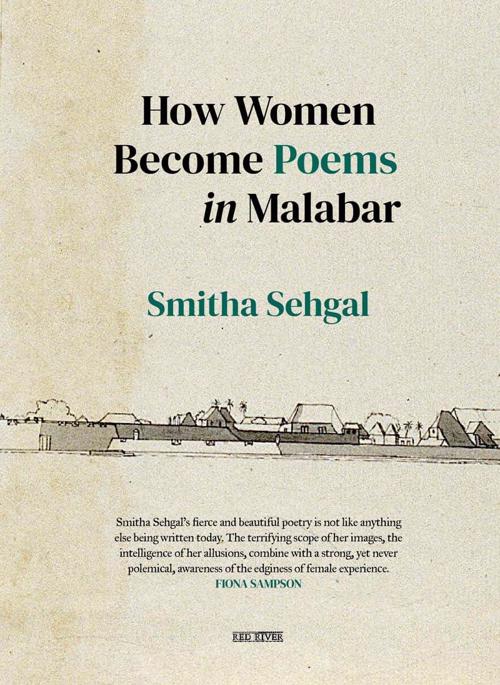
Much like the title itself, Smitha Sehgal’s maiden poetry collection How Women Become Poets in Malabar traces her journey of ‘becoming’ a lover, a woman, and most of all, a poet. ‘This is the only language I know, the only road I walk, the only God I trust,’ she says in her short and succinct introduction. Written over twenty spasmodic years, as the socio-political context of the world changed, the geography of her inner self, tailored by life’s experiences, its jabs and jolts, beauty and cruelty in equal turns, also transforms. These poems thus become a testament to those subtle shifts, an autobiography of sorts, as the poet meditates on, and tinkers with, life and language to find herself an authentic voice. Sample this:
The word was the first to ripen
on the wrinkled skin
of a half-naked monk, his core ablaze
in the quest for freedom.
-Word
Not only in the sequencing of these poems —where the latter ones are clearer, more precise—, but also in her poetic voice and choice of subjects, one can sense a shift. This is a shift from personal to political, as the cliché goes, but while Sehgal’s overtly political poems (Kabul 2021, Peshawar 2014, In Kiev) might begin to feel labored, it is in Dream of Leaves that one can see an evident expansion in the landscape of her experiences. The poem ends with: we plant green shoots of our fingers in the kingdom of Neptune/gather the harvest of summers/so that no child ever goes to sleep hungry.
In fact, this is Sehgal’s trademark: to be able to merge two distinct cultures, people, places, time zones. From the nostalgic Malabar poems that seem to be inspired by Kamala Das’ and Tishani Doshi’s oeuvre, her later poems reference
Ezra Pound’s red lunacy or Whitman’s pale sensibility. A poem that locates her grandfather with Anna Akhmatova (Anna Akhmatova’s Lover) or where she imagines a tête-à-tête with Bukowski in her Delhi drawing room (Killing War) are interesting and skillful. My personal favorites are her witty poems, tempered with a touch of sardonic humor.
Epicurean trio
sniffing, running hypopharynx slow
on divine crust
…
Prized trio
collector’s delightz NASA in the queue,
squabble of law suits, for roach guts; I must, you must
-Moondust Trio: A Roach Poem
Or
‘Born from faux pas jab of keys’ where mynahs…missing the sharp curve of v, obliterates the memory of five brothers.
-Pandara Road
Sensorially charged, these poems are quiet, playful, and use a barrage of images that are mostly tender, but sometimes cut us deep. ‘The rain plucks the cello strings of sunlight’ in the poem Rain, but just a few pages before, talking of her brother and hinting at his deepening sense of masculinity, she uses the starking image of a ‘flamingo turned lion keeper who feeds piranhas…’
It would be unjustified to end the review without chronicling the journey of her ‘arrival’ as a woman. This is also how the book gets its title. In the titular poem, she subverts the idea of what a poem can accomplish. Instead of being used as a clarion call, a way to document injustices and show a mirror to society, it can turn into a futile exercise of beautification of narrative — an act of silencing.
Many poems in the first two sections highlight the experiences, rituals, and myths surrounding women in her culture and others such as The Chronicle of Breast Tax, Radhe Radhe, and Wood Rose. While there is irreverence in these poems (I am the trespasser, she writes in Malabar Gliding Frog), the real force of that realization is felt a few sections later in poems such as Stone Fruit.
Sehgal might feel that latecomers [should] eat mud, or that her satchel is full of unlearnt words, but she might not realize it now, with just her first book out, how her patience and the lapse of time has enriched her poetry.

Kinshuk Gupta is a doctor, bilingual writer, poet and columnist who works at the intersection of gender, health and sexuality. His debut book of short fiction, Yeh Dil Hai Ki Chordarwaja, modern Hindi’s first LGBT short story collection, was published to great critical acclaim in 2023. He is the winner of prestigious awards and fellowships including the India Today-Aaj Tak Sahitya Jagriti Udayiman Lekhak Samman (2023); Akhil Bhartiya Yuva Kathakar Alankaran (2022); Dr. Anamika Poetry Prize (2021). He has been shortlisted for the Toto Awards for Creative Writing (2023); The Bridport Prize (2022); Srinivas Rayparol Poetry Prize (2021); All India Poetry Competition (2018). He edits poetry for Jaggery Lit and Mithila Review. He has been awarded the prestigious South Asia Speaks 2023 Fellowship to work on his poetry manuscript with Tishani Doshi.