
Review: The Way Home
The collection probes the complex interplay of individual agency and societal constraints, exposing inconvenient truths about human behaviour and the challenging pursuit of self-actualization.
In The Way of the Writer, author and scholar Charles Johnson likens the artist to the philosopher. Neither, he writes, spends time in ‘reflecting on a pre-existing truth’; instead, both engage equally with the act of ‘bringing truth into being’.
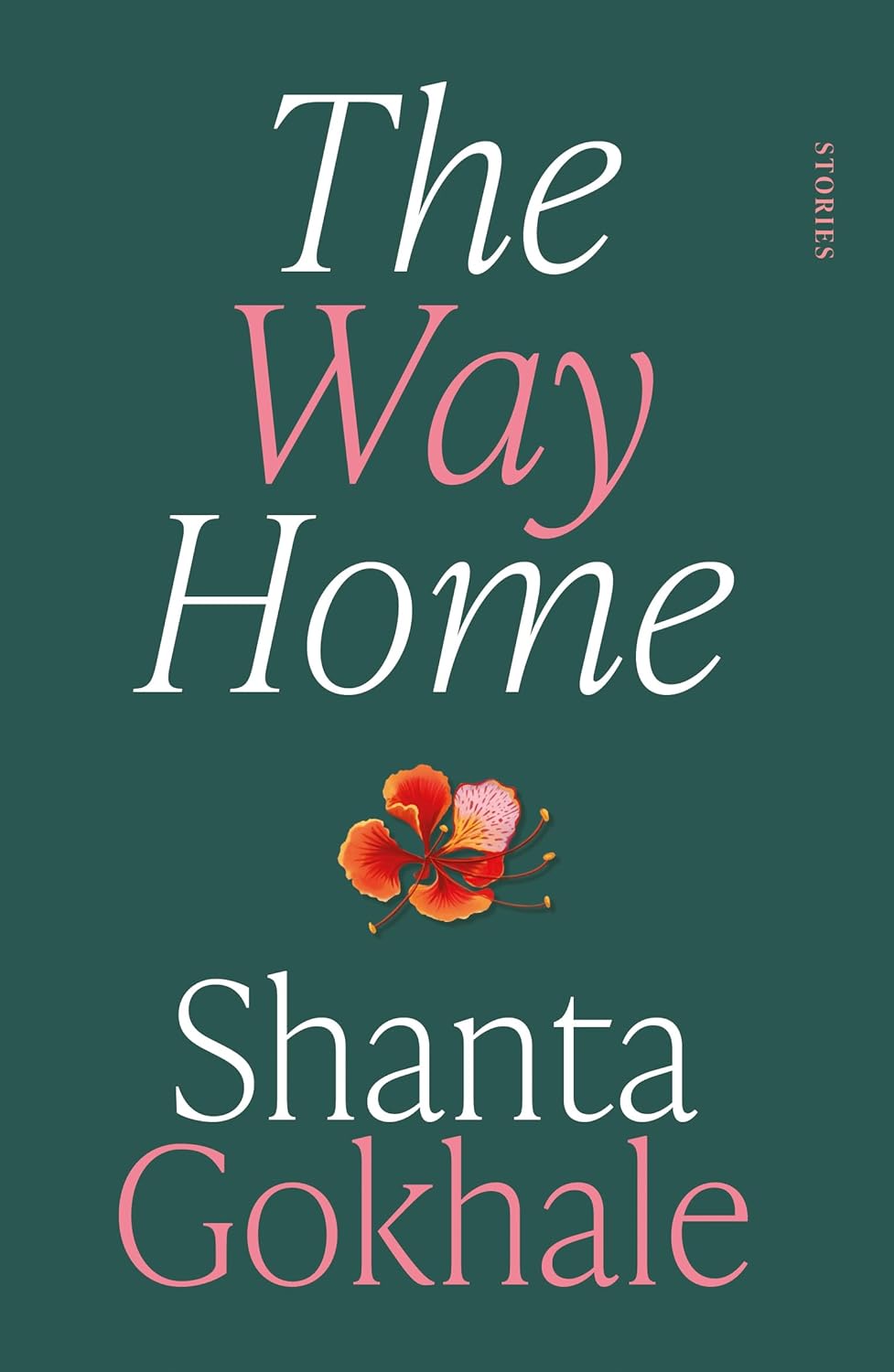
In The Way Home, a collection of short fiction by Shanta Gokhale, the seasoned author reveals her expertise at bringing truth into being, and with baring the most truth in the least space.
Across twelve stories, set mainly in and around present-day Mumbai, Gokhale intimately captures the lives of ordinary men and women, amid private dilemmas for which there are no easy solutions. Her writing is spare, elegantly nuanced, often ironic, and as gentle as it is provocative.
Be it through Nandini, who, while reminiscing over an old flame, discovers the joy of dancing to songs from her youth; or Vishnu and Supriya, who, after losing their daughter to asthma during the pandemic, find themselves questioning a heartless society; or Savitri, who shuns moral convention to make her own rules in love and life, Gokhale imbues her characters with agency, authenticity and flesh-and-blood multi-dimensionality. She particularly excels when she centres female defiance, teases male fragility, unpeels the layers of human hypocrisy, and surprises her readers by unearthing universal fears and hidden vulnerabilities.
In ‘The Quilt’, Mugdha is betrayed by her Brahmin lover Vijay, who callously ends their relationship to marry a woman that his caste-conscious mother has ‘chosen’ for him. Heartbroken, Mugdha attends the couple’s wedding reception and gifts them a hand-made quilt – one that she has stitched herself for what would have been her own wedding night. But as Vijay settles into married life, he is humiliated – and emasculated – by the unforeseen agenda of his new wife, Avantika.
When Vijay visits Mugdha, hoping for a reconciliation, he is crushed to learn that she has moved on with her life. Mugdha, far from pining for Vijay, is gloriously indifferent to him, and thriving in her career. There are no heroes or villains in Gokhale’s stories, but as this one concludes, there is a mischievous streak of justice at play. Vijay is revealed as the weak-willed man that he is, condemned to suffer under the domination of his wife and mother, whereas Mugdha’s qualities of pragmatism and self-reliance have guided her towards a better, brighter future.
Gokhale’s female protagonists are flawed and brave, impulsive and intuitive, dignified and resilient. What they share is an earthy sense of self-awareness, and a yearning to transform their lives.
In ‘Two Men’, playwright Ashwini rejects her theatre director husband’s ‘mansplaining’ advice, moves into a home of her own, and pursues her art on her own terms.
In ‘The Swimming Pool’, two women strike up a conversation on a bus. When one discloses the absurd compromise that she has had to make in her life, the other finds the strength and inspiration to move forward with hers.
And in ‘Silences’, a matriarch and her daughter-in-law make a pact to honour a family secret, and build a decades-long relationship on trust and solidarity.
Gokhale’s insights also extend to the male psyche, and into the foibles, insecurities and emotional landscapes of men. ‘In Daybreak Over the Gandaki’, Avinash is a grieving widower who attempts suicide by leaping off the Sea Link. When the intervention of an anonymous cab-driver pulls Avinash back from the brink of death, an unexpected and healing friendship develops between them.
Gokhale paints vivid portraits of real people with real problems, while simultaneously navigating the politics of caste and gender, fragile balances of desire and power, and the fissures within contemporary culture. What permeates the gravitas of her themes (pride and shame, illness and death, aging and abandonment), is tenderness, humour, and a genuine empathy for the contradictions and complexities that drive adult behaviour.
Illuminating inconvenient truths, and avoiding judgment to make space for honest reflection, The Way Home is a bittersweet exploration of what it means to be human, and the unpredictable, uncertain journeys to self-actualization.

Selina Sheth
Selina Sheth is an independent journalist, screenwriter, and the author of an auto-fictional novel Half Moon Rising: A Midlife Coming-of-Age, which is currently under consideration for publication in 2026. Her work portfolio includes drama and documentary scripts (written for BBC World, Asia Business News, Sony Entertainment Television, Walt Disney India and Amazon Prime), as well as stories and essays that have featured in The New York Times, Out of Print, The Bangalore Review, Nether Quarterly, The Woman Inc., Open Democracy, Cosmopolitan India, Yoga Journal International and Scroll.in. She has been profiled in the series ‘South Asian Women Writing’ (published by Kitaab magazine in Singapore), and is currently pursuing an MFA in Creative Writing through Lindenwood University’s online literary arts program.To know more about her, please visit the website: www.selinasheth.com – or follow her on Facebook (www.facebook.com/selina.sheth) and Instagram (www.instagram.com/@selinasheth).