
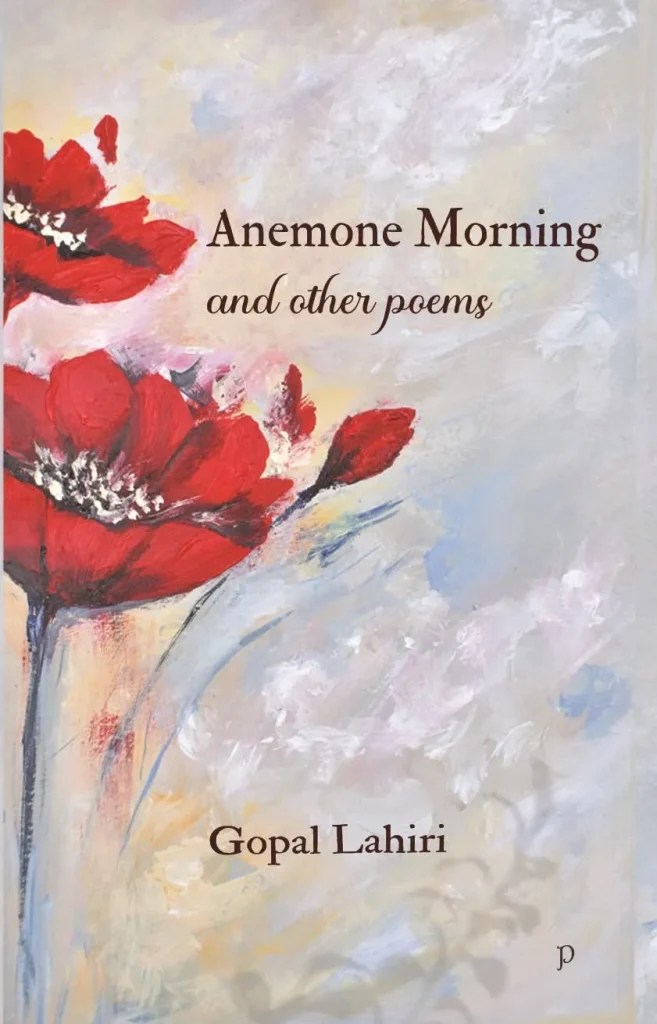
KD: Greetings, Gopal Sir! It’s a pleasure to have the opportunity to chat with you. How do you identify yourself as a poet amidst a crowd that’s poetic in hate, misogyny and censorship?
GL: Poetry is a part of my life, and it resides in my heart. The heart does not die in outside noise and chaos when one thinks it should. Despite everything I move on. Many of us believe that poetry is something unsayable. Perhaps some essential parts can’t be spoken. Honestly, it’s a human truth beyond words.
KD: What makes poetry so important in the present time? How do you approach the genre in modern context?
GL: In this time of turmoil and tribulations, we need a sane voice who can act as a therapist and who can be better than a poet. I consider the poet is one who will not be compromised, who is bent on to leave a trace in words, to transmute depths of feeling into the nuances of art. My approach to poetry in modern context, is similar. I want to reach out to others in the form of a social act and get more connected in an otherwise compartmental world.
KD: How has poetry changed from the time of your study life to your current working period? What is your overview on the change?
GL: Poetry has changed considerably during the passage of time. In my study life, I am more inclined to rhyming poems like, Sonnets and Sestina, Villanelle and Pantoum. But now rhyming poems are a big no-no.
Modern poets embrace rightfully ‘Neoliberalism’. To break the shackles of conceived barriers they explore the newer literary themes and techniques. Exploration of alienation and disconnection, feminism, highlighting marginalized voices, non-linear narratives, eco-critical issues, use of paradox and sarcasm encompass the ‘Neoliberalism’.
I also imagine that my poems should foster critical thinking, challenge the traditional notions of identity and community, and encourage experimentation with the form and narrative. I am talking about Japanese form poems as well.
KD: Everyone is a poet today. Everyone can be a poet today. These are two statements that comes in our mind when we go through our social media channels. How has the entire world of social media changed the dynamics of poetry? Also, what do you think could be the future of poetry when relevancy is a critical phenomenon?
GL: There is now a glut of poems flooding the social media. There are positives and negatives as one perceives. Now, you don’t need to run around the editors and wait for their acceptances.
The opportunity is much more, and you can write to your hearts’ content and post poems as you like at any time in social media and invite your friends to read and ask their comments which are mostly good as they are your close acquaintance, and your followers may increase day by day.
You are under the impression that your poetry deserves acclaim. But these do a great disservice to the poet’s fraternity.
Social media poetry is suddenly everywhere on Instagram, Facebook, Twitter and increasingly in print too. These short poems accompanied by illustrations are shared by countless readers who have millions of followers who follow for a dose of poetry and inspiration.
They have helped poetry go viral in a way it has not been able to do before. Then there are numerous poetry organizations of different geographical locations and from different backgrounds, races, ethnicities, and genders all over the world that have increased the growth of poetry in social media.
Indian English Poetry is no longer confined to Indian shore and reach to the global readers in one click of the mouse.
One observation is that perhaps the modern-day poets are overlooking the grammar of poetry. The rhythm, flow and syntax are the backbone of poetry, and the poets should not neglect this. In earlier times, we used to look at the senior poets for their advice and suggestion.
Now it’s rarely practiced, and the poets(?) flood the social network with poorly crafted poems without any proper tutoring and the quality of poems is fast deteriorating. This is a downside of the social media and we all should give a thought on it especially.
KD: Your poems often filter the dark debris of society and prepare them for our sane eyes with a beauty that could be acknowledged. In times of hatred, when dissent is being eroded by most of our society, how necessary is it to filter the dark and disturbing elements? Also, should love poetry be written in times of war or is it the other way around?
GL: Henry James says that ‘three things in human life are important: the first is to be kind, the second is to be kind and the third is to be kind. I prefer kindness and I believe I can connect with the common people through this path.
Poetry cohorts us. It also makes us feel less lonely and more connected. As it happens, I am more enchanted by the surroundings with its smell, sound, fissures and lineaments and their intricate relations with the people. Writing, especially poetry is something which is essential for me. Poems that I am creating are just part of me. They echo reality and as well as surreal beats and want to explore the unknown. I never fume in the lines, and I feel comfortable with this. My language of expression is restrained and subtle.
Love poetry is not always confined between two persons but love for the mankind as well. So, it can be written at any point of time when there is war or not.
KD: What is the one driving factor that keeps you hooked to this genre? How’s the market treating poetry?
GL: I have mentioned earlier that Poetry is an integral part of my life. I want to stay always in the poetic scape which Andre Breton says poetry as a ‘room of marvels’ or Seamus Heany calls it ‘language in the orbit’.
Poetry unfortunately has a very limited readers and the book market does not care much for the poets unless of course you are an award-winning poet. Only poets read other poets if at all and the readers are becoming miniscule day by day. Maybe poetry is much more emotionally difficult, accelerated thinking and intellectually demanding for the common people. May be but I don’t know
KD: Could you recommend five of your favourite poetry collections of all time?
GL: My top five favourite collections are
- The Sonnets by William Shakespeare
- Inferno by Dante Alighieri
- Ariel by Sylvia Plath
- The Waste Land by T.S. Eliot
- Love poems of Neruda.