
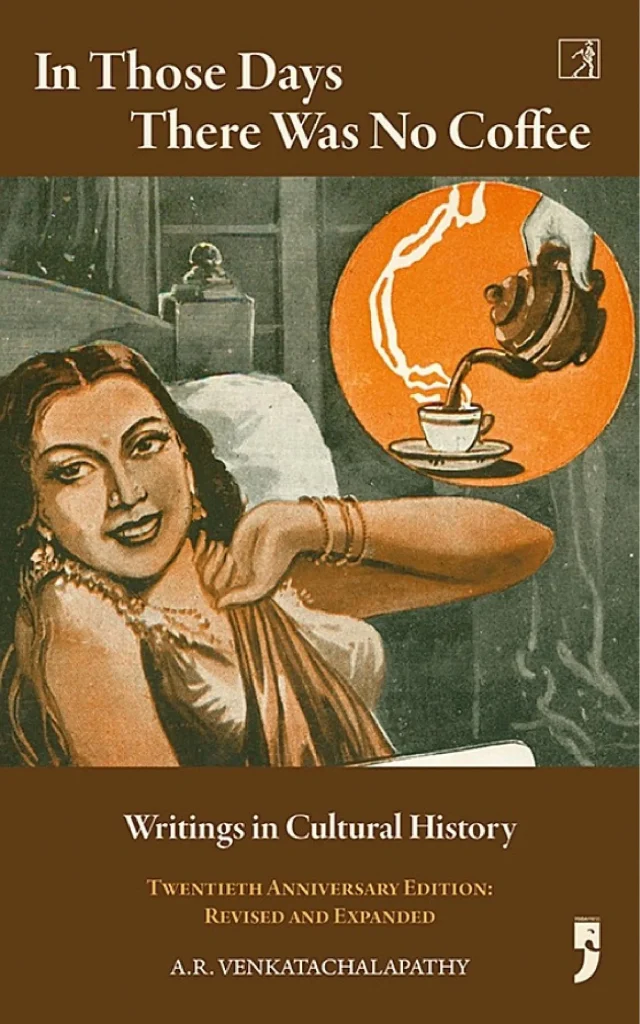
Can a cup of coffee reveal the social anxieties of an entire society? What do coffee houses, caste lines, labour movements, Tamil print culture, and middle-class aspiration have in common?
Today I am in conversation with historian, professor, and Tamil writer, A.R. Venkatachalapathy. We journey through colonial Tamil Nadu, from archive slips and forgotten journals to coffee hotels where caste discrimination played out in public view.The conversation also moves through Periyar-era archives, Tamil literary culture, writing rituals, and the pleasures of historical research itself. The questions are based on the excerpt from In Those Days There Was No Coffee from Matchbox by Usawa October 2025 edition.
1. First Encounter
How did you first come across the unique case presented on 13th July 1927 about M. Ramaswamy and his experience at the Venkatesa Vilas Coffee Hotel?
As a historian, I am always browsing old printed material for one reason or another. Also, even after I have written and published on a subject, my ears are pricked for new material on it. This has especially been so regarding my coffee paper. In the thirty years since it was first presented, I have never failed to be amazed by the enthusiasm with which it has been received – whether in Tamil, English, or Malayalam.
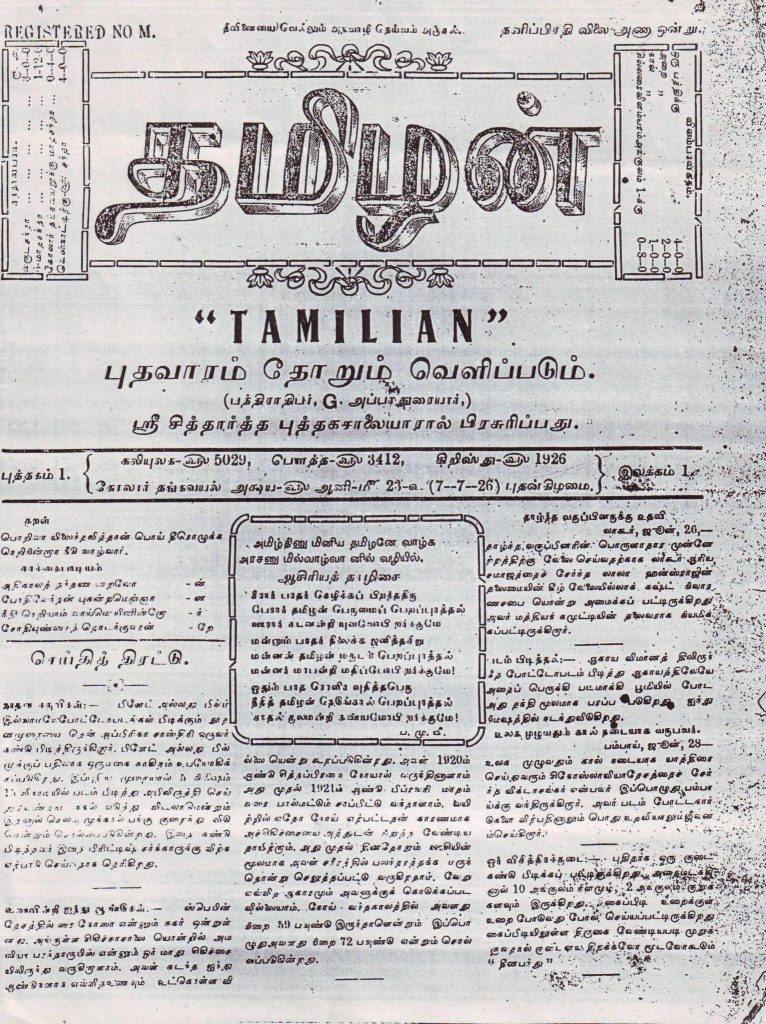
More than ten years after my coffee paper was published in its various avatars, sometime in the early 2010s, I was collecting archival material for my Periyar biography at the Periyar Research Library located in Periyar Thidal, Egmore. I was scouring the Tamilan, the Dalit-Buddhist weekly, a successor to the journal founded and edited by Iyotheethoss Pandithar, the pioneering intellectual who anticipated Dr Ambedkar by a generation. In the 1920s, Tamilan was revived by G. Appadurai (who was ably supported by his daughter, Annapoorani Ammal), who maintained a close relationship with the Self-Respect Movement and Periyar. In its pages, I came across the curious incident of M. Ramaswamy being refused coffee because of his caste. This incident fascinated me, and I tracked the case. But as luck would have it, the run of Tamilan in the Periyar Thidal was incomplete. No other library seemed to have its back volumes. Luckily, the Times of India online archive helped me to fill the gaps. Given my earlier work on the history of the labour movement in colonial Madras, I had some additional information on E.L. Iyer, who appeared for M. Ramaswamy. I pieced together these tantalizing bits of information and reconstructed the story. It is now part of the expanded version of my coffee book.
It is one more lesson that research is an unending process, the result of a continuous dialogue between the past and the present.
2. The Spark
What compelled you to write about the microhistory of coffee consumption and culture in colonial Tamil Nadu in particular?
I suppose nobody sets out to write a paper such as this. Research for me is a creative process, and it happened. As a literary reader, I read extensively and eclectically, often for the sheer pleasure it affords. My interest in printed texts led me to work on the history of the book for my PhD thesis.
My way of tackling a research project is to immerse myself in all the material of the period – the exact opposite of how sociologists and anthropologists work; they don’t step into the field without a theoretical framework. As I was doing this research in the early 1990s, I was reading and re-reading all the print material I could lay my hands on – novels, short stories, poems, essays, reports, reviews – it suddenly struck me that references to coffee begin to crop up in the 1920s, followed by a flurry in the 1930s, and stabilizing finally in the following decade. Any decent historian, I suppose, is alert to potential topics for future research – I sensed one such topic in coffee. Initially, I made mental notes, but soon I began to jot them down on slips of paper and cards, and stuffed them into a used envelope. As the folder bulged, my search became more systematic. Tamil books don’t usually carry an index (and of course, Ctrl+F was unknown then), and so one actually had to read whole books or at least have the ability to skim pages to find references to find what one is looking for. Simultaneously, I was also looking for secondary and theoretical literature, which, in any case, was sparse.
I delight in working in the archive and won’t write if I can help it. Such a scholarly paradise, however, exists only in dreams. When an opportunity presents itself – which, for us academics, it is the invitation to a conference or workshop – I force myself to write. In this case, it happened to be the first of Professor K.N. Panikkar’s series of cultural studies workshops at Wagamon, in late 1997.
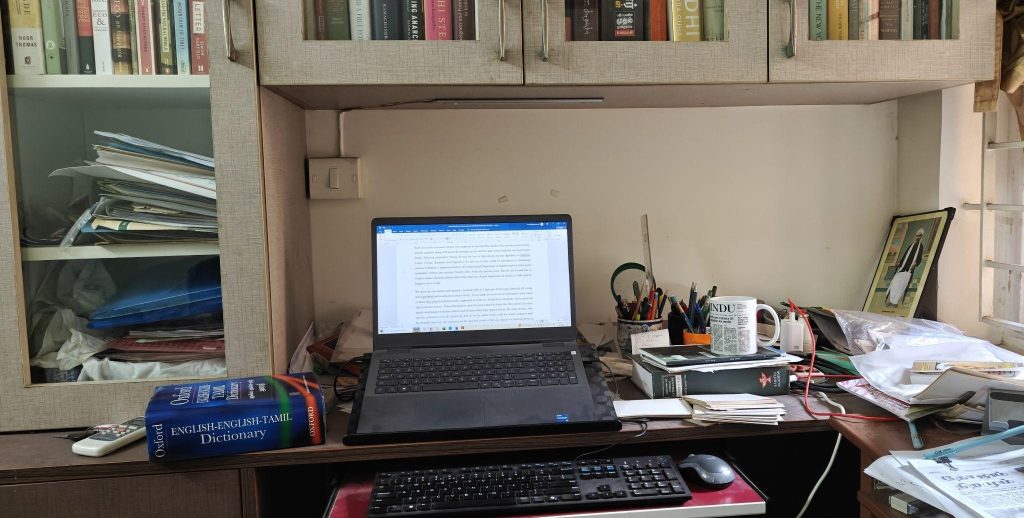
(Image caption: Author’s work desk and the essential coffee cup)
3. The Conversation
The chapter In Those Days There Was No Coffee begins with a quote by A. K. Chettiar: “One can write a whole puranam on coffee.” What conversation about caste, religion, language, or place does this piece open?
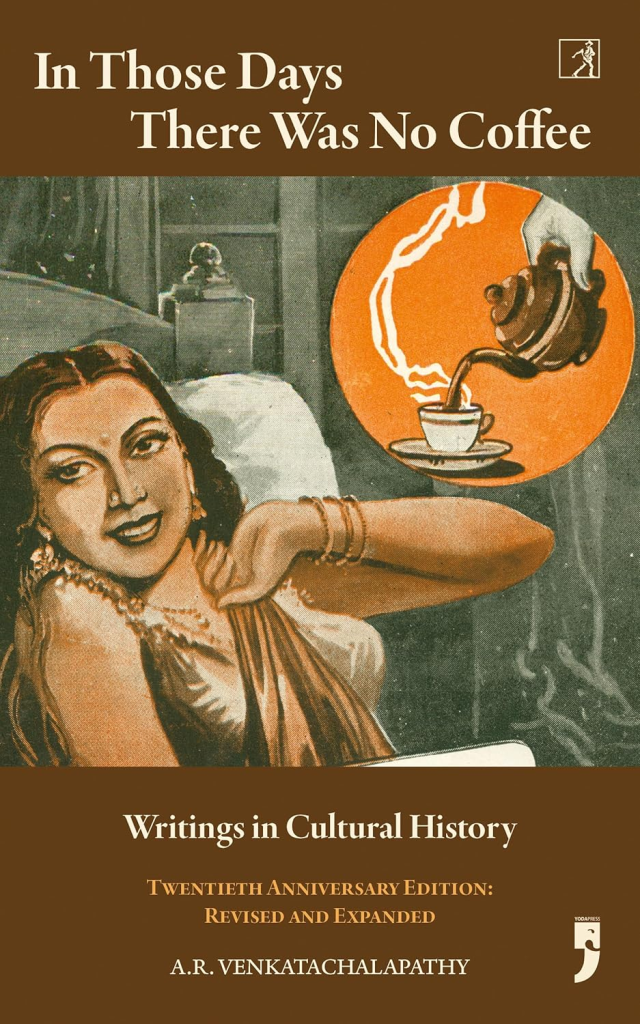
My coffee chapter primarily interrogates the question of caste and class. Coffee-drinking was clearly a middle-class phenomenon, and the beverage made inroads into South Indian society when cultural anxiety among the modernising middle class was high. But given how germane caste is to class, it turns out to be a story of caste as well. The middle class in India continues to be a Brahmin and upper-caste formation, with regional variations. Even if its social base has somewhat expanded in the last generation or so, the ideological hegemony of Brahmin/upper castes remains well entrenched. If anything, it has turned aggressive with the rise of Hindu majoritarian politics. Religion too rears its head in the chapter with tea’s identification in the Tamil region with Muslims. Gender anxieties also figure prominently. Though my answers may not satisfy everyone, I believe my coffee paper raises questions of caste, class, and gender in thought-provoking ways.
4. The Line That Stayed
It has been many years since you penned down the anthology. Was there a moment, image, or idea in this chapter that has lingered with you?
The thrill of reading my notes and how they fell in place to yield a coherent narrative is exhilarating.
My coffee chapter is full of fascinating vignettes. But let me flag two arresting ones. A.K. Chettiar’s arresting remark that C. Rajagopalachari (Rajaji) would not be content even if the entire Kaveri were to run with coffee has stayed with me. But there is another memorable vignette that figures in the Tamil version and not in its English avatar. This is a prose poem by Vallikannan on the glories of coffee, written in the 1940s. A parody of Subramania Bharati, it simply did not work in English, and I had to pass it.
5. Pass It On
Name one book by a woman, marginalized, or feminist-forward writer that more readers should discover.
I strongly recommend the 2004 novel by Salma, Irandam Jamangalin Kathai. It is widely translated into many languages, including twice in English. Following on her sensitive poems, this ambitious novel etches in evocative detail the quotidian lives of ordinary Muslim women in the hinterland of Tamilnadu.
6. Craft Rituals
Do you have any routines or rituals you follow before or during your writing sessions?
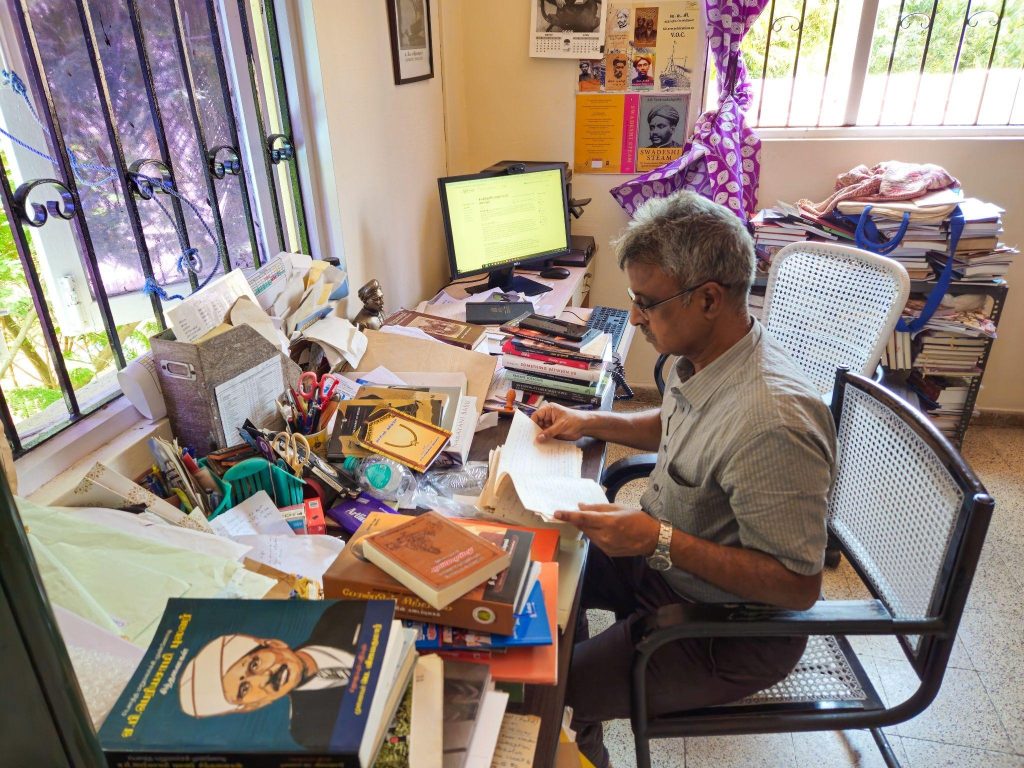
Absolutely. Despite all the techniques learnt and past experience, there is a magic to writing. And I always feel hopeless at the start. So, I follow a set routine, hoping that what worked the last time will work again. Writing is postponed until the pressure builds up like a piston in a cylinder. When the writing can no longer be postponed, I lay out my cards/slips and arrange them in sequence. For a brief interval before and during my writing, I stop reading anything except newspapers. I drink a cup of tea or sometimes indulge in coffee. I start pacing up and down, and make myself generally insufferable to my family members. When I start writing, I am man possessed, and I hate to be interrupted, fearing that the voice within will fall silent.
A good title or an arresting opening gambit helps to kickstart the writing process. Sometimes, I write a set piece before I turn to the start. Much like a novel’s characters dragging the author, the narrative leads me. I am barely in control. As my writing proceeds, more references come to my mind. But there are certain aspects that I am particular about. I belong to a generation that lamented the absence of a historical sense among Indians. So, my early work, especially, is steeped in evidence. I try to marshal as much data as I can. I may not be a great writer, but I do have an eye for the telling detail, the apt phrase, the juicy quotation – you can see them littered throughout the text.
I write in fits and starts. After each spurt of writing, I collapse, drained of all energy. A good writing day means four to five such spurts. After a full draft is done, I take a break – it may be only a few hours if it’s a short newspaper article or weeks if it’s a long essay or full-length monograph. In reworking the drafts, I am more at ease and less tentative, confident that I have not lost the plot and can always untangle the skein. When the final draft is done, I share it with a friend or two. I take on board their comments, but address only the substantive comments at first. At the time of copyediting, I give the manuscript a full look over. At the final proof stage, the embellishments that I make, though apparently minor, are what add the shine. Once my work is published, I never read it, for I can see only infelicities. But sometimes I note great passages and can’t believe that they were penned by me!