
The Reliquary of Redemption
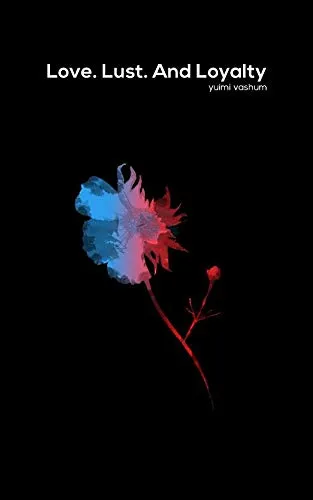
Love, Lust and Loyalty is a book of true confessions. Confessions of a girl who was sexually abused as a child. There is a tremendous emotional upsurge when one reads the narratives of abuse and another L joins the alliteration in the title- the L for Letting go. Like a slow exhalation, one discovers not outrage and disgrace at the end of the book, but a restoration to dignity and self-love. The poems in the book are as much about forgiveness as they are about defilement- a rare combination – giving the book a quality of pure grace.
In the book’s sensitively penned foreword, Sukrita Paul Kumar writes, “The personal becomes impersonal and the individual experience becomes everybody’s, across cultures and beyond continents. Yuimi’s poems have that kind of potential.”
Yuimi says,
Forgiveness,
An act I mastered before I could put together a sentence; An act I mastered with grinding teeth, clenched fist,
and a stifled scream.
Because, Forgiveness, It liberates you.
let go and let God
Matha C. Nussbaum, in Gilbert and Gubar’s The Madwoman in the Attic, exposes the unfairness of the larger issue of the mistreatment of a girl child:
“…one should never smile when sexual harassment is afoot. One should recognize it, and name it, and publicize it, and, above all, prevent it, by education, consciousness-raising, and in general constant tiresome harping on the harm it does.”
It is often said that abused girls make fiery feminists. But It is not just abusive and fascist fathers, uncles, older brothers and cousins that breed feminist-daughters; it is also passive or drunk and distant mothers, hateful grandmothers, remorseless husbands, and even sexist and privileged male professors.
The victory of the phallus over a little child, the unvented silent labia and the Labia politics of society are entrenched in our world in some form or the other. Yuimi’s book embraces the voices and expressions that make up the years of a living hell. It teeters on the mutinous thought that her body did not belong to her but instead was a tool for brutal pleasure.
Yuimi’s poetry, over the course of most of the verses, uncovers the physical abuse and depravity taking us into the darkness of the soul of the abuser. At the same time, these poems expose the vulnerability of all girls, the damp, cold fear that must fill their lives. There is a graceful, contrasting beauty of innocence that resides within her young form, and the relentless betrayal of that innocence is deeply disturbing. The harm and humiliation endured by her is something that one wants to turn away from, but can’t because her pain opens up a universe of beguiling empathy.
She writes:
I will teach my daughter to own every part of her body.
From the roots of her hair to the tip of her toenails. My daughter will be strong, not meek;
Earn respect not take; give only when deserved.
My daughter shall fight against silence; So shall my daughter’s daughter… Until there is no shame in the truth.
breaking the shame
Yuimi does not hold back without overtly shocking the reader, and succeeds in paving the path to catharsis, if that were possible. This poetry elicits a vehement response from the reader. One either attempts to block out the imagery or seethes inwardly at every page.
Don’t mistake my writings for a rancor Or misery.
I am not sad over what happened;
The aftertaste of sadness is too bitter.
I write so people can stop putting up an act I write to break the shame in honesty.
I write for the little kid
Who grew up dreading the night, Jumping at every touch.
I write for people like me
So they don’t have to face their fear alone.
I write for the monsters
To show them the nights will no longer be theirs. That, there shall be no more cries.
I write for battered souls like me
To forgive, forget, and only live;
That, what is done to us in the shadows Shall not stop us from living life.
We are air
We don’t bend
We don’t break
We are unprecedented.
the survivors
The poems move on from the dark and disturbing part of her life to her grown up years where she seeks and finds love, and there is a certain underlying hope in her words that her poetic voice might be ‘heard‘
Time will heal me
It has always been the healer
…
I was wrong.
Gin has always been the healer.
when love comes calling
I was once told
Love is a poor man’s gold.
I never understood until I fell for you.
When my eyes rested on yours,
And your hands shook mine,
You felt so fine,
Like a wool on a rich woman’s arm.
Then my heart leaned into yours
Like a head gently falling on a pillow of feathers, And love came racing
Like a long overdue luxury.
And I knew
You were the treasure of whose map I held; You were where I was supposed to be!
a poor man’s gold
Empowerment, freedom, patriarchy – the book brushes against all these ticking bombs. Yuimi’s work is honest. It hits you in the solar plexus and displays a rare strain of courage and bravery as she bare her soul to the readers.
Interestingly, the title of each poem appears at the end. It’s as though she wishes to re-emphasise the point of her words by succinctly syncretising it in its title so that the reader takes in the complete meaning once again.
Her poems lend voice not only to the travails of her own past but to those of thousands who’ve not yet opened up or are too oppressed to speak. In this lies the true value of the book. It bridges the gap between the said and the unsaid, blurs the chalk lines of what should and should not be confessed, and carves a fresh crop circle of outspokenness that is desirable and healing, a veritable reliquary of redemption.