
Usawa Literary Review is headquartered in Mumbai, India.
PIN Code: 400050
Interested in working or collaborating with us?
Contact Us

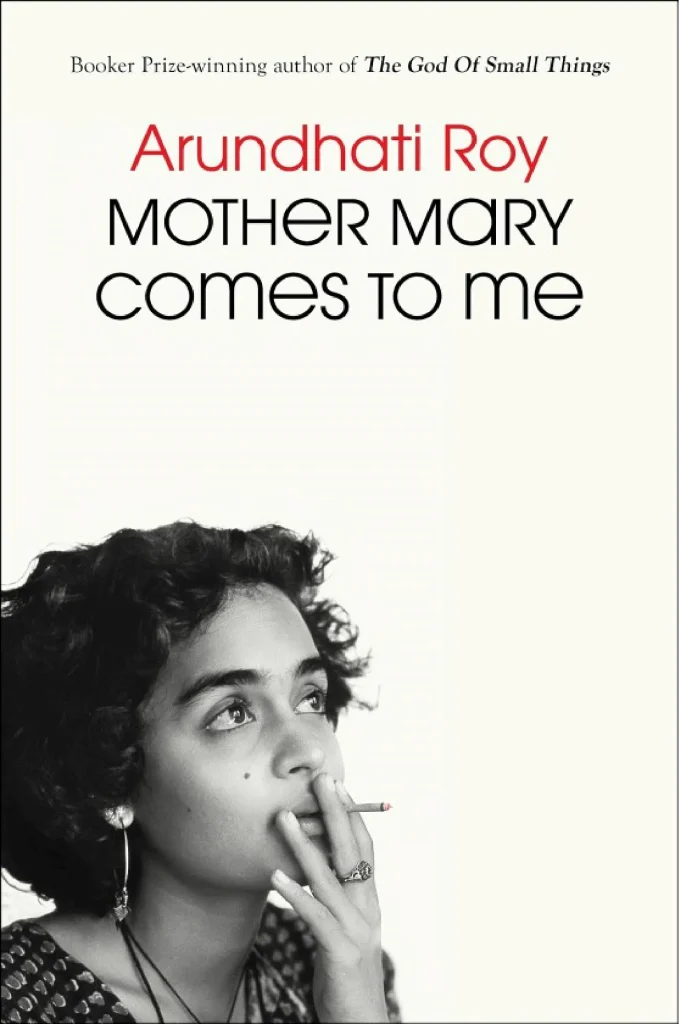
Mother Mary Comes to Me

By Arundhati Roy


Arundhati Roy began writing this memoir "heart-smashed" by her mother's death — puzzled and ashamed by the intensity of her own grief. Mother Mary Comes to Me traces her journey from a Kerala childhood shaped by a singular, formidable mother who founded a school and defined everything Roy ran toward and away from. Intimate, funny, and sometimes disturbing, this is Roy's account of how she became who she is — and a tribute to the thorny love that made her.

Review: Mother Mary Comes to Me

Arundhati Roy's memoir refuses decorum. Through Mary Roy's contradictions — love, damage, absurdity, and silence — Roy finds her liberation and her trap. A bitter pill that heals.

A Book That’s A Bitter Pill To Heal Our Wounds

The moral tendency that society inserts in people is to prevent them from expressing their personal extremities, and limit their honesty, which keeps them from navigating their own life choices and expression. This makes Arundhati Roy’s memoir all the more significant. Roy, who became iconic for her novel The God of Small Things, is here not writing fiction but rewriting herself — and in doing so, rewriting what a memoir can be.

Most writers while jotting down their thoughts in their memoirs frame their lives by keeping many elements in mind. They have to ensure that whatever they write represents them well. Roy, however, in Mother Mary Comes to Me, is strikingly different. She does not care for decorum. She is also the author of The Ministry of Utmost Happiness and The Seditious Heart — books that similarly refuse to stay within acceptable limits. This memoir is no different: it refuses to tidy itself up for the reader.

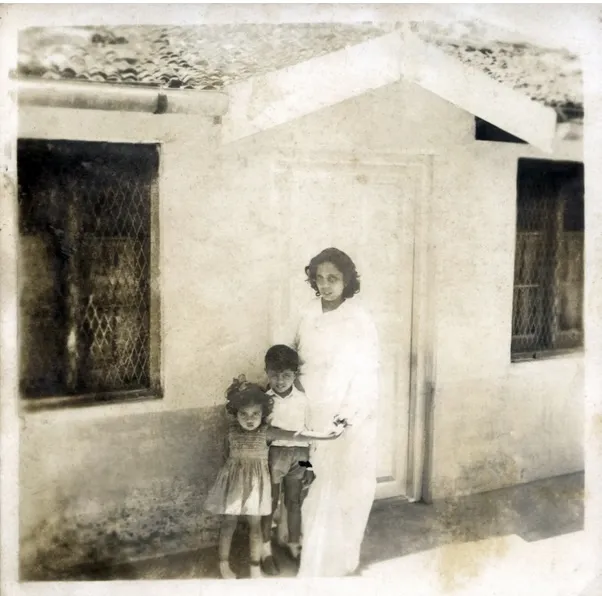
The erratic mother of her debut novel is a reflection of her own mother, who has inspired her in many ways to deal with her own demons. Mary Roy, as rendered here, is complex and contradictory — capable of great love and great damage simultaneously. Roy writes of her:

“my mother unloaded the burden of her quarrels and the daily dose of indignity that she had to put up with — from her in-laws, from my father — onto us, her children.”
Mother Mary Comes to Me — Arundhati Roy. Image courtesy of Penguin Random House India.

Image courtesy of Penguin Random House India

It is generally considered that silence is an inherent part of acceptance. But in the case of Roy, the act of dissent against her mother became her liberation — and her trap. She writes:

“my escape route always circled back to what I was trying to escape from.”

And then, with devastating precision:

“it felt as though she had cut me out – cut my shape out – of a picture book with a pair of scissors.”

Roy, in this book, does not refrain from identifying her courage with her mother’s perseverance. That being said, Mary Roy’s abusive behaviour is also a subject of scrutiny. The absurdity and the humiliation are rendered without flinching:

“This is a bra. All wear them. Your mother wears them. Your sisters will too soon.”
Mother Mary Comes to Me — interior image. Image courtesy of Penguin Random House India.

Image courtesy of Penguin Random House India

Sexual prowess is something every human being experiences, especially when that human being is full of loneliness. In the Indian society, women are always taught to suppress their sexual desires and keep their sexuality under wraps. Roy writes about this with the same unflinching clarity she brings to everything else in this memoir — the body, the longing, the shame that was never hers to carry.

Mother Mary Comes to Me is a reminder of what a memoir should be like and how literature can liberate us from our own wounds. The book is not a comfortable read. It is a bitter pill — and like all bitter pills, it is the kind that heals.
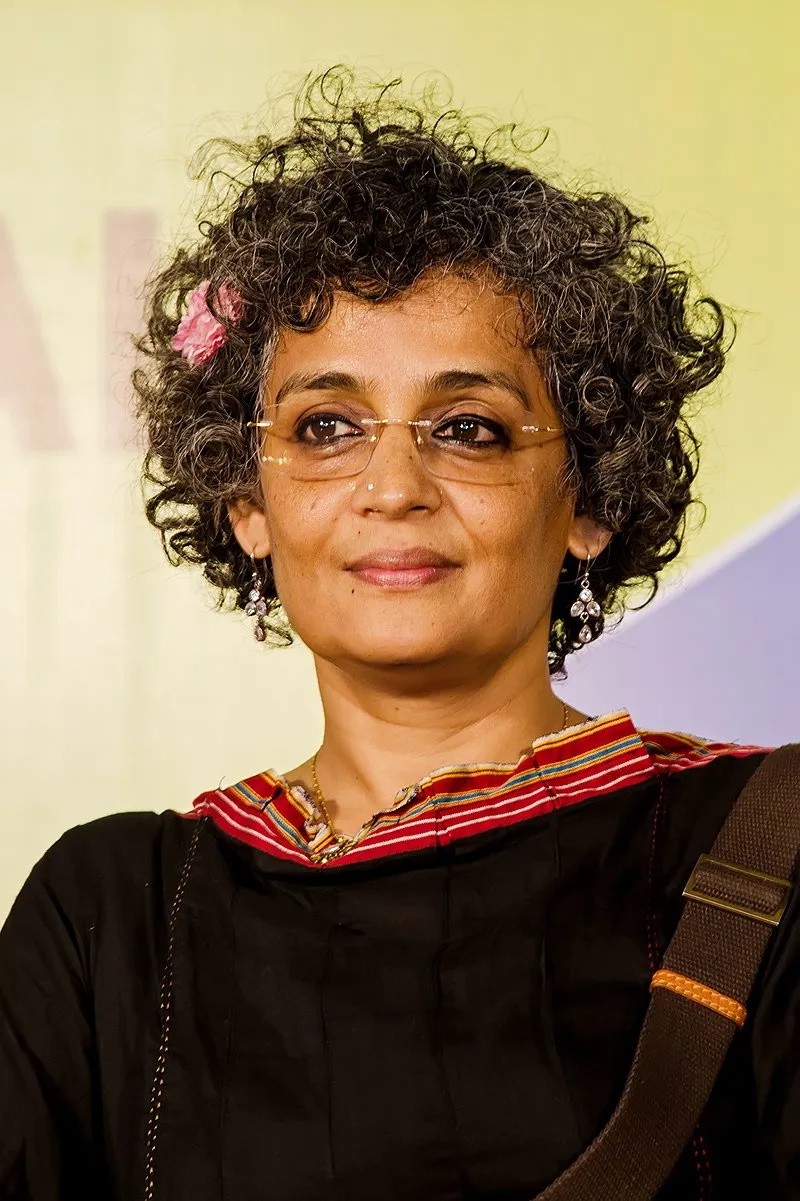
Arundhati Roy

About the Author

Arundhati Roy

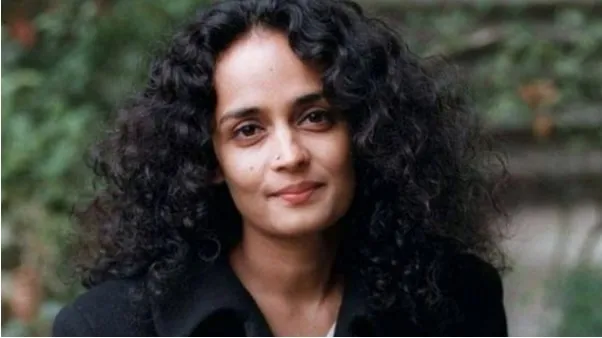
Arundhati Roy is the author of the novels The God of Small Things, which won the Booker Prize in 1997, and The Ministry of Utmost Happiness, published in 2017. She is also the author of several works of non-fiction, including The Seditious Heart. She lives in New Delhi.

Photo: Augustus Binu, CC BY-SA 3.0

Looking for more Books?

Browse the Bookshelf →

Excerpt: Mother Mary Comes to Me

Kerala's emerald landscape bites with loss. A gangster matriarch's death rips through generations she shaped. Old wounds bleed; fierce love lingers still.

Gangster

She chose September, that most excellent month, to make her move. The monsoon had receded, leaving Kerala gleaming like an emerald strip between the mountains and the sea. As the plane banked to land, and the earth rose to greet us, I couldn’t believe that topography could cause such palpable, physical pain. I had never known that beloved landscape, never imagined it, never evoked it, without her being part of it. I couldn’t think of those hills and trees, the green rivers, the shrinking, cemented-over rice fields with giant billboards rising out of them advertising awful wedding saris and even worse jewelry, without thinking of her. She was woven through it all, taller in my mind than any billboard, more perilous than any river in spate, more relentless than the rain, more present than the sea itself. How could this have happened? How? She checked out with no advance notice. Typically unpredictable.

The church didn’t want her. She didn’t want the church. (There was savage history there, nothing to do with God.) So given her standing in our town, and given our town, we had to fashion a fitting funeral for her. The local papers reported her passing on their front pages, most national papers mentioned it, too. The internet lit up with an outpouring of love from generations of students who had studied in the school she founded, whose lives she had transformed, and from others who knew of the legendary legal battle she had waged and won for equal inheritance rights for Christian women in Kerala. The deluge of obituaries made it even more crucial that we do the right thing and send her on the way she deserved. But what was that right thing? Fortunately, on the day she died the school was closed and the children had gone home. The campus was ours. It was a huge relief. Perhaps she had planned that, too.

Conversations about her death and its consequences for us, especially me, had begun when I was three years old. She was thirty then, debilitated by asthma, dead broke (her only asset was a bachelor’s degree in education), and she had just walked out on her husband—my father, I should say, although somehow that comes out sounding strange. She was almost eighty-nine when she died, so we had sixty years to discuss her imminent death and her latest will and testament, which, given her preoccupation with inheritance and wills, she rewrote almost every other week. The number of false alarms, close shaves, and great escapes that she racked up would have given Houdini pause for thought. They lulled us into a sort of catastrophe complacency. I truly believed she would outlive me. When she didn’t, I was wrecked, heart-smashed. I am puzzled and more than a little ashamed by the intensity of my response.

Excerpted with permission from Mother Mary Comes to Me by Arundhati Roy published by Penguin Random House India 2025

Looking for more Books?

Browse the Bookshelf →
Back to Issue

Support Our Work

If you enjoy our content, consider supporting us.

Support Us

We are an unfunded, independent feminist publication. We need your support to continue our work.