
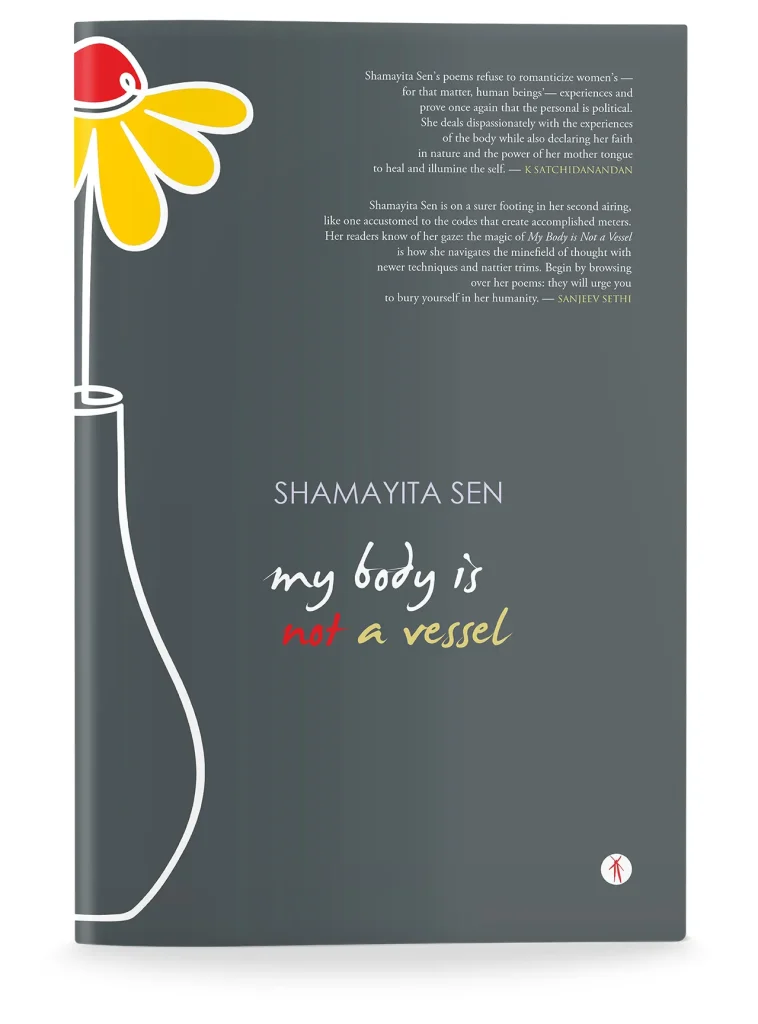
All you write about is being gay or Chinese, Chen Chen writes in Poem in Noisy Mouthfuls, a poem in which he talks of how each of his poems circuits back to his anxious search for his identity and its roots. What else do poets do but talk about similar things, over and over again, using a variety of tricks and techniques, trying to seek clarity and make ‘sense’ of life? Reading My Body is Not a Vessel by Shamayita Sen, published by Hawakal Publishers, in that light might help us understand the outpouring of grief in the pages that follow. Even though Sen talks of other things — the staple of any poetry collection — of body and the politics of othering, of lovers and heartbreaks, of a Delhi changing seasons – the grief that Sen feels as a daughter for her father, her Jojo, with whom she wishes to stay like a mole, occupies the centre stage. As memories resurface like a crow perched on a timid branch, everything she witnesses becomes a metaphor for loss: kalboishakhi, Aloo Poshto, a moon that appears to be screaming from the branches. With a host of fresh, astonishing metaphors, and poems that profusely experiment with the form, they become an elegy: making us think if grief only shapeshifts with time, never fully leaving us from its clawed grasp.
— Kinshuk Gupta, Associate Editor
Distraught
after Ellen Bass
You’ll always have the weather to complain about. Always have accidents to encounter if your house is situated on the main road. There will always be enough time to experience new things, or visit new places. And sometimes, bad things will happen: You would return to your old moss laden home, and stare at your child’s favourite toys stripped to their last celluloid bit. Your father-in-law would abuse you in public. Your parents would wither like flowers perched on a mantle – a mere audience to the drama of your life – and eventually die. No matter how much undereye gel and SPF you apply, every time you look into the mirror, you’ll know you’ve aged a year. The leaves you’ve so painstakingly watered every morning would suddenly attract worms and shrivel up. Still, life will go on. But in your heart, you’ll know, once stuck in a hospital chamber past sixty, it’s difficult to rest, difficult to be your forty-year-old self again.
In this Poem there are No Deaths
In this poem the world hasn’t shrunk
itself to fit into your tender palms.
In this poem the local dhaba isn’t shut,
with its owner cooped up in a body bag.
In this poem you graduate, weaving memories
of school, setting them free into the blue.
In this poem Baba is a real person, not
a photograph Maa shops online a frame for.
In this poem you do not pin yourself up
on a wall like a blank sheet of paper,
denied even the pain of written words.
In this poem you drunk dance with cousins.
In this poem you do not wake up with
taste of piss in your dreams.
In this poem you read of love and
sunflowers. In this poem you breathe,
you count, one, two, three…
This poem is an exercise in calming.
Distraught after Ellen Bass You’ll always have the weather to complain about. Always have accidents to encounter if your house is situated on the main road. There will always be enough time to experience new things, or visit new places. And sometimes, bad things will happen: You would return to your old moss laden home, and stare at your child’s favourite toys stripped to their last celluloid bit. Your father-in-law would abuse you in public. Your parents would wither like flowers perched on a mantle – a mere audience to the drama of your life – and eventually die. No matter how much undereye gel and SPF you apply, every time you look into the mirror, you’ll know you’ve aged a year. The leaves you’ve so painstakingly watered every morning would suddenly attract worms and shrivel up. Still, life will go on. But in your heart, you’ll know, once stuck in a hospital chamber past sixty, it’s difficult to rest, difficult to be your forty-year-old self again.
In this Poem there are No Deaths In this poem the world hasn’t shrunk itself to fit into your tender palms. In this poem the local dhaba isn’t shut, with its owner cooped up in a body bag. In this poem you graduate, weaving memories of school, setting them free into the blue. In this poem Baba is a real person, not a photograph Maa shops online a frame for. In this poem you do not pin yourself up on a wall like a blank sheet of paper, denied even the pain of written words. In this poem you drunk dance with cousins. In this poem you do not wake up with taste of piss in your dreams. In this poem you read of love and sunflowers. In this poem you breathe, you count, one, two, three… This poem is an exercise in calming.