
Usawa Literary Review is headquartered in Mumbai, India.
PIN Code: 400050
Interested in working or collaborating with us?
Contact Us

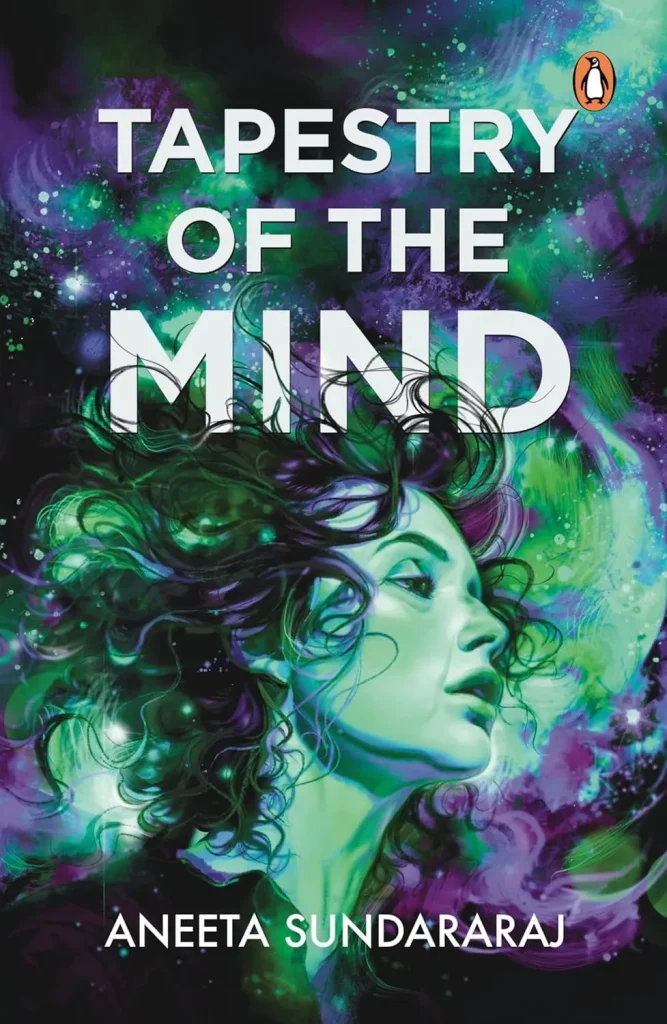
Tapestry of the Mind and Other Stories

By Aneeta Sundararaj


Tapestry of the Mind is best described as the writer’s literary love affair with trying to make sense of the human psyche. It is a collection of seventeen fully-developed short stories that are serious, funny, tender and grounded in Malaysia and, in particular Aneeta Sundararaj’s hometown of Alor Setar in northern Peninsular Malaysia. The reader moves among a diverse range of protagonists from classical Indian dancers, toddlers engaging with spirits, pet therapy, mothers losing their children because of inequitable laws and the manipulation of the metaverse, men lacking self-worth, and divorcees mulling failed marriages, to probable stigma of homosexuality, narcissism, mean adults, sibling rivalry, bullying, spiritual abuse, clandestine adoptions, autism, environmental disasters, men’s regret from love lost, and the destruction of the mission schools. Like all love affairs, specific and unique cultural, ethnic and religious differences gave rise to moments of betrayal, poignancy, heartache and, sometimes, much mirth. Ultimately, this haunting collection pieces together an everlasting tapestry of words rooted in brutal honesty. When viewed as a whole, it brings to light issues long avoided, evaded or hidden. With each story prefaced by a quote from an expert in mental health, Tapestry of the Mind is cradled with gravitas.

Excerpt: Tapestry of the Mind and Other Stories

Madras gold flecks meet a tender gaze. Penang becomes home, laughter lines, then loss. Burden, echoes, and a husband's spectral call beckons.

Golden Illusion

Often, social factors can underlie depression in older people, especially the loss of a spouse … Studies show that loneliness and social isolation are associated with higher rates of depression and death wishes. Professor (Adj.) Dato’ Dr. Andrew Mohanraj Curling gnarly fingers around a remote control, Maya used her forefinger to switch off the ceiling fan in her windowless room. At least this was a whole room. There was a time Maya was the mistress of a whole house. The door opened. Puffy eyed and red cheeked, Salomé must have been crying all night. Her father in the Philippines had contracted pneumonia. In the blink of an eye, he was gone. She bent to pick up the bedpan and walked into the en suite bathroom. That stench had to offend. Such was the indignity of old age. Maya closed her eyes.

***

A young couple were about to board the P&O liner, The Chusan , in Madras, India. Maya studied the intricate bridal henna design on her hands. Was she doing the right thing following this almost-stranger she’d married a month ago to seek a new life on the western coast of the Malay peninsula? “Maya-Maya,” he called out. The elders had giggled at his peculiar manner of speech. But in those gold flecks of his irises, she’d recognised his tenderness. All would be well. She blushed when he whispered, “Too-too beautiful an illusion.” It took her a week to find the word to describe the single-storey house assigned to them in Hargreaves Circus on the island of Penang. It had to express the serenity in her being, showcase the stunning backdrop of a hill, and promote the busy activity of the fauna in their garden. In the end, she came up with a simple one: home. And here, in 1972, she gave birth to their only child. “What do we name her?” “Swarnalata,” Ram replied. When Maya blinked, he said, “I thought about it for a long-long time.” Maya smiled bright and happy. With ‘swarna’ meaning gold, the child was nicknamed GG. This carefree child basked in her father’s love. Her ferocious temper was only placated whenever Ram told her one of his fanciful tales, usually after dinner. Dinner proper, however, was often fraught with tension. “No wasting,” Maya pleaded daily. “Millions in India are starving,” she would add, knowing full well that they rolled their eyes when her back was turned. The happiest of their many celebrations was the day GG married her sweetheart from law school. There was no celebration four years later, when GG chanced upon her husband and his secretary trading sexual favours in his swanky Singapore office. Maya rushed to the island nation and helped her child move to Kuala Lumpur where GG soon became the country’s foremost corporate lawyer. One sweltering January a year later, Maya stepped out onto the veranda expecting to see Ram with some Hokkien Mee for their lunch. Instead, a squat policeman stood in front of her. Officious, he focused on his shoes when he said that Ram died on the spot when he was hit by a bus. Then, he handed her two packets of noodles and left. In the kitchen, Maya poured the noodles into a ceramic bowl. She carried the back to the veranda, sat in Ram’s planter’s chair and ate every morsel. No wasting; millions in India are starving. Thud! Maya began to recite the Gayathri mantra. This is the end. Seven long and lonely years without you, Ram. Her world went black. When she opened her eyes, she was looking up at a fluorescent tube light. “Mama. You’re awake.” “How long?” Maya whispered and turned to look into GG’s eyes. “Ah! You’ve been asleep for three days,” GG said. Apparently, when their neighbour heard her fall, she’d rushed over to find Maya curled into a foetal position and unconscious. She called for an ambulance and then GG. Mercifully, Maya had responded to treatment and was now on the road to recovery. On a sunny morning, three months later, an ambulance dropped off Maya at GG’s condominium complex and a new carer GG hired – the rotund Salomé – opened the door to a posh unit on the third floor. “Mama, this is the best option.” Her daughter said that night. “And my flat is next door. Problem solved.” She was a problem ? Pulling the gossamer blanket to cover her being, Maya sensed that she was never going home to Penang.

***

Maya rubbed the grit in the corner of her eyes before opening them. The shrill ringing of the telephone startled her. It rang another five times before Maya answered the call. “Where were you, Mama?” There it was – that concern in her daughter’s voice. “Don’t forget. Today is the day for the Pfizer vaccine, yes?” Maya’s eyes widened in disbelief. She’d forgotten. “I can’t come. Only two passengers in the taxi. Salomé will follow, okay.” “Yes. Yes,” Maya said, a little breathless. Then she heard the words her daughter said, seemingly to someone else: “Such a burden, I tell you.” Maya threw the phone’s receiver aside. An hour later, Maya slipped out of the flat, not wanting to trouble the grieving Salomé. At the taxi stand, Maya lifted her head to the sky and felt the heat of the mid-morning sun on her face. Suddenly, she heard a familiar voice. Maya opened her eyes. He was there, on the opposite side of the road. His smile was as dazzling as the dancing flecks of gold in his eyes. When he opened his arms, she heard him say repeatedly: “Maya-Maya, come home.” Maya ran to her husband and into the path of a speeding taxi.

This is an edited version of a short story by the same name which won the 2022 H.E. Bates Short Story Prize . It is part of a collection called Tapestry of the Mind and Other Stories (2024) and is published here with permission from Penguin Random House SEA.

Looking for more Books?

Browse the Bookshelf →

Aneeta Sundararaj on “Tapestry of the Mind and Other Stories” in Conversation with Kabir Deb

The narrative dissects how short stories navigate intersectional identities and desires, foregrounding the precarious stakes of individual agency within complex multicultural societal structures.

The answers to the questions below make reference to the short stories in Tapestry of the Mind and Other Stories by Aneeta Sundararaj (Penguin Random House SEA, 2024). Some of these short stories won awards, namely the Trisha Ashley Award in 2022 and the 2022 H.E. Bates Short Story Prize. Some have been shortlisted for the Aesthetica Short Story Award 2023, longlisted for the Bristol Short Story Prize in 2023, nominated for the Pushcart Prize 2024 and published in various literary magazines all over the world. For more about Aneeta’s work, please visit http://www.aneetasundararaj.com

KD: What makes a short story live through the times of growth of novels and novellas to describe a fictional world?

AS: A short story allows me to choose a single emotion / event and explore it as deeply as I possibly can. In Unchartered Waters, I chose a clandestine adoption and in Golden Illusion, elder abuse. For Visitation Rights, I wrote about something that many of us go through – the loss of a parent. I was touched when a reader sent me this message: It’s very nice when someone reads your book and says, ‘I went through this,’ but, how good is it when someone who doesn’t believe in supernatural things says, ‘I got goosebumps when I read Visitation Rights? That was me.’

KD: How has the human psyche changed in the present time towards perceiving different elements of human life?

AS: A good example will be my story Exchange Marriage which considers the issue of homosexuality. I’ve observed that, more often than not, there is a common belief that it is the mother who will support her child when he / she comes out of the closet. What I chose to explore in this story was something I’ve observed lately, which is that many fathers now show enormous compassion when their child navigates something about which he / she may be thoroughly confused and in need of support.

KD: Diversity is the soul of a short story collection. Yet many have failed in stitching the diverse constituents into a single cloth of fiction. What’s the basic rule or idea that you follow to keep diversity in homeostasis?

AS: When I studied the collections of other award-winning short story writers, I found a pattern to how they achieved this diversity and applied it to my work. Often, their collections were a reflection of what happened in their lives and they chose one aspect therein to focus on. Similarly, the stories in this collection were a reflection of things that happen around me, the rising awareness of mental health and something that in ubiquitous with Malaysia – the predominance of race over everything else.

To illustrate: The protagonists I created in this collection try to navigate living in this most diverse and multi-cultural society that is Malaysia. For example, in Tapestry of the Mind, one of the main characters is a Malay gentleman called Rosli Idris. He is also a traditional Indian classical dancer. In Nuns & Roses, the scenes I created resonated with many Convent girls throughout the world with whom I shared the story. All of us (some of whom were anything but Catholics) knew a Catholic nun who gave of herself to instil in us values that have carried us all through our lives.

KD: Diaspora affects the human mind to live and express life in a way many others cannot perceive. What changed in your stories due to the change of cities and countries? And what’s the one thing that still bothers you while transcribing a work of fiction?

AS: I wouldn’t say change but rather I’m more aware of the differences. The perfect example is Metopia. A Hindu mother loses her child because her husband converts to Islam and, without her consent or knowledge, converts their child as well. The mother has no recourse in law, be it Syariah or the legal system. Malaysia remains the only country I know where there two official and concurrent legal jurisdictions in play. My UK-based editor asked a simple question: Why doesn’t the mother convert the child back? She is, after all, the mother.

The possibility of a non-Muslim embracing Islam then reverting to being a non-Muslim never occurred to me. The awareness of such a possibility only happened when a foreigner highlighted it. The more I thought about it, the more I became aware of similar situations in other places and times. For instance, aren’t there many inter-faith Bollywood couples? Wasn’t there a time when Catholics weren’t allowed to marry non-Catholics in church? Didn’t a whole new religion – the Church of England – start because Henry VIII couldn’t divorce Catherine of Aragon and marry Anne Boleyn? Isn’t’ it the case that Parsis aren’t allowed to marry non-Parsis in their temples? The list goes on…

That awareness is what made the nature of my stories change, especially in Metopia. Instead of a whole courtroom drama (which anyone can read about in our national newspapers), I wanted to explore the concept, idea, desire and need for ‘choice’. What does it mean to actually have freedom of choice or the lack thereof? What happens to a mother when, through no fault of her own, she loses her child? What is the state of her mental health? I mean, when a neighbour wanted to harm my dachshund, Ladoo (who is featured in The Obituary), I almost went berserk. I can’t imagine how I’d cope if my child was taken away from me and the laws of the land allowed this to happen.

It bothers me enormously when I cannot recognise the people and places when the stories are meant to be contemporary Malaysian stories. I’m not saying what is written should be a travelogue or that it has to be true to actual events. Unless you’re writing Fantasy or about another world, there must be something recognisable about the places you write about and this is what I try very much to achieve. For example, my story kumbavishaygam, is set in Foothills Estate. This rubber plantation no longer exists, but I did visit it once and after the story was published, I was mighty pleased when an uncle rang to tell me that he recognised it from my description of the place.

KD: Writers write when necessities emerge before them. For you, what was that one need which made you express yourself through your characters?

AS: The need to ensure that we get to see as many points of view of a single event. For example, when I was a girl, I wasn’t allowed to play with a doll because it belonged to my cousin. When I grew up, I was fascinated by what the elders thought was the reason for what I did to the doll when I finally got my hands on it. In Lolita, I used this experience to explore the many points of view of this one event and how sibling rivalry can sometimes have terrible consequences.

KD: If you have to play the Devil’s Advocate, then we generally write fiction to keep us behind a veil and to avoid judgment. Now, when the journey of a book of fiction stays behind the screen, how do writers express honesty without being a direct image before the readers or observers?

AS: This is something I learnt from listening to another author say that she’s not there to police what you read. Adopting this, as a writer I’m here to express, in the best possible way I can, how I see the world. You assume that it’s an image of me I create when I write. Actually, it’s as honest as I can possibly be in creating an image of you and your behaviour, bad or good. And, the easiest way to do this is via dialogue. For instance, in The Incredible Tragedy of the Indian Man, the protagonist goes to meet an ex-suitor who cast her aside to marry another. A mutual friend, during a conversation says this: “Why, ah, Indian men all so Queen-controlled when they have Chinki—in this case, Japanese—wife?”

The use of ‘Chinki’ was a trigger for many who worked on the collection. However, if I change it to ‘Chinese,’ I assure you, that entire sentence will not resonate. Every Malaysian Indian I know uses this word, if not in public, at least in private. It was a tough call, but I am grateful that my editors allowed it. Indeed, since the book’s been published, you have no idea how many readers have written to me to say, “This is exactly what happened to me.” Additionally, they also say my stories don’t make them feel alone and that there are others who have gone through this. Isn’t ‘being alone’ one of the uppermost mental health maladies of the 21st century?

KD: Speaking of short stories, how has the world of short story writing changed with time, especially in its telling?

AS: Stories are becoming shorter and shorter. In times gone by, a short story was at least 8,000 words – usually much longer. Nowadays, something in this region is often considered a novella. I will admit that I don’t particularly like flash fiction. A comfortable range for me is between 3,000 and 5,000.

KD: If you had to pick three of your favourite short story writers, who would they be?

AS:

  • Laurie Colwin
  • Emma Donoghue
  • Jhumpa Lahiri

Looking for more Books?

Browse the Bookshelf →
Back to Issue

Support Our Work

If you enjoy our content, consider supporting us.

Support Us

We are an unfunded, independent feminist publication. We need your support to continue our work.