
Usawa Literary Review is headquartered in Mumbai, India.
PIN Code: 400050
Interested in working or collaborating with us?
Contact Us
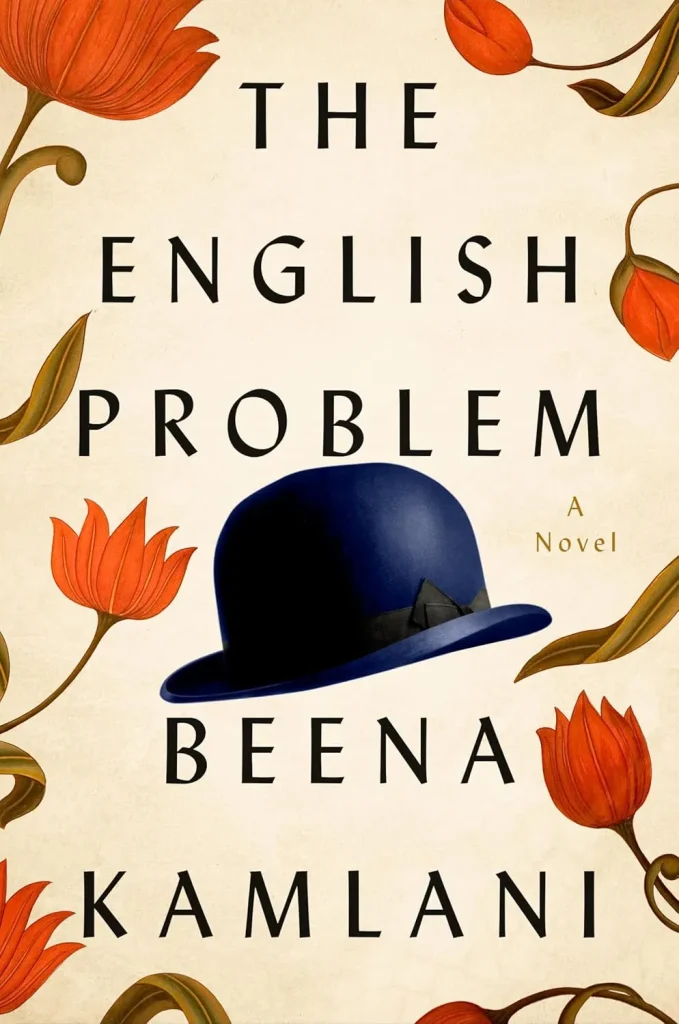
Cover of The English Problem by Beena Kamlani

The English Problem

By Beena Kamlani


A young Indian man is tapped to help his country’s fight for freedom—but his heart engages him in a different war. “Grand, sweeping, mesmerizing . . . a richly detailed, politically profound story of love, of migration, of individuals caught up in the great convulsions of history.”—Joseph O’Neill, PEN/Faulkner Award–winning author of Godwin Shiv Advani is an eighteen-year-old growing up in India. But he is no ordinary young man. Shiv has been personally chosen by Mahatma Gandhi to come to England, learn their laws, and then return home and help drive the British out of India. Before he leaves, his family insists he fulfill his arranged marriage, and he is hastily betrothed to a young woman he hardly knows. He arrives in London and soon discovers a world he is both repelled by and drawn to. Shiv knows his duty: get in, learn the letter of the law, get out. But as anyone who has ever lived in a British colony can tell you, “the English Problem” is multifaceted. The racist colonialism of “the empire on which the sun never sets” seeps into everything—not just landed territories, but territories of the mind: literature, language, religion, sexuality, self-identity. Soon the people Shiv sought to be liberated from will be the people he desperately wants to be a part of. In the end, Shiv must fight not only for his country’s liberation but also his own. Set against the backdrop of the Indian independence movement, with appearances by historical figures such as Virginia and Leonard Woolf and Mahatma Gandhi, The English Problem is so self-assured and ambitious, it is hard to believe it is a debut.

Beena Kamlani in Conversation with Ankush Banerjee

Kamlani's debut novel reimagines an uncle selected by Gandhi as a future leader, tracing his struggle to negotiate belonging in 1920s England. The work examines how colonial education and class ritual shape individual agency and national service.

“Reading is yoga for the brain! Give yourself the permission to get lost in a book. It’s one of the greatest pleasures in life.” – Beena Kamlani

We congratulate editor and writer, Beena Kamlani, on the publication of her acclaimed debut novel, The English Problem. One of our editors, Ankush Banerjee, happened to meet Beena during a reading in Kochi. In this interview, he speaks to her about the book.


AB: Dear Beena, thank you for consenting to do this interview with us. Our compliments on the recent publication of your novel, The English Problem. Your book talk at MyLibrary, Kochi was very thought-provoking. Can you tell our readers a little more about the book – its plot, what it’s about, and your inspirations?

BK: The novel was inspired by the story of an uncle who was selected by Mahatma Gandhi as a future young leader of an independent India, finally freed from British rule. I had heard about him growing up—he qualified as a barrister in England, suffered ill health from a fall, and was brought back to India in the care of a British doctor and nurse. He died while he was still in his thirties. There was little else anyone could tell me about him. But I was intrigued enough to reimagine his life through the lens of life in England for young men like him, who, in the 1920s and thirties, were sent to England for their education and returned home to serve the country.

From the moment Shiv Advani arrives in England, he knows it’s going to be a struggle to find his own place in a society so controlled by ritual and affiliations to class and creed. The English Problem is a deep dive into his world, his effort to find his own place in life, to know what he wants, to serve both his country and himself without compromising either. 

AB: Migration has been one of those staple phenomena that the Indian English novel has explored from various perspectives and lenses. May I know what your intention was while choosing this theme, and secondly, following from this, what do you hope the reader will see or read differently in your work?

BK: I didn’t really set out to center my work around a theme—there were situations that Shiv had to face and work out within himself, and the life of the story is in seeing the many choices that present themselves, the ones he picks, or the ones he is picked by, and how they determine his course of action. Migration is a universal condition—whether it’s a farmer leaving his fields to find work in the city or a young man or woman leaving their country to earn their education in a foreign land. Most people live their adult lives far from where they were born. Every writer brings her own understanding to what it involves, and that’s what makes all these stories so interesting. 

AB: You have been an editor at Penguin for 30+ years. While working on your own manuscript, how did you reconcile your editorial eye and authorial voice? 

BK: You have to resist the urge to edit your work as you’re writing it. They are two different functions. When you write, you let everything crowd the page—thoughts, impressions, sensory details. You don’t pay that much attention to the writing itself because you know you’re going to be editing. I knew this from working on writers’ first or second drafts. I knew it from my own writing, seeing the refining process take place from draft to draft. Sometimes, I edit what I’ve written the previous night the very next morning because I’m impatient to see how it will finally sit on the page and within context. But they are two separate things. The overlap is in the love of words. Both editors and writers love words and mine them for meaning, though they may approach them differently. 

AB: The English Problem explores the Spivakian double-bind that most migrants face: they feel estranged from their native lands, yet are expected to assimilate into the new culture. But such assimilation only intensifies their sense of estrangement from their native culture and the new culture they are trying to assimilate into. According to you, what is preferable – the uncertain double-bind of identity crisis which accompanies migration, or the surety of one’s own identity which comes from ascribing to hyper-nationalist politics we are seeing around the world?

BK: I don’t see “the uncertain double-bind of identity crisis” as a crisis. To grow is to change—and change occurs when we expose ourselves to unfamiliar situations and places. The comfort of the familiar and the discomfort of what we do not know and must learn to navigate are the most ancient stories ever told. A man leaves home…his story begins. It’s Homer’s Odyssey told over and over again. It’s Ram and Sita in the forest, learning how to adapt to their new and strange environment. It’s Shiv, arriving as a stranger in the greatest city in the world and recognising two emotions at once—his sense of intimidation, of being dwarfed by everything he sees, and his need for deep connection. 

AB: There is a lot of advice going around on how to hone one’s writing skills. But we would love to hear from you how you hone your editorial skills, especially when it’s one’s own draft(s) one is working with (some of our readers have been very curious to know)? 

BK: Editing begins with words, as does writing. But when you edit, your antennas are out to sense where there’s repetition, the use of lazy words, too much explanation, an excessively elaborate plot, and the existence of too many characters and subplots. You look for sentences and paragraphs to cut because less is more. Cutting often highlights what is already there. And sometimes, you need more—what is invisible on the page, known only to the author, needs to be in the story for the reader to understand what’s happening. To be honest, that kind of editing is honed through reading. We’re asking all sorts of questions when we read, from matters of plot and characterization to analysing our own responses to what we’re reading. Why is this not working for me, you ask. And your answer will present you with something to watch out for when editing your own work. 

AB: One piece of advice you’d want to give to inspiring writers and editors?

BK: Read. Read as much as you can. Start with fifteen minutes a day and gradually increase it to an hour. Reading is yoga for the brain! Give yourself the permission to get lost in a book. It’s one of the greatest pleasures in life.

The English Problem (Beena Kamlani, The Bombay Circle Press, 2025) can be purchased here

Looking for more Books?

Browse the Bookshelf →

Excerpt: The English Problem

1934 England: Lucy's flamboyant spring attire clashes with Shiv's dull suit on the train to Lewes. Class whispers, revealing deep colonial inheritances.

Pages: 129 – 133

On 28 May, 1934, they boarded the 2:53 p.m. train from Victoria Station to Lewes. Lucy looked stunning. His skin was glowing, the pink and white suit he was wearing was meant to create a stir—only someone like him could carry it off, Shiv thought. The sharp sculptured planes of his face like one of Balthus’s young girls, his expression cool and consciously indifferent, the shoes pointy toed and white, the green of his eyes and the pink of his suit evoking spring’s bounty, his smile detached and engaging at the same time. He had on a cream-coloured panama hat with white trim. His entire get-up, his style, felt Parisian, or Venetian, certainly not English. The oblique admiring looks aimed in Lucy’s direction spoke of his effect on some of the passengers. Stuck to his side, it was attention Shiv felt he could do without. His eyes were red- rimmed from lack of sleep, his pin-striped suit looked staid and dull. Even the small touch of flamboyance he’d  reached for—a yellow tie—failed to perk up his general appearance. How did he seem to them—a lackey, a paid servant of some sort, a rajah for hire? He sat next to Lucy with mounting anxiety. 

The compartment was full of young men in suits and top hats, women in dresses that were calf length or ankle length. Dressed in sensible garb, the women had accessorised with pearls, the flashier ones with diamonds and emeralds, but they all seemed dowdy and fusty compared with Lucy. Some of the women were in high-heeled shoes; others in wellies. “Wellies?” Shiv asked. 

“Yes, they’re the knowing ones. There’s going to be a lot of mud in those fields.” 

“So you wore white!” Shiv said, laughing and shaking his head. 

The animated women kept up a spirited conversation about nannies, cooks, children, horses, housekeepers. The men discussed amenities at their clubs, the dull concert season, new actresses in musicals playing in the West End, and where they would be shooting grouse at the start of the season in August.

Lucy said, “You’re going to hate us all by the end of the day. Even I find it intolerable and I’ve been listening to this stuff with a half-shut ear since I was a child.”

“What do they do?” Shiv asked. 

Lucy laughed. “Nothing. They’re pretty good at that. Some of them collect art; some breed horses. They don’t have any real interests. They meet one another—the men, that is—at their clubs, at shoots, and at the races. At the theatre, they are nodding acquaintances. It’s essential to have eyes you can meet and heads you can nod at across boxes.”

“I find that impossible to believe. Such ruddy specimens of humanity doing nothing! How do they live?”

“It’s largely inherited. Invested heavily—telephones, electricity, diamonds, steel, coal. The Empire. You see why industrialisation of the colonies is so important to this lot. And horses, of course, which is why the races are a huge social event. They do money quite well.Some make it; some blow it. The ones who do well cannily opine on world affairs with an eye on their chequebooks. Service is for Boxing Day.”

“So what do they really care about?”

“Society. To never breach the rules of society, which are unwritten of course, and inherited largely at birth. It’s the sure knowledge of these that allows them to walk into a room with a confident air and to take their place within it. Violate those rules, and you’re out. There: a short course on English society.”

Shiv saw someone who looked like Lady Sophia. Dressed in a crimson cape, crimson court shoes, her neck bubbling with large pearls, waving fingers studded with stones, she came eagerly towards them. “Oh, it’s Polak’s lodger, isn’t it? I thought I recognised you! Fancy meeting you here, dear boy!” Her lips had been smeared thickly with lipstick and it sat like cream on her smile. Shiv got up from his seat, shook hands. “Meet my friend—”

“Oh, Lucy,” she cooed. “Naughty boy, hiding behind the newspaper. I didn’t see you! His mother and I were at school together. I’ve known this boy since he was a babe in his nanny’s arms.”

Lucy cut in, “He’s my guest.” He went back to his newspaper. Lady Sophia blinked several times. “I would never have taken you for an opera fan.”

Shiv said, “It’s my first.”

“Ah, you lucky man,” she purred. “You’re beginning at the top. Mozart. The Marriage of Figaro. It doesn’t get better than that. We are all giddy with excitement—marvellous Mr. Christie, to have pulled off the event of the season in the middle of pastureland! He’s got the best singers in the world to come. Simply extraordinary!”

“So I’ve been told. The danger, of course, being that nothing else will ever come close again.”

“Well, I hope you enjoy it.” She appraised him again, surprise never leaving her face, and then gave him a broad smile, her ivory teeth flecked with bright pink lipstick, her cheeks already a bright tomato red. “Henry Polak was right. Young man, you bright natives will have the run of the colonies after we’re gone. Perfect wogs!” Lucy’s newspaper crackled furiously behind him. He had been paying attention.

Shiv felt a chill run through him. Again. That inevitable comparison, are you wanting or not, are you capable or not, are you one of us or not, can you be trusted to be one of us when we want you to be one of us, and not one of us when we don’t want you to be one of us. He bowed stiffly, not saying a word.

“Tell your mother I insist on meeting Harry.” She turned to Shiv. “It’s her new obsession—a new breed, Bichon something. Quite a charmer, I’ve heard.”

Lucy flicked his newspaper aside. “Frise. Bichon Frise. He’s had a name change yet again—Hector, after Greece. Poor little fellow! Doesn’t know if he’s Greek or  English now.”

She laughed. “Funny boy! I see you’re just as witty as ever! Well, cheerio! See you at the concert,” she said, moving back to her seat.

They sat in silence as bright green countryside shot past the windows. “Cat got your tongue?” Lucy, his face bright pink with rage, lowered the newspaper and glared at him.

“What?”

“She called you ‘lodger’—did that just sail past you? She called you a ‘perfect wog.’”

Shiv shrugged. “Yes, I’ve been called those names before.”Lucy shook his head. “I wish you’d fight back. You take it. It’s bloody infuriating. You make me want to be a monster for you.” He put his newspaper down. “The French have a term for it—avaler les couleuvres—to swallow grass snakes.”

“What?”

“Yes, when insults are so deep, one’s stunned into silence. Was that it?”

“You would have wanted me to make a scene? Here?” He puzzled

over Lucy’s words.

“Yes, here,” Lucy said, going back to his newspaper.

Bit it off, he wanted to tell him. Bit off that tongue, didn’t I, when I was told my opinion wasn’t worth a penny. Mr. Polak’s enraged face swam into his consciousness—lie low, don’t question, don’t offer your opinion. I bit it off to make it. Here—his eyes swept the green fields of early summer. Lucy would never have understood.

Excerpted with permission from The English Problem by Beena Kamlani published by The Bombay Circle Press 2026.

Looking for more Books?

Browse the Bookshelf →
Back to Issue

Support Our Work

If you enjoy our content, consider supporting us.

Support Us

We are an unfunded, independent feminist publication. We need your support to continue our work.