
Those Bombay Sundays
Borrowed Bombay Sundays: black and white films, communal cheers, and a father's…
Read more →Poetic genesis, from personal grief to spiritual reckoning, defines an evolving creative process that seeks authentic expression amidst societal pressures and artistic convention.

Menka Shivdasani is a Mumbai-based writer. Her first book of poems, Nirvana at Ten Rupees,was published by Adil Jussawalla for XAL-Praxis in 1990, and described by the critic BruceKing as ‘one of the best first books of poetry to appear during the 1990s’ (Modern Indian Poetryin English: Revised Edition, OUP). Her second collection, Stet, first appeared in 2001, and herthird, Safe House, was published in 2015 by Paperwall Media & Publishing Pvt Ltd. Her mostrecent collection is Frazil (1980 – 2017), also a Paperwall publication. In 2019, the bookreceived a certificate for “excellent contribution to literature” at the Rabindranath TagoreLiterary Prize awards. In the same year, she received the Ethos Literary Award for Poetry. In2020, she received the inaugural WE Eunice de Souza Award.Menka is co-translator of Freedom and Fissures, an anthology of Sindhi Partition poetry, (SahityaAkademi, 1998), and editor of If the Roof Leaks, Let it Leak, an anthology of women's writing by Soundand Picture Archives for Research on Women (SPARROW). She has edited two online anthologies ofcontemporary Indian poetry for the American ezine www.bigbridge.org.Menka's poems have appeared in several publications, both in India and elsewhere. She is representedin Indian Literature in English: An Anthology, a textbook of the University of Mumbai. She has presentedher work several times on radio and television in India and at various Indian and international events.Menka is Mumbai coordinator for the global movement, 100 Thousand Poets for Change, for which shehas been organising an annual poetry festival since 2012. In 1986, she played a key role in founding thePoetry Circle in Mumbai.Menka’s four-decade long-career as a journalist and columnist includes a stint with the South ChinaMorning Post in Hong Kong, columns for Hindu Business Line and The Pioneer, articles in The Times ofIndia and Readers’ Digest, and 19 books, three of which were released by the then Prime Minister, AtalBihari Vajpayee. She has also done extensive work in the field of Sindhi literature.
Part – I
K.V. Raghupathi: Dear Ms. Menka, I have all your collections, I have all my praise for your poetic achievement. You presented me with the first two collections when you came as an invited poet to a National Seminar on Indian Women Poetry in English that was held by me at Central University of Tamil Nadu, Thiruvarru in 2013. It was a great experience for me, and I cherish it even today. I hope it was a memorable experience for you too as you shared your presence with other distinguished women poets at that time. Perhaps I can begin at the beginning. Do you remember the circumstances under which you began to write?
Menka: I recall that experience with pleasure; it was a truly important event. I think it was the first time that anyone had recognised, on a national level, that women poets had begun to make a huge difference to Indian English poetry. I was especially touched and gratified that you wrote a paper on my work for the volume that you subsequently brought out.
Now, to your question.
I was a child of eight when I started writing my first verses. They did have rhyme and meter, but I would not call them poems since they did not have the depth of experience. I was greatly encouraged by a young freelance journalist, Rajika Kirpalani, who asked to see my work, and then convinced a newspaper editor to publish it. She told them that it was vital to encourage children, and this is something that I have kept in mind ever since.
I continued writing freely through my schooldays, and through college; if I did not have access to pen and paper, I would scribble lines on the palm of my hand and the backs of bus tickets! I could write anywhere and everywhere. I remember sitting at the back of the class during a Hindi lecture in school, and when the teacher realized I was writing a poem, she insisted on reading it; since she felt she had to reprimand me for not paying attention to her lesson, she said, “If you must write in my class, at least write your poem in Hindi!”
As I grew older, however, poems took longer to incubate, and the themes sometimes surprised me. I found that two or three different experiences would merge, and a poem would turn up at the most unexpected moment. An early poem of mine, Diving Board, written when I was about 15, came about as a result of two people I knew who met with untimely deaths. One was my schoolteacher who was in her late 30s, the other was an older man who jumped from his third floor balcony. The poem emerged in the form of someone who jumped into a pool and came up sometimes to ‘breathe our memories’.
I remember I was in the middle of hemming a dress when I suddenly set it aside to write this poem. Another time, in my late 20s, I was in the midst of a noisy magazine office where I was working, and out of nowhere, Diary of a Mad Housewife happened. I was, in fact, single at the time!
K.V. Raghupathi: I want to start with your first collection, Nirvana at Ten Rupees published in 1990 by a distinguished poet, Adil Jussawalla for XAL-PRAXIS in Bombay (now Mumbai). Poems in this collection have already been published in various journals and some of them were featured on All India Radio. The collection begins with the first poem, “The Atheist’s Confessions”, was much anthologized. You begin the poem, “At thirteen I believed in rose petals” and go on narrating the experience in the first person using simple diction that is very appealing. Who is this ‘I’ in the poem? Was the experience yours? The poem is mainly centered on the subjective experience, I believe, and it presents the growth of religious belief from being theist to atheist to agnostic. Do you now really hold to this experience even today? What is your belief as far as religion is concerned? Could you please throw some light on it?
Menka: When I was a child, my family used to make an annual visit to a particular temple in Bombay. I remember it as being crowded and noisy. I also noticed that the priest was very welcoming towards those who could make large donations but quite hostile to others with smaller offerings. On one of these visits, my father’s wallet was stolen, and it occurred to me that this should not have happened in a place that was meant to be holy.
So yes, the poem did stem from personal experience. I was concerned about rituals that involved what I saw as wastage of food; how could people walk past hungry children outside a temple and then ‘feed’ milk to an idol only to have it go down a drain? How could so much rice and flour be used while praying while so many people were starving?
As I grew older, I recognized that there was higher energy that some people might call God. But I also knew that my path to this greater power did not involve external rituals. The central stillness is something that must be nurtured from within. There were certain sayings that also resonated with me.
An American clergyman, Harry Emerson Fosdick, had once said: “God is not a cosmic bellboy for whom we can press a button to get things.” And especially in today’s times, I remember Jonathon Swift’s statement: “We have just enough religion to make us hate, but not enough to make us love one another.”
Today I spell God with an extra ‘o’. Long ago, I stopped believing in God and started believing in the goodness instead.
K.V. Raghupathi: In a complementary poem, “Somewhere on the Streets?” you express your frustration and longing for the real God: “The real God is still somewhere on the streets.” Have you found the real God? Or have you still ended in frustration?
Menka: At the time that I wrote this poem, I believed that while there might be a God – really, who knows? – I had yet to find him, and more importantly, he still had to find me. It was the arrogance of youth at work. I’m not looking for God anymore, actively or otherwise. And I’ve realized that sometimes it’s when you stop looking for something that it will finally turn up at the most unexpected moment.
So hopefully, someday I will indeed find God, if He or She exists, but meanwhile, I would rather believe in the adage, ‘Work is worship’ and get on with my various commitments.
K.V. Raghupathi. The poem, “Crystal” ends with the line, “Today only another diamond/can cut me”. What is this another diamond symbolically represented in the poem? Several layers of meaning can be elicited from this. However, I would like to hear from you as a poet. Are you expecting yet another hard experience that can subject you to undergo to change your perception of life?
Menka: This is another of my very early poems, at age 16. The ‘other diamond’ would suggest someone who would be equal in strength and clarity; no one else could have the power to hurt me. The world is full of people who are weak in mind and heart but who believe they are superior to those they try to destroy, but I could never give them this power.
K.V. Raghupathi. In another poem, “Schoolgirl No More” you are aspiring for freedom. In what sense would you like to represent this freedom? Freedom is one aspect of poetry written by women in India. Are you talking of this freedom in a limited sense or a broader sense? Where do you locate yourself in-between freedom from tradition and freedom for the spirit? Are you confused in representing the anguish?
Menka : How can freedom ever be limited? To me, it implies being the kind of person you want to be and doing the things that matter to you without, as far as possible, hurting anyone else. It means allowing the spirit to find its space and balance even in the midst of tradition. It means finding your voice and making it heard whenever necessary. I think I have succeeded in finding this balance, but it has taken a long time.
K.V. Raghupathi: The poem, “Cigarette” sounded philosophical when it summed up at the end, “someday even you/must drop into the tray./Then it won’t matter anymore.” At what point of time in your life you realized this truth?
Menka: This is again one of the poems I wrote in my teens; I must have been about 17. I remember showing it to Nissim Ezekiel when I was a very young girl.
K.V. Raghupathi. In another gender-specific poem, “This Game you Play” you have beautifully and symbolically presented how a woman undergoes the kicks in the hands of a man in the game football. The word ‘kick’ obviously speaks volumes of the pain and humiliation that a woman faces in the patriarchal society. By presenting this pain do you want to change and reverse the roles in life or just want to be content with “swallow my past like a rabbit” (“Ramayana Revisited”)?
Menka: I do not think one needs to reverse the roles – what purpose will it serve to kick others needlessly? Yes, if you are hurt in any way, you need to hit back – and harder. An ideal situation, of course, would be mutual respect and consideration – accepting that men and women are equal and play complementary roles.
You may swallow your past like a rabbit, but as the poem points out, it will show; it can never be ignored.
K.V. Raghupathi. Why did you name the first collection Nirvana at Ten Rupees? Nirvana is a beautiful word in the philosophy of Buddhism which stands for final dissolution, which again means there is no return to earth after attaining this state. In other words, it also represents freedom, but freedom in the absolute sense. Were you aware of this connotation at the time of offering title to this first collection? What you intend to convey to the readers through this title?
Menka: Since Nirvana cannot be bought for ten – or ten million – rupees, certainly, the reference is to a false sense of freedom. The phrase comes from the poem, ‘Lover, Loser, Addict’, in the book, uses drug addiction as its core image. As a journalist, I had met several drug addicts and got close to quite a few of them. For them, ‘nirvana’ – or at least their version of it – could be obtained for ten rupees; the problem was it quickly faded away.
In retrospect, I should have called the book ‘Stet’, as Adil Jussawalla had suggested, and I made up for this with my next book.
K.V. Raghupathi: ‘Stet’ means ‘let it stand’. You have named your second collection as Stet. Do you like the status quo in human relations since nothing can be altered in the given social life that has been handed down to us for centuries? Are you meekly accepting any self-defeat? Why this attitude of compromise?
Menka: There is no question of accepting self-defeat or compromising on the important things. The reference is not to the status quo in human relations, but to recognizing that sometimes the things one wishes to change are actually right for you. This discovery comes from experience and reflection.
The central image here is that of a newspaper and the world it represents; it is the only poem that survived the two years I spent in my first job as a sub-editor. There were many things about the work that made me feel diminished, but over time, I realized that there were other aspects that enriched me in multiple ways.
K.V. Raghupathi. Poems included in this collection are not as intensely subjective as the poems found in the first collection, Nirvana at Ten Rupees. I find this gradual shift in being less confessional. Why is this so? Was it deliberate or reconciliation? I may be wrong in my reading. I need more clarity on this.
Menka: Since ‘Stet’ was published about a decade after my first book, I was older, and hopefully, more mature. I believe that as one gets older, one finds the time and space to look outward as well as inward; there is an expansion of the consciousness. Much later in life, one moves inwards again.
Certainly, the external world did make its presence felt in my first book (as in the poem Why Rabbits Never Sleep) but by the time ‘Stet’ came out, I was more willing to meet the world and recognize that there were issues beyond my own immediate concerns.
K.V. Raghupathi: The poem, “A Letter to Veena” has impressed me deeply for its striking imagery. Why did you use crow as a symbol? You could have used some other bird to represent your feelings. Is there anything special about the crow that has appealed to you quickly which you have not found the same in any other bird?
Menka: Poems turn up in strange and unexpected ways, and the fact is, there is a very mundane reason why a crow made its way into this one. I wrote it on my journey home after attending a poetry reading at the Horniman Circle Garden in Mumbai. Throughout the programme, a crow on a nearby tree kept cawing raucously and at least for me, this had a truly disruptive effect.
When I began writing this poem, the crow was top of mind. I did not consciously set out to speak about the riots in Mumbai – sometimes the theme of a poem crystallises as the words form on the page. But the riots were a dark phase, an evil moment in a city that I loved, and the immediate perception that one can have of a crow involves feasting on carcasses. Perhaps it is wrong to attribute characteristics to living creatures just because they might suit your immediate purpose.
But the creative process has no scruples, and it follows its own logic. I can say this in hindsight; at the time that I was writing the poem, none of this was happening consciously.
K.V. Raghupathi. You have ended the poem, “The Head (for Gopi)” with the line, “What does the dictionary say/about death?” It is true the dictionary can hardly say anything about death. Contrarily, did you realize the essence of life? How smooth your life is/has been? Excuse me for intruding into your private domain.
Menka: Nissim Ezekiel once told me that nothing that a poet wrote could ever be private because we were all talking of the same human condition – of love, and pain, fear and happiness, and all the other emotions that all of us encounter as we go through life.
This poem was my response to the untimely death of Gopi Bhaskaran, who was my first News Editor at the Mid-Day newspaper when I was 21. He knew he did not have long, and had told me so; still, his passing came as a shock. He was the one who taught me the logistics of bringing out a newspaper under daily deadline pressure, particularly after he realised that I would need to step up in the role once he was gone.
K.V. Raghupathi: “Peaks and Troughs” presents the two contrasting worlds, the empirical and the ethereal. You sound practical and at the same time romantic. Can you compromise these two worlds in your living?
Menka: I think we all must compromise and find a balance between the practical and the romantic, because that is how life is. This poem was written on what seemed to be an ethereal journey, travelling between Sikkim and Darjeeling, where the discomfort of the bus ride was more than made up by the beauty of the surroundings. It was also a poem where I was adjusting to a new and beautiful phase of my life where I was now no longer a single girl. The reference to the ‘oak tree’ meeting ‘the pine’ was a metaphor for this, and it came from the physical experience of seeing these two types of trees meet each other at one point on the journey.
When we began Poetry Circle, it was a dream but turning it into reality involved – as one of our co-founders Nitin Mukadam pointed out – ensuring that letterheads and logos were in place so that people would take us seriously. I do not think we can ever escape the mundane facts of life; we just have to deal with them in as efficient a way as possible so that we can move on to the important and lasting things.
K.V. Raghupathi: “Safe House” is altogether different. Several poems carry titles drawn from nature. Yet anguish continues to be present. This collection was published in 2015. You are in pain and loss. A sense of maturity in terms of age you must have felt. Is there any change in your attitude and perceptions towards life?
Menka: I suppose the intensity and angst have quietened down a bit, and I’ve realised that things pass; some things have happened for the best, and some others were never meant to be. One should live with the choices one has made.
K.V. Raghupathi. One striking quality I have discovered in your poetry is the use of powerful imagery. Sometimes it turns to surrealistic. This has heightened the quality of your poetry. Your poetry minus this quality becomes sapless. What I have noticed is that you have powerfully conveyed your sentiments through the use of imagery if I am right. Have you acquired this quality by reading any poets or do you use it without any volition on your part?
Menka: I suppose it comes naturally. I have read many poets in my life and been moved by their work, but the important thing while writing poetry is to find your own voice. I do not make any conscious effort to seek this imagery; these linkages somehow happen and I have no idea from where they arrive.
K.V. Raghupathi: In many poems of your collections, you seem to be confessional and subjective. How different you are from other women poets writing similarly? Where in your poetry do you say you sound to be distinct?
Menka: Sorry, I cannot answer this. I leave that to the critics to analyse!
Part – II
K.V. Raghupathi: Let me turn to some generic questions. Do you have a writing routine? I mean, do you have a writing schedule?
Menka: I have heard of people following a routine while writing and am full of admiration for those who can do this; I am told there are many benefits. For me, the writing happens unexpectedly, while reading a book, writing an article that has nothing to do with poetry, cooking… But I have realised that silence and solitude are key contributors to a poem, and if I spend time alone, there is a better chance that I will hear the inner whisper that might finally lead to a poem.
K.V. Raghupathi: What is your earliest memory of poetry?
Menka: Writing a poem about a pet dog whom I called Terri, when I was eight years old. This was a pure act of imagination as I did not own any dogs until decades later when I became a mother. My poem about Terri, and a few others along the way, were published in a newspaper.
K.V. Raghupathi: What has turned you to writing poetry? Would you like to talk about your early period? What shaped your work and contributed to your development as a poet?
Menka: I do not know why I turned to write poetry – perhaps it was the one thing that could be done without having to spend too much money! Art required materials, a music required an instrument and classes, and poetry only involved paper and pencil. At the age of 15, I fell ill and spent much time in bed; I could write while lying down.
I was very fortunate to have a great deal of support during my early period and I do believe that such encouragement can work wonders for children. It is one of the reasons that I have a children’s event as an essential part of the 100 Thousand Poets for Change festival that I have been running for a decade now. When I was a child, Rajika Kirpalani, a freelance journalist, asked to see my work when I was eight and then requested my father for permission to get it published; unfortunately, she was only 26 when she died, but she ensured that five or six of my poems appeared in a newspaper. I also received support from schoolteachers – practical advice such as not becoming dependent on a particular golden fountain pen to write a poem; a fake reprimand with a suppressed smile when my Hindi teacher realized I was writing a poem (in English!) in her class; requests to write for the school magazine, including a poem during the centenary year of the school…
When I passed out of school, Mrs. Rati Dady Wadia, my English teacher with whom I conduct the 100 Thousand Poets for Change children’s poetry event today, told her good friends, Prof. Govind, and Roshan Shahani, that I would be coming to their college. Prof. Govind Shahani asked that I connect with him because at the age of 16, I would not be able to distinguish a good poem from a bad one. He spent many hours in the college staff room introducing me to good poetry.
Of course, there was my good fortune in meeting Nissim Ezekiel, clutching a letter of introduction from Patanjali Sethi, the Training Officer of The Times of India. Nissim taught me a great deal about the art and the craft of writing poetry, introduced me to other brilliant poets who were forging a new language; he also provided platforms for my work, including literary
magazines, radio, and television.
K.V. Raghupathi: I wonder if you could talk more about your actual habits in writing verse.
Menka: Writing poetry is not a ‘habitual’ activity for me. While I could write without thinking once upon a time, I now feel blessed if a poem arrives. This is why I am not a prolific poet; I see people who write at the drop of a hat (or pen) and I wonder how they do it. I’m sure if I tried, I could write verses that had rhyme and rhythm – I have enough experience and ‘muscle memory’ to do this – but there would be a good chance that the literary spark would be missing and the poem, in my eyes, would be mediocre. (Kamala Das also told me something along these lines in an interview many years ago.)
I would rather wait till a poem is ready to emerge. I might sometimes help it along, but not always. Once, when I got a little panicky after a long silence of two years, I thought I was finished, so I wrote a ‘blank’ line that could go anywhere – “One day he said”. In 15 minutes, I had a complete poem that I thought might merit a place in my next collection. This is my poem, Interlude.
I used to write short stories at one time, and the one that is in Stet, The Price of Potatoes, happened when I sat in complete silence with a blank mind alone at home in front of my computer and waited to see what would happen. The whole thing was written all at once, without a break.
K.V. Raghupathi: How did you know that in your life writing would set off?
Menka: It was the thing I knew how to do from my earliest days. There was never any doubt about it. Unfortunately, I made the mistake of thinking that because I wanted to write, journalism would be the career for me, and my first articles appeared when I was about 17. It took me many years to recognize that journalism and poetry required completely different disciplines, and mindsets. Journalism pushes you outwards towards people, and poetry takes you inward, away from them.
On the other hand, journalism allows you to understand and appreciate other people’s life experiences, and in a sense broadens your horizons. When I was with Afternoon Despatch and Courier, I edited a supplement on women’s issues. It definitely helped broaden my horizons. Some of it, I think, is reflected in my poems.
K.V. Raghupathi: Have you been influenced by English literature?
Menka: Well, I did my M.A. in English Literature and was keen on doing a Ph.D. Nissim, who was in fact a Ph.D. guide, stopped me. He said it would destroy my creative writing. He told me that my goal in life should just be to continue to write good poetry. I never did that Ph.D. though I contemplated it several times over the years.
K.V. Raghupathi: When you’re writing, do you think at all about who will be reading you?
Menka: Not at all. I do not even think about this once a poem is published. The work exists for itself. Though if it reaches out even to one reader, and makes a true connection, I find it immensely gratifying.
K.V. Raghupathi: Are you a good poet or a good freelancer? Which one would you like to be first?
Menka: I do not know what you mean by this question. When you say, ‘good freelancer’, do you mean as a journalist? I have many professional commitments because they help to pay the bills. I would like to be good at both. For me, being a good poet, however, is paramount. I remember an acquaintance once telling me, when I was writing weekly columns for a newspaper about the television industry, “Why do you write these things? It is the poems that people will remember you by.” He was right; I do hope that there are at least one or two poems people might remember me by.
K.V. Raghupathi: Nearly three decades have passed since you brought out your first collection Nirvana at Ten Rupees in 1990. Three decades or even more than that since you said that you started writing poetry while you were a girl is not a small period in one’s poetic career. When you look back at your long period of writing, what is your reaction? Are you gratified with your writing, publishing, and recognition?
Menka: In a career of about four decades, I have published fewer books than many other poets I know. I was never in a hurry to publish, not even when I was a young girl. Nissim Ezekiel used to ask me about it and I told him I wasn’t ready. He said, “People write for two years and think they are ready for a book. I have been reading your poems for ten years and you don’t think you are ready?” So, when I finally told him that I was ready, he clapped!
To me what has mattered is being recognised by people whose opinion I value. I may never have been published by the ‘big’ publishing houses – though Dom Moraes did want to bring out my work through one such publisher.
What mattered to me is that someone like Adil Jussawalla stood by my poetry and published it; someone of the stature of Jayanta Mahapatra reviewed it and said it could have made a mark anywhere in the world; a review in a prestigious literary magazine by someone I did not know at all at the time had the title, ‘Important New Voice’; Bruce King wrote to me out of the blue saying that he had come across my work somewhere and asked why I did not have a thicker book to my name – and then said all those marvellous things in his book – these are the things that have been important to me. I have had the highest praise, including Dom Moraes calling me the “most talented female poet in the country” in a newspaper – and I have been bitterly criticized in an anonymous review.
I learned very early that one must never let either praise or criticism affect you; what is most important is your own ability to look at a poem you have written and feel that it has met at least some of your own standards. I have never hankered for recognition because I believe that a good poem will find its readers. I have seen people bending over backwards to gain favour especially from international writers and could never imagine doing it myself.
K.V. Raghupathi: Were there any poets who had read your poetry in the years of the beginning of your writing poetry? How did their comments/observations help you shape the muse in you? Any influences on you?
Menka: I have already spoken of Nissim. Dom Moraes read my work and introduced me to the poet Christopher Levenson; there were many others – including Imtiaz Dharker, Jayanta Mahapatra, Keki Daruwalla, Adil Jussawalla, Arvind Krishna Mehrotra, Gieve Patel, K. Satchidanandan, Arun Kolatkar… I learned a great deal from each of them, in different ways, sometimes through conversations, and at other times, simply by reading their poetry.
K.V. Raghupahi: Do you feel comfortable in any milieu—at home in any situation? Has there ever been a time when you felt uncomfortable—that you couldn’t suss out the situation?
Menka: I am never comfortable in crowds and prefer to be by myself. As a young girl I could go for weeks not speaking with anyone and being perfectly at ease with that. I no longer have this luxury, but if I do feel the need to disappear for a while, there is more than enough space in my relationships to allow that to happen.
K.V. Raghupathi: Can I ask you if you have any other plans to bring out your new collection?
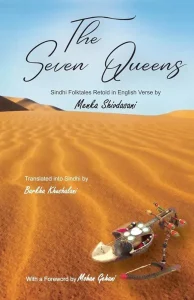
Menka: Hopefully in the next year or two I will be able to do so. I also want to work with Sindhi folk tales but that will involve a great deal of research before I can do anything meaningful with it.
K.V. Raghupathi: It is a very general question, but I wonder if you could advise a young poet about how he/she might cultivate to improve his/her art.
Menka: In 2012, I gave a talk at a college literary festival. I suggested they read a marvelous poem by Wendell Berry, How to be a Poet (to remind myself).
I also shared my own principles, and this is what I said:
If I were to summarise some principles of writing good poetry, this is what they would be:
1) If you want to write good poetry, first read good poetry
2) Pay attention to craft and to what may seem like little details.
3) Be willing to revise, as many times as necessary.
4) Let your work mature before you allow it to be published.
5) Learn to value silence, so that you can hear the sound of your inner voice. Then stay faithful to it, and true to yourself.
K.V. Raghupathi: Thank you Ms. Menka for talking to me and sharing your wonderful
experiences as a poet with the readers. Namasthe!
Menka: Thank you Namasthe!
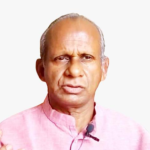
K.V. Raghupathi holds a Ph.D. in English Literature, writes in English, and lives at Tirupati. Poet, novelist, short story writer, and critic, he has been widely anthologized and published. Published thirty books that include twelve poetry collections, two novels, and two short story collections besides eight edited critical works. His poetry collections include Desert Blooms (1987), Echoes Silent (1988), The Images of a Growing Dying City (1989), Small reflections (2000), Samarpana (2006), Voice of the Valley (2006, 2014), Wisdom of the Peepal Tree (2006, 2014) Dispersed Symphonies (2010), Orphan and Other Poems (2010), Between Me and the Babe (2014), On and Beyond the Surface (2018), and The Mountain is Calling… (2018). His poetry is usually marked with rich and dense philosophy, mystical/transcendental thoughts,romantic elements, and imagery comprising similes, metaphors, personifications, apostrophe, irony, climax, anti-climax, and full of rhetoric and symbols. His two novels are The Invalid (2012) and The Disappointed (2014); his short fiction includes: The Untouchable Piglet (2015) and A Gay and a Straight Woman (2017). His poems and short stories, besides thought-provoking and stimulating scholarly papers, have appeared in various newspapers like The Hindu, The Statesman, Print and online journals. He taught at three different universities, S.V. University, Tirupati (1997-2007), Yogi Vemana University, Kadapa (2007-2011), and the Central University of Tamil Nadu, Thiruvarur (2011-2019). His other passions include classical Karnatic Music and Yoga. As a Yoga sadhaka in the classical tradition, he has published over thirty articles and four books on Yoga besides delivered eighty-six discourses on his Yoga channel. Hi thoughts on Yoga and Yogic life are most radical, unconventional, and deeply insightful. He is a recipient of several national awards for his poetry, creative wring, and Yoga.