
From
Then What Happened?
Spreading the Joys of Reading: Reflections on the Development of Indian Children’s Literature
Insights from Parag, An Initiative of Tata Trusts
Over the last two decades, children’s literature in India has evolved in remarkable ways, and sector-building initiatives like Tata Trusts’ Parag have been central to this journey. This article offers a brief overview of Parag’s ethos in strengthening spaces for joyful reading.
Explore the Usawa Bookshelf
Discover the books that shape our times
A great deal of an organization’s vision is reflected in the name it chooses for itself. Parag draws inspiration from two evocative sources. The first is the Sanskrit and Hindi word for pollen grains. Humble, almost invisible, yet indispensable to growth and regeneration. This metaphor mirrors Parag’s role as an “ecosystem enabler,” quietly but vitally nurturing the field of children’s literature. The second inspiration is more nostalgic: Parag, India’s first Hindi children’s magazine, published by the Times Group in the 1960s. Edited by stalwarts of Hindi literature, it enjoyed a decade of beloved readership and remains a cultural touchstone. Together, these images capture, for me, both the organic and historical dimensions of Parag’s mission.
Ninety-nine questions and all of them dreams: Parag’s goals
Books matter to children, first and simply, because a good story is a pleasure. Reading for pleasure becomes a habit when it is chosen freely and without coercion and undue scrutiny. Whether they manage to read or not, it is important for children to be surrounded by a wide variety of literature that might interest them. Reading shapes children in ways that are difficult to quantify, but impossible to ignore. Research consistently shows that reading improves language, literacy, and learning, it builds self-confidence and empathy and that it can counterbalance the structural disadvantages of poverty in ways that many other interventions cannot. All of this depends on a prior condition of books existing in a child’s vicinity, of them being accessible, and of them being worth reading.
In India, this pre-condition is far from guaranteed. According to a study by Tata Trusts, there is roughly one book for every eleven children, compared to at least five per child in high income countries. In this context of scarcity, tricky questions raise their heads. Do we prioritize quantity or quality? Which of India’s tens of official languages, its thousands of dialects, should the books be published in? Whose childhood gets represented, and whose remain, as they have for so long, invisible? When most children cannot afford books, how do books reach them at all?
Catalyst, not Creator: Supporting Creative and Diverse Publishing
One of Parag’s earliest decisions was to not create books itself. It chose the less visible role of acting as a catalyst, the underlying springboard for a broader ecosystem. The goal was to encourage existing and emerging publishers to take creative leaps in children’s publishing, to publish bravely, and in doing so, to expand the field itself. Over the years, Parag has partnered with publishers who share its commitment to high-quality material, enabling wider access to books, and a dedication to publishing content in multiple Indian languages. Going back to the beginnings, in 2005, this was Parag’s first call-out:
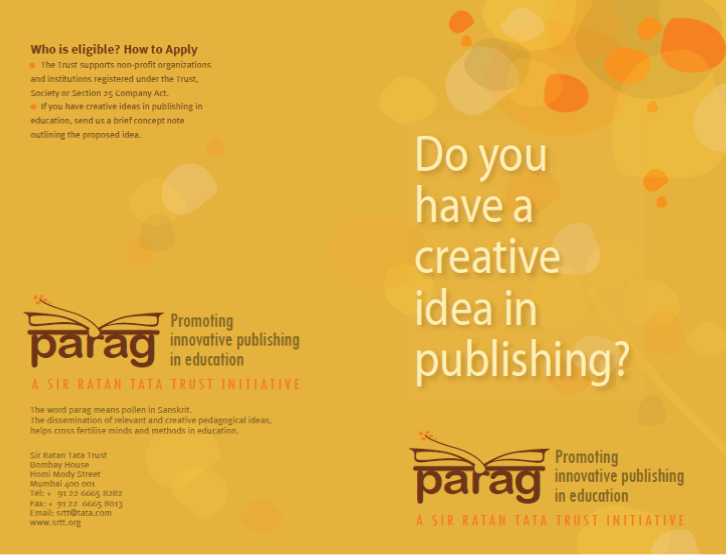
In supporting creative publishing for children, Parag’s philosophy translates in multiple ways – finding partners who share Parag’s vision, building publisher and creator capacity, and most importantly, to assuage publishers’ concerns of cost versus quality decisions in innovative, diverse books. Actively resisting to settle with “poor” books for “poor” children, Parag extends financial support to reduce publishers’ input costs, which in turn bring down book prices without requiring a corresponding reduction in quality. Authors, illustrators and translators are paid respectfully and attributed properly, in recognition that without their critical contributions, high-quality books would be a difficult goal.
Language has been central to this work. A child who reads in her own tongue finds her world reflected. She also finds other worlds more accessible in a language that is her own.
Language has been central to this work. A child who reads in her own tongue finds her world reflected. She also finds other worlds more accessible in a language that is her own. Over the years, Parag has partnered with publishers to create books in 17 Indian languages. This includes not just majority regional languages like Kannada, Gujarati and Marathi, but also other tribal and minority languages: Bhili, Mundari, Pawari, Kora, Santhali and others – languages where written material has long been sparse. Parag’s book development work over the last two decades supported innovations in themes, genres, formats and languages.
You are in your books: Representing the Indian child
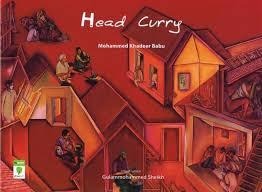
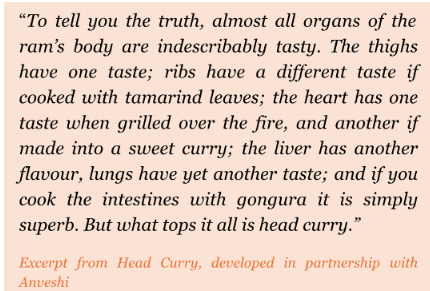
This is an excerpt from the book Head Curry / Sir ka Salan, a story by author Mohammed Khadir recalling a childhood memory of cooking a Sunday lunch — a curry made from a ram’s head — deeply rooted in his family and region.
I remember my slight surprise mixed with discomfort when I first encountered this story. I found myself pausing at its uninhibited description, wondering what children might feel reading it, and how differently they might respond depending on their own contexts and experiences.
Curiosity led me further, and I discovered that this book was part of a 13-book series by Anveshi Research Centre for Women’s Studies under the Different Tales project. The series was supported by Parag Initiative and aimed at bringing stories from the lives of children who rarely found space in mainstream children’s literature.
What struck me most was not just the content, but what it revealed about a certain emerging imagination within children's publishing: stories written not as prescriptions of childhood, but as lived, textured experiences.
What struck me most was not just the content, but what it revealed about a certain emerging imagination within children’s publishing: stories written not as prescriptions of childhood, but as lived, textured experiences. Stories that focused on detail, sensory memory, and the quiet magic embedded in different ways of growing up.
For a detailed review of this book: https://www.eklavya.in/pdfs/Sandarbh/Sandarbh_121/01-05_Reading_Head_Curry_and_Thinking_Diversity.pdf
This was not an isolated example. It reflected a wider pattern within many of the publishing experiments emerging at the time. These books were often located at the edges of mainstream children’s literature: in regional contexts, in unusual narrative forms, and in stories that did not always conform to dominant ideas of what children’s books “should” look like or contain.
What connected these efforts was not a single aesthetic or theme, but a shared openness to risk — an openness to expanding the idea of whose stories get told, and how they are told.
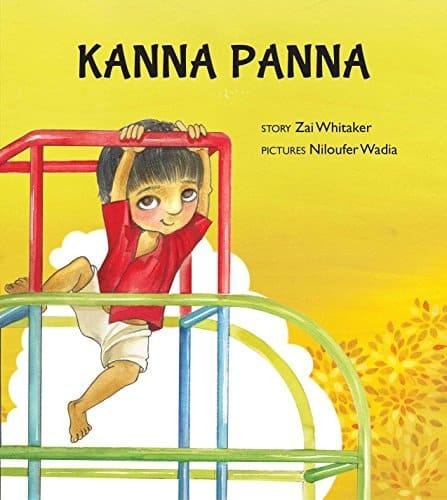
In the books that it commissions and supports, Parag attempts to deliberately centre the voices and experiences that have been kept out. A set of books commissioned through Tulika Publishers – Kanna Panna, Wings to Play, Catch that Cat – placed children with disabilities at their heart, without making disability a moral lesson, or a tragedy. People and Wildlife bring stories about some unexpected special bonds with wildlife. Geet Ka Kamal moves through Bundelkhandi lives, Edi Shikari speaks of a crab-hunting family in rural Karnataka. Payal Kho Gayi and Ek Shehar, Ek Pahad, Ek Mohalla, both written by children themselves, capture what it means to grow up in urban bastis. Lightning is a big book about the glorious tigress of Ranthambore.
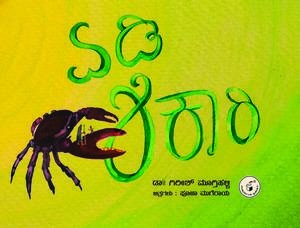
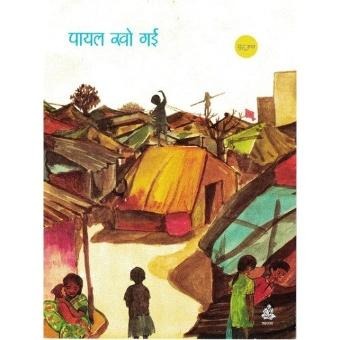
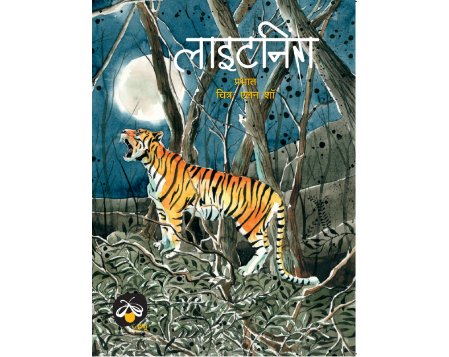
Under the ‘Different Tales’ project in partnership with Anveshi, 13 stories focused on bringing out stories from marginalized cultures in regional languages for young adults. In another celebrated partnership with Avehi-Abacus, three fiction titles (Sea in a Bucket, Who Will Teach Emperor Akbar, Sameer’s House) were developed as part of teaching-learning materials.
In this sense, enabling publishers has not been simply about funding or supporting books. It has been an attempt to create the conditions in which publishers can take creative risks. What also becomes visible here is a particular approach to sector building – working across publishers, languages, and ideas rather than shaping a single institutional catalogue. This is evident in the fact that over the last two decades, Parag has supported 50+ publishers in developing over 1,100 books across 17 Indian languages, experimenting with forms, genres and themes.
Reaching children: Building the ecosystems, not just the books
Strengthening publishing alone could not address deeper structural gaps in the field. While books and publishers existed, there were still very few spaces for sustained professional development, peer learning, and ecosystem-wide engagement.
It was within this context that Parag began experimenting with new models for sector capacity building.
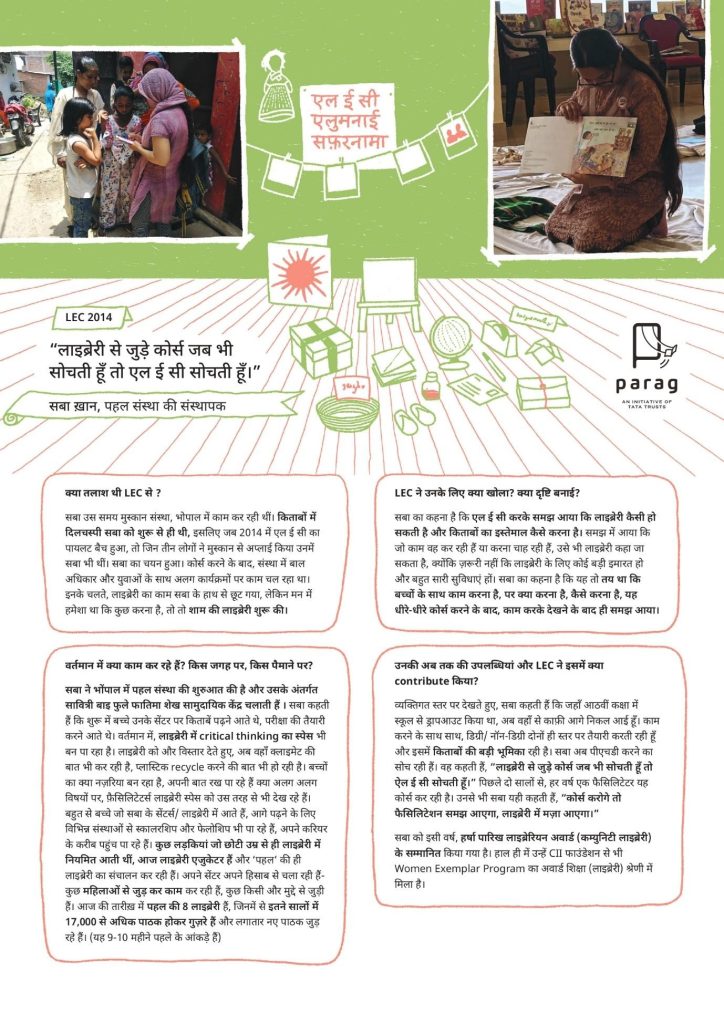
One important expression of this shift was the introduction of the term “library educator” and the piloting of the Library Educators Course (LEC) in 2013. While practices such as cataloguing and classification had long existed in library training, LEC introduced a different lens of seeing libraries as transformative spaces, and librarians as educators capable of shaping meaningful reading experiences for children. Over time, other organisations also began developing similar programmes, expanding the ecosystem of library education and professional learning.
At the same time, Parag continued identifying emerging gaps across the field. This led to initiatives focused on working specifically with translators, illustrators, and authors through interventions such as Bimb Pratibimb, a workshop for translators in regional languages, the Riyaaz Course for authors and illustrators, and the More Than Words masterclass on creating wordless stories.
Importantly, capacity building moved beyond ‘training’ to ecosystem transformation across stakeholders and shared spaces of learning. Over time, another question began to emerge within the ecosystem itself: what was still missing, and what role could sector-building initiatives now play? Perhaps this is where the next movement within children’s literature in India also begins to become visible.
Saba’s Safarnama: A Practitioner’s Journey
Taking bigger leaps
If the earlier years were focused on strengthening foundations within the country — supporting publishers, building capacities, and nurturing creators — the next movement required looking outward as well. This meant thinking about how children’s literature could travel across wider ecosystems: from being seen as a specialised literary space to becoming more deeply integrated within literacy and educational initiatives; from developing Indian creators and books to creating pathways for their work to reach global platforms; and from encouraging original writing in Indian languages to also bringing international children’s literature into Indian languages through translation.
One important expression of this shift has been Parag’s engagement with the International Board on Books for Young People (IBBY) and other international platforms for children’s literature. In 2024, Parag was selected as the convener for IBBY India, further deepening pathways between Indian children’s literature and global conversations around books, reading, and childhood. These engagements are not only about visibility or recognition, but also about exchange.
Dr. Shailaja Menon from Tata Trusts’ education team was selected to the Hans Christian Andersen Awards (HCAA) jury. Muskaan Foundation in Bhopal received support through the IBBY-Yamada Fund for its project on nurturing critical literacy among children through storybooks. Pratham Books launched the French classic The Little Prince in five Indian languages, creating new pathways for global children’s literature to travel into regional reading worlds. Chiknik Choon — a collaboration between Eklavya and Parag was featured on the HCAA jury recommends list, becoming the first Indian book to receive that recognition.
From the eyes of a sector builder
One way of understanding Parag’s impact would be through visible shifts in the sector: the growing number and diversity of children’s books being published, the emergence of professional development spaces and courses being offered by multiple organisations and the increasing global visibility of Indian children’s literature and creators. But would these indicators alone capture the full story of sector growth?
Given that much of this work does not engage directly with the child, but with the ecosystem surrounding the child — authors, illustrators, translators, publishers, librarians, and educators, the impact often travels through people and institutions before it reaches children themselves. The important questions to then ask are,
Are more Indian practitioners feeling encouraged to experiment, create, and contribute? Are publishers taking creative risks with language, form, and content? Are there more organisations anchoring professional development courses for authors, publishers, authors, illustrators & translators?
Are librarians and educators beginning to imagine reading spaces differently? Are more children encountering stories that reflect diverse languages, regions, and lived experiences? Are more practitioners finding communities of learning, exchange, and collaboration around children’s literature?
Are Indian children’s books, ideas, and conversations travelling more freely across
languages, regions, and global contexts than before? Do we feel and sense a certain energy in the Indian children’s literature space?
These questions cannot be answered through the dashboard of any one organisation and that is the true test of building a sector. Taken together, they suggest this field is becoming more alive, more connected, and more capable of sustaining itself over time.
Perhaps sector-building work is something like pollen itself: small, often unseen, carried across spaces, enabling new life to take root. Its impact is not always immediately visible. It reveals itself slowly-in the diversity of books being created, in the confidence of practitioners, in the strengthening of institutions, and in the ways ideas travel across people, languages, and contexts.
Much of this work does not sit in the foreground. It happens in the spaces between- in the connections formed, the possibilities opened, and the quiet accumulation of change that becomes visible only when one steps back and looks at the field as a whole.
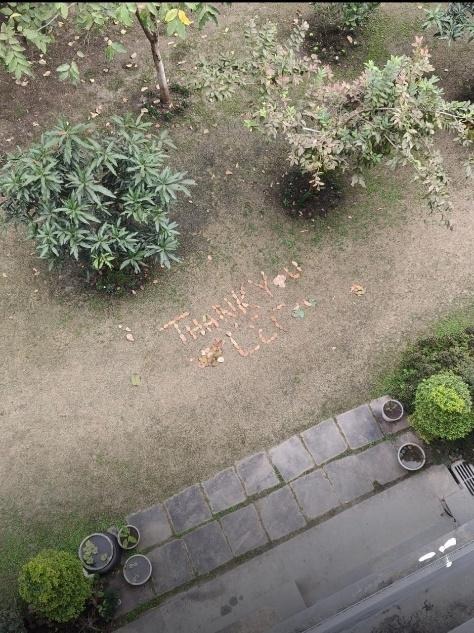
Made from leaves and twigs, this “Thank You LEC” was left behind by a participant from our last batch. Long after the programme ends, the pollen continues to travel: through people, practices, and the quiet spread of joyful reading cultures across learning spaces.
It is only when pollen travels far and wide that joyful reading can bloom.
For more details about Parag, write to maulshreekalothia@tatatrusts.org
Bibliography
Zai Whitekar & Niloufer Wadia. Kanna Panna. Tulika Publishers. 2015
Sowmya Rajendran & Arun Kaushik. Wings to Fly. Tulika Publishers. 2015
Tharini Viwanath & Nancy Raj. Catch that Cat. Tulika Publishers. 2015
Shivani, Maheen & Kanak Shashi. Payal Kho Gayi. Eklavya Foundation. 2015.
Ankur Society for Alternatives in Education. Ek Shehar, Ek Pahad, Ek Mohalla. Eklavya Foundation. 2024.
Mohammed Khadeer Babu & Gulam Mohammad Shaikh. Head Curry. Eklavya. 2015.
Jitendra Thakur. Geet ka Kamal. Eklavya Foundation. 2012.
Girish Mugthihalli & Pooja Mugeraya. Edi Shikari. Navakarnataka Publications. 2023.
Prabhat & Allen Shaw.Lightning. Jugnoo Prakashan, Ektara. 2021.
Tanya Majmudar, Sujatha Padmanabhan, Janaki Lenin, Gangadharan Menon, Ashish Kothari, Nikit Surve, V. Arun, Akila Balu & Nayantara Surendranath. People and Wildlife. Kalpavriksh. 2019.
Deepa Balsavar & Preeti Rajwade. Who Will Teach Emperor Akbar? Eklavya Foundation. 2010.
Deepa Balsavar & Preeti Rajwade. The Sea in a Bucket. Eklavya Foundation. 2013.
Deepa Balsavar, Deepa Hari and Nina Sabnani. Sameer’s House. Tulika Publishers. 2006.
Sushil Shukl & Atanu Roy. Chiknik Choon. Eklavya Foundation. 2016.
Maulshree Kalothia
Maulshree Kalothia is a part of Tata Trusts’ Education team. She leads Parag, An Initiative of Tata Trusts. This piece was written with support from Tuhina Sharma (Research and Advocacy, Parag, An Initiative of Tata Trusts).