
I Didn’t Come This Far Just To Come This Far
Defying cultural oppression and forced marriage, an Afghan girl educates herself, empowers…
Read more →Downtrodden, yet hopeful eyes meet ours. Though scarred, the bright scarf hints: tomorrow might bring a world of art and dreams.
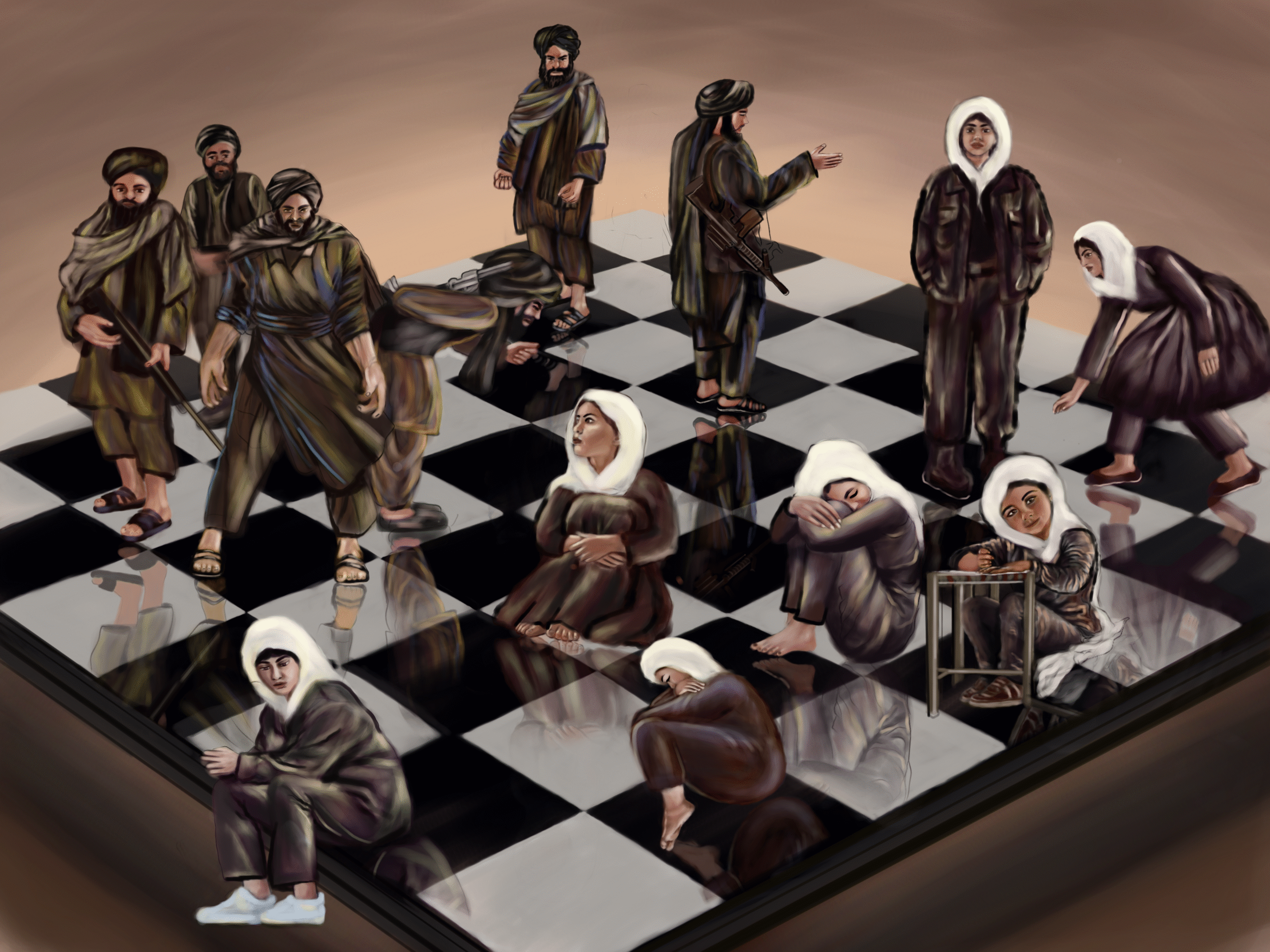
I
This artwork is a metaphor for a society where women and girls are treated like chess pieces in the game of power. Their sorrowful faces and downcast eyes reflect the oppression and restrictions that limit their freedom and agency. It reminds the viewer that human destiny should never be reduced to a pawn in political and violent agendas.
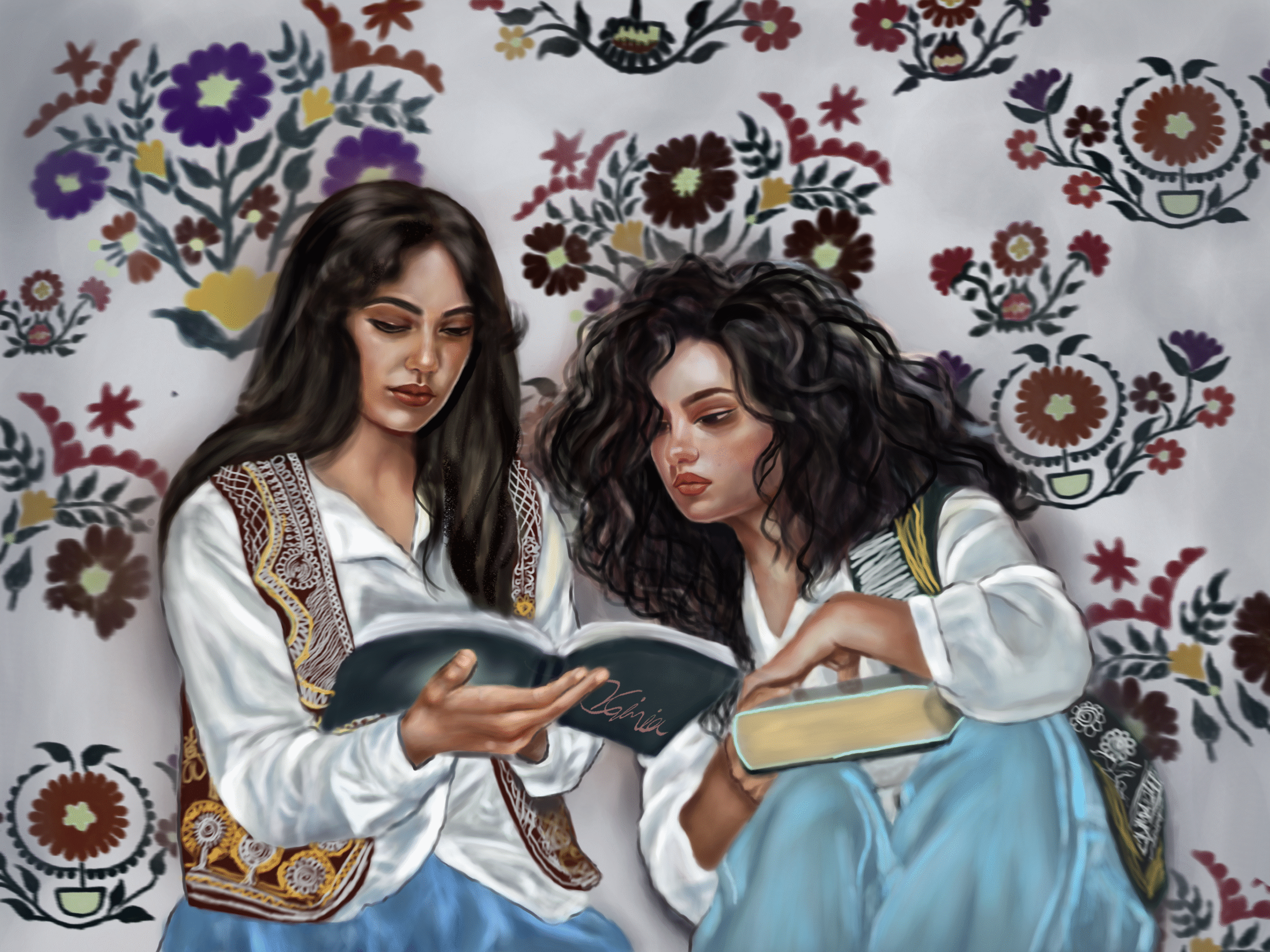
II
Two young women, dressed in white and blue, are immersed in the world of books — a symbol of love for knowledge and culture. The embroidered background bridges the cultural heritage of the past with the hope for a brighter future. This image conveys the message that even within restrictions, reading and learning can illuminate the path forward.
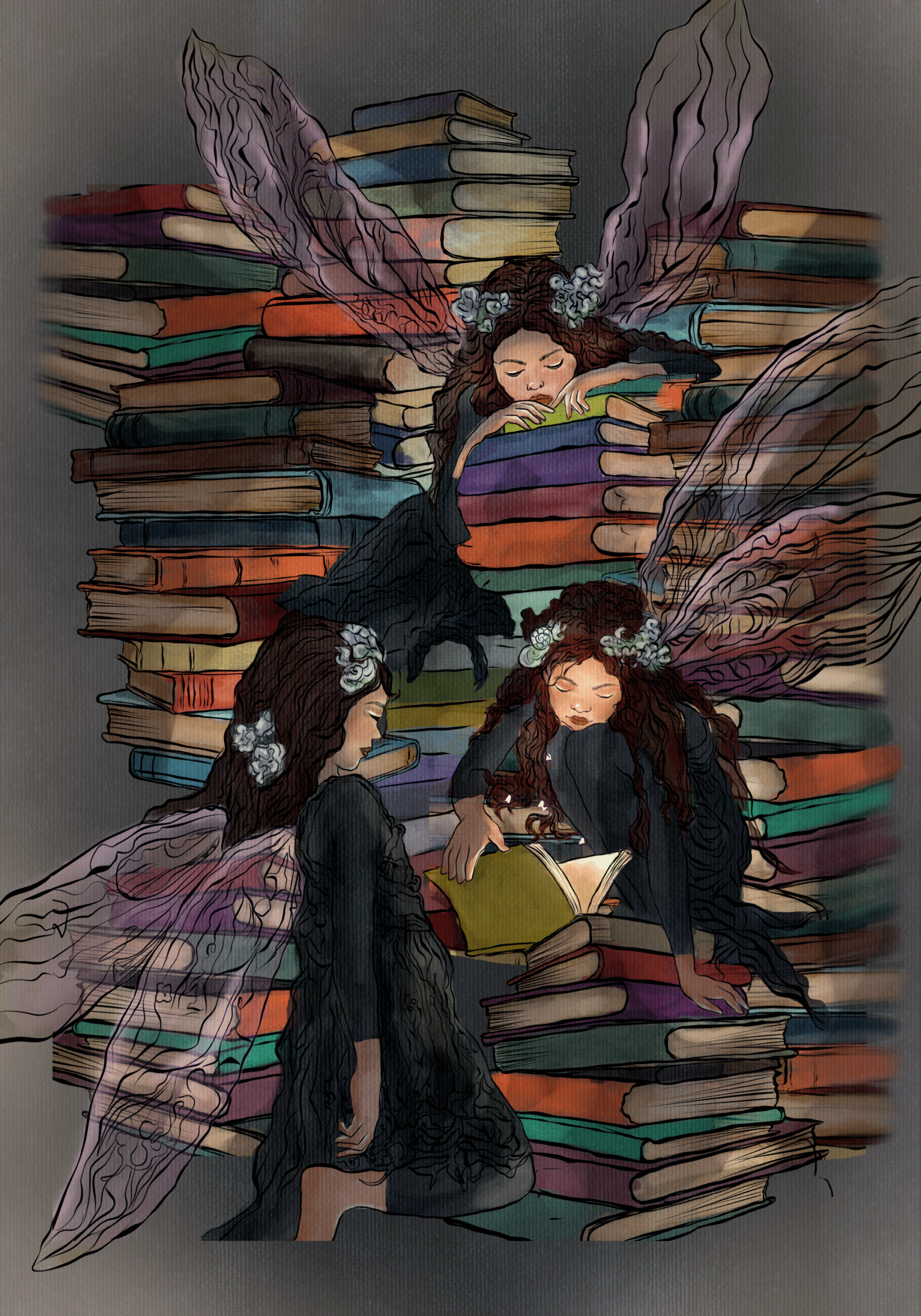
III
Girls seated on towering stacks of books, with wings of imagination on their backs, embody freedom of thought and spirit. Here, books are not only sources of knowledge but wings for escaping imposed limitations. The magical setting and muted tones highlight the contrast between harsh reality and bright ideals.
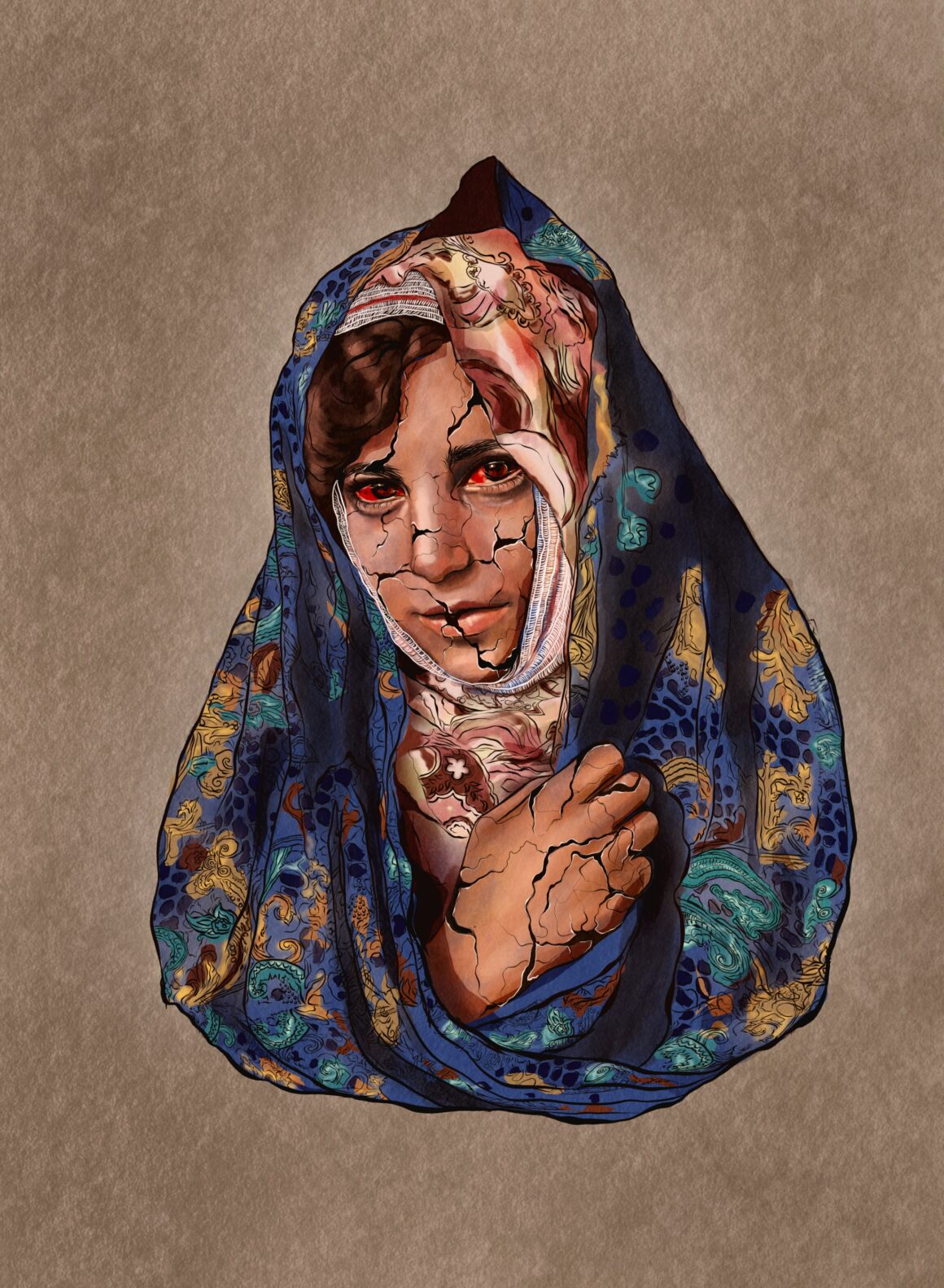
IV
The face of a young girl, partly hidden beneath a colourful scarf, carries a gentle smile and eyes full of hope. The marks on her skin represent the emotional and physical wounds of her past, while the vivid colours of her clothing reflect her inner strength and her hope for a better tomorrow.
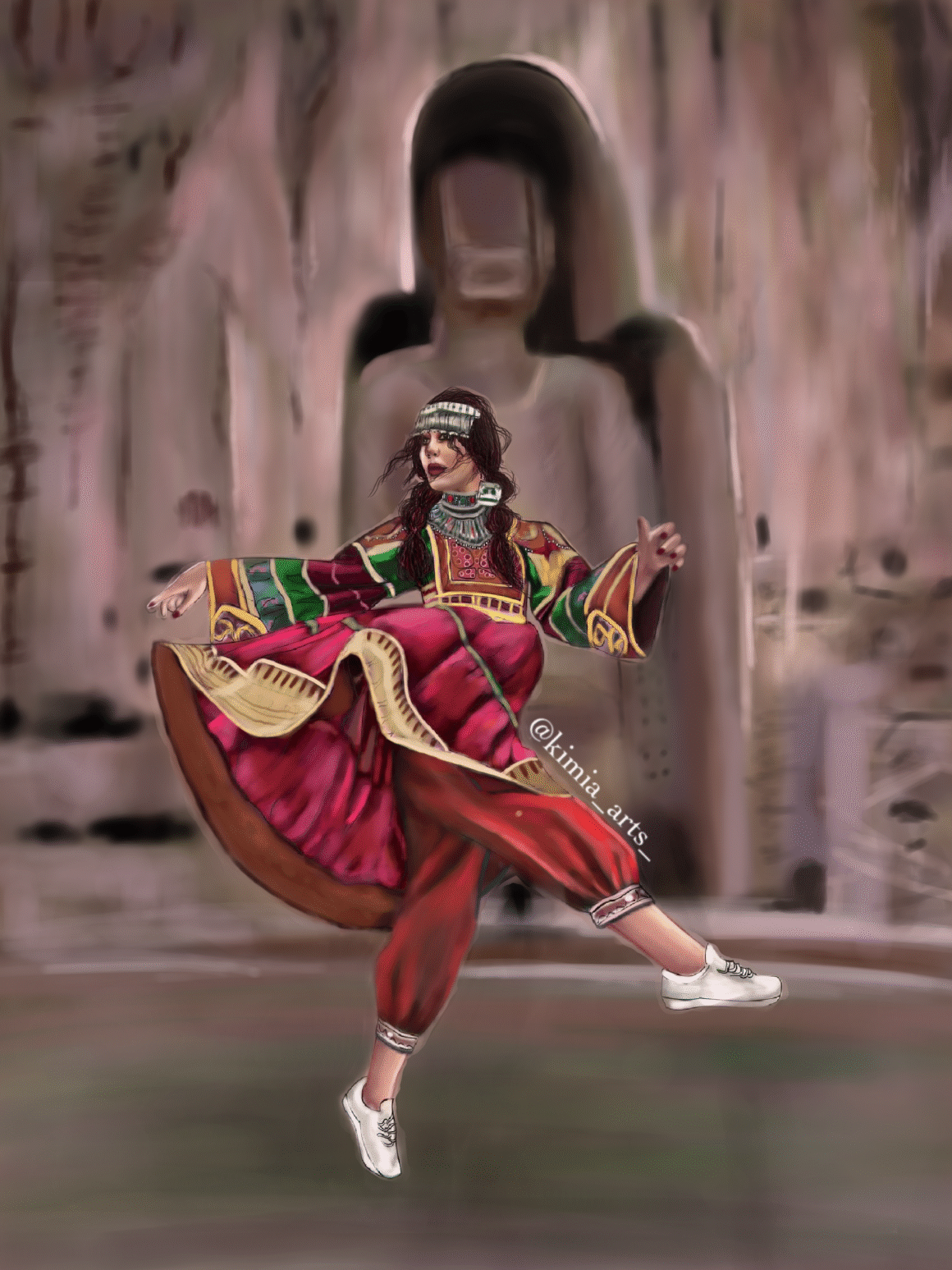
V
A young woman in traditional Afghan dance attire moves gracefully before the Bamiyan statue, creating a bridge between Afghanistan’s ancient heritage and its present life. Despite the somber background, her dance expresses cultural resistance and the joy that survives even in the face of silence.
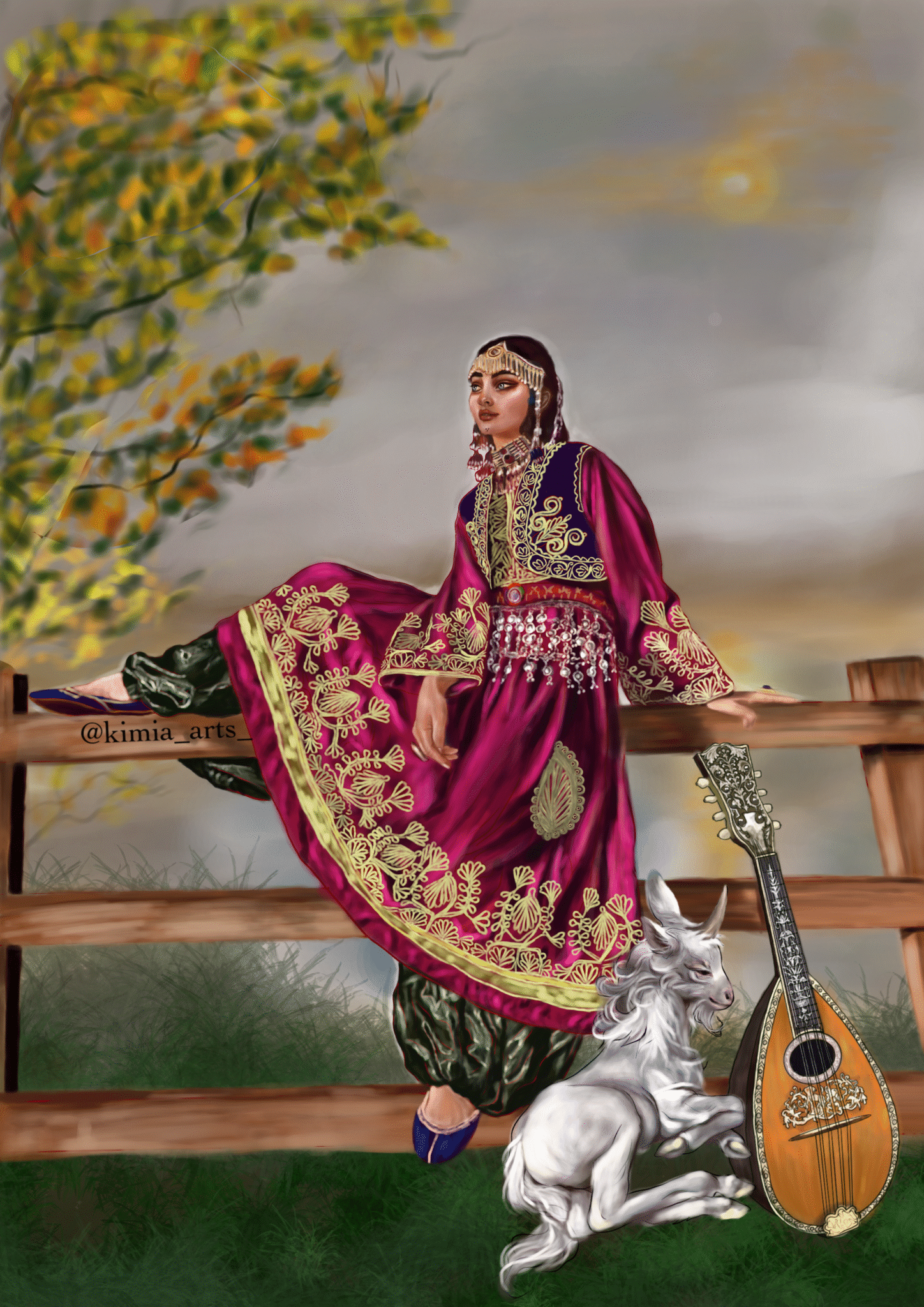
VI
A young woman in traditional dress sits atop a wooden fence with a musical instrument by her side, her gaze calm yet determined. The presence of a pet and lush nature creates a scene of peace and intimacy. This work symbolises the harmony between art, nature, and the freedom of the human spirit — a world that still lives in dreams.

Angela Gulistani (Artist name: Kimia) is a digital painter born in Herat and raised in Kabul, Afghanistan. She completed her schooling and university in Kabul. Her work focuses on digital images and animations, often highlighting the challenges and restrictions faced by the people of Afghanistan, particularly women.Kimia has participated in several UN-organized exhibitions in Kabul and won second place in a regional art competition organized by UN Women among multiple Asian countries. Through her art, she aims to be a voice for girls whose freedom and right to education have been taken away, raising awareness worldwide about the situation in Afghanistan. She currently lives outside Afghanistan.