
Editor’s Note – North East Special
After a 16-month pause, The Little Journal of Northeast India returns with…
Read more →Brahmaputra's shore awakens. Lorries and drum-laden bikes huddle like students. Scales glint, mouths gasp, and an egret eyes the shimmering plenty.
Swipe to navigate
Visual Narrative · Usawa Literary Review
The lorries are lining up tidily on the roadside, and bicycles strapped with aluminum drums are leaning against the railing on the pedestrian walkway. Like schoolkids in uniform in time for the assembly rituals.
Mornings typically unfurl like this at Maas Bazaar, or fish port, at Uzan Bazar, on the banks of the Brahmaputra.
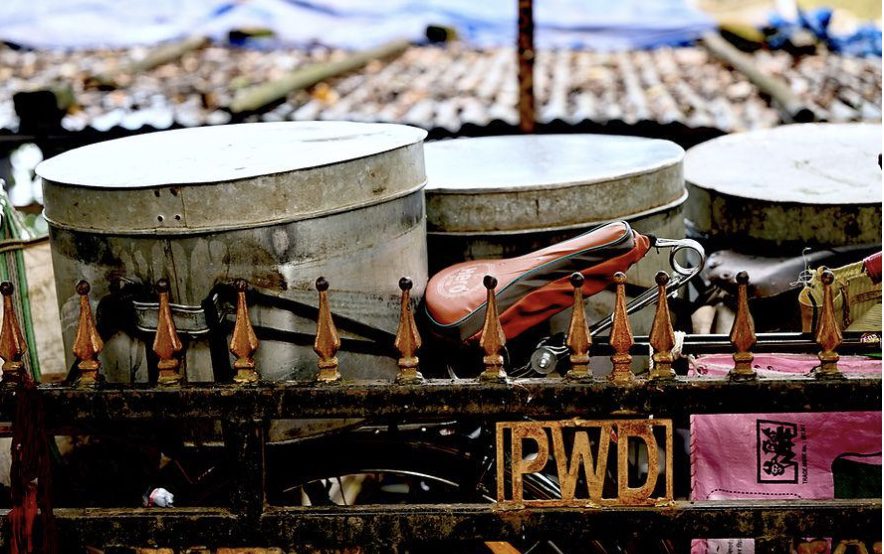
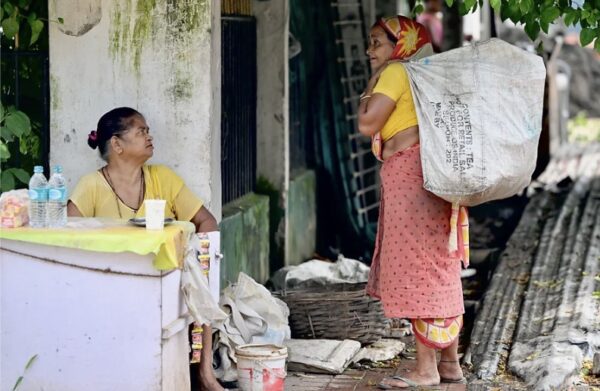
Dozens of wholesalers, retailers and workers, and a handful of auctioneers and their supervisors, are shuffling and wafting. On the fringes, a few scattered shacks are coming to life.
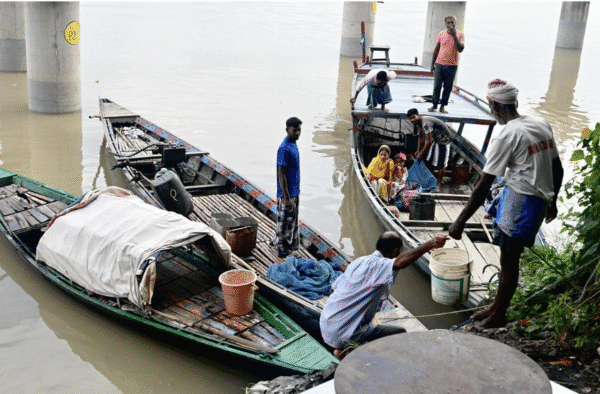
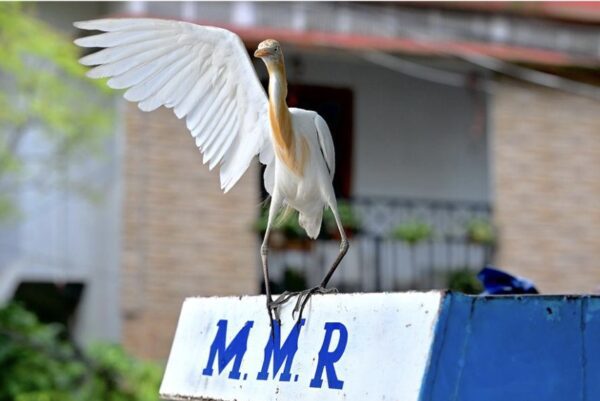
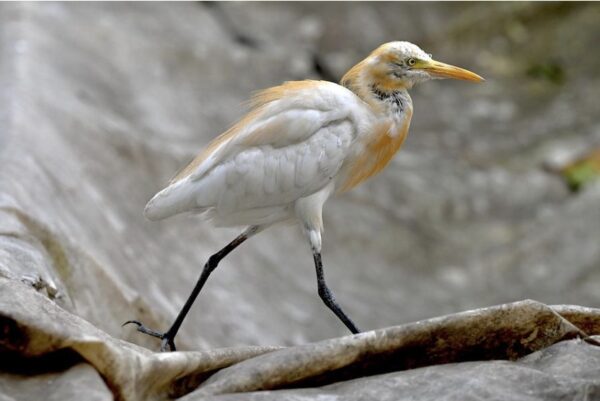
The most impatient entity here is a cattle egret, described as ‘a cosmopolitan species of heron’. It first struts around on the hood of a Bolero. Then, with feathers streaked fashionable yellow, valiantly strides up the glass pane to peer at the plenty. One of the four men guarding the fish, kept in a water tank, decides to gift it one. The egret gulps it down in seconds.
This acts like the ringing of the bell. The entire place gets into action.
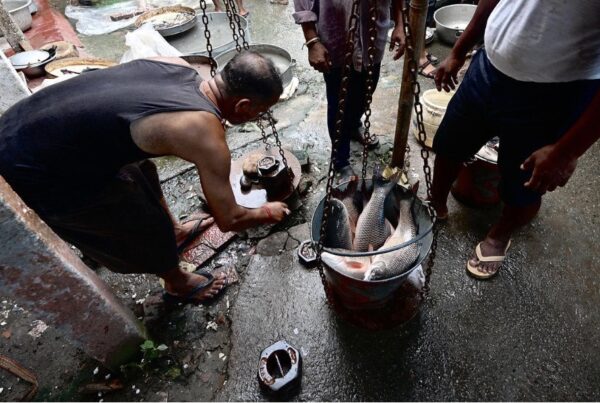
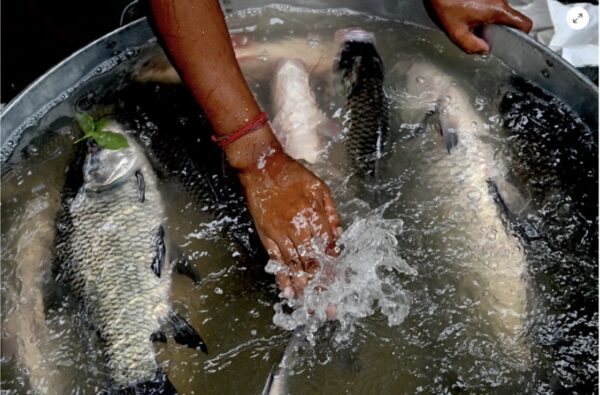
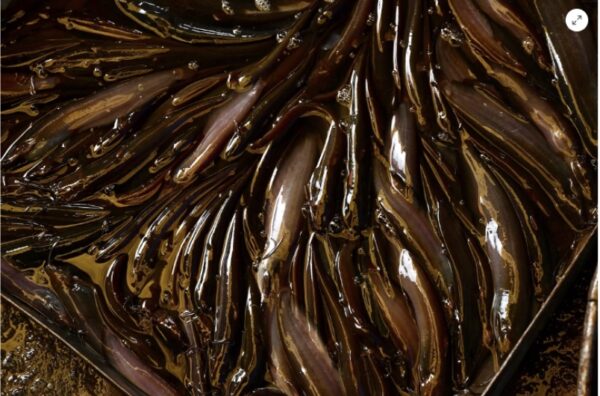
The next 45 minutes are a blur of shiny scales, bloodshot eyes, pink pouting lips, aluminum buckets, weighing scales, and gaggles of men – and a few women – in circles around different auctioneers. The fish are displayed, base price is announced, and the bidding is concluded calmly, swiftly.
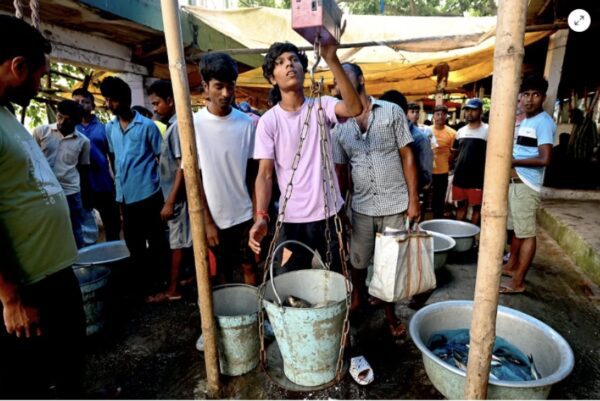
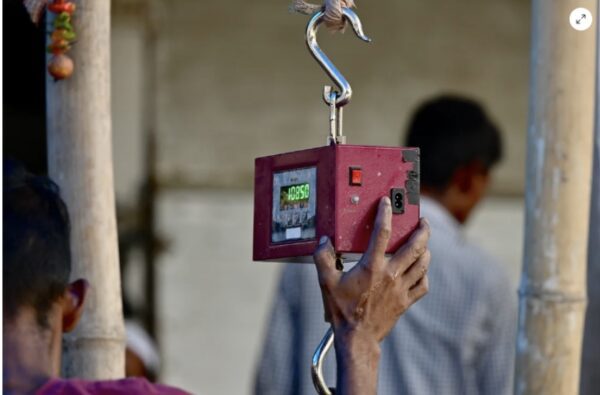
Every few minutes, a fisherwoman puts her fingers inside the mouth of each of the five Rohu in her tank and shakes them vigorously, angrily: Breathe, fish, breathe. I am tired. Don’t you dare die till I tell you to.
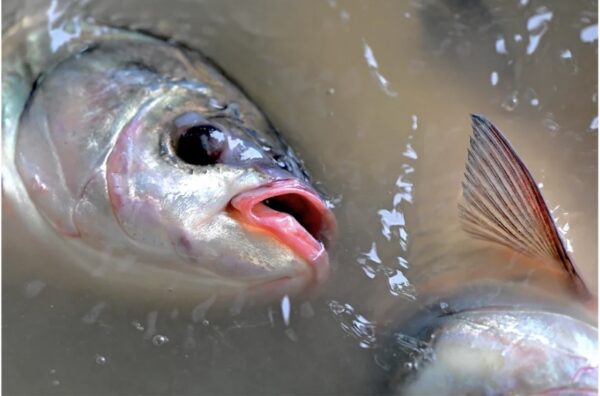
A gregarious man decides to showcase his massive 22-kilo Catla and asks for a photo, and another rearranges a prawn to make it look alive. The morbid aesthetics of death.
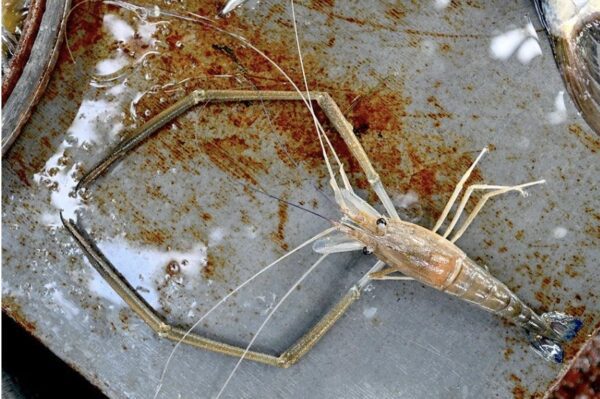
Almost all the fish – many still bouncing, thrashing, gasping – have been weighed and poured into buckets and plastic bags. Buyers are dispersing, stepping out of the bazaar as sellers for the rest of the day.
The auction is almost over. But our egret is still there, still looking for charity, spillover, and unguarded moments. It will be here again tomorrow morning, the fish donor atop the lorry tells me. “It will be here just before 6.”
↗ Click any photograph to enlarge

Amit Kumar has over 30 years of cumulative experience as a journalist, trainer and coach, L&OD consultant, and instructional design specialist. He has worked in India, the USA, Nepal, and Mauritius with a range of organizations.