
Review: The Girl in White Cotton
Dementia's erasure of memory fundamentally undermines a daughter's pursuit of justice for…
Read more →Parekh's six-decade retrospective reveals a self-taught folklorist whose village-rooted visual language—layered with myth, memory, and crosshatched vibrancy—resists stylistic prescription while transforming mundane life into fabulist tableaux where figures, beasts, and faiths coexist in deliberate, childlike cosmology.
At Madhvi Parekh: A Life in Line, Memory and Myth, each canvas seems to tell a folklore. It is apparent even to the uninitiated that Parekh is a folklorist with a contemporariness that makes her paintings universal. Deeply rooted in the village tradition, her paintings speak of the mundane, everyday life but in a fabulist landscape that gives every character in her canvas a role to play. Spanning six decades of her work, the exhibition curated by DAG at the Alipore Museum, gives a glimpse of the artist’s journey from her village in Gujarat on to the global centrestage with Museum of Metropolitan Art acquiring her work, her collateral showing at the Venice Biennale 2024. Yet this journey has been remarkable in the absence of any dominant movement or stylistic prescription.
Discover the books that shape our times
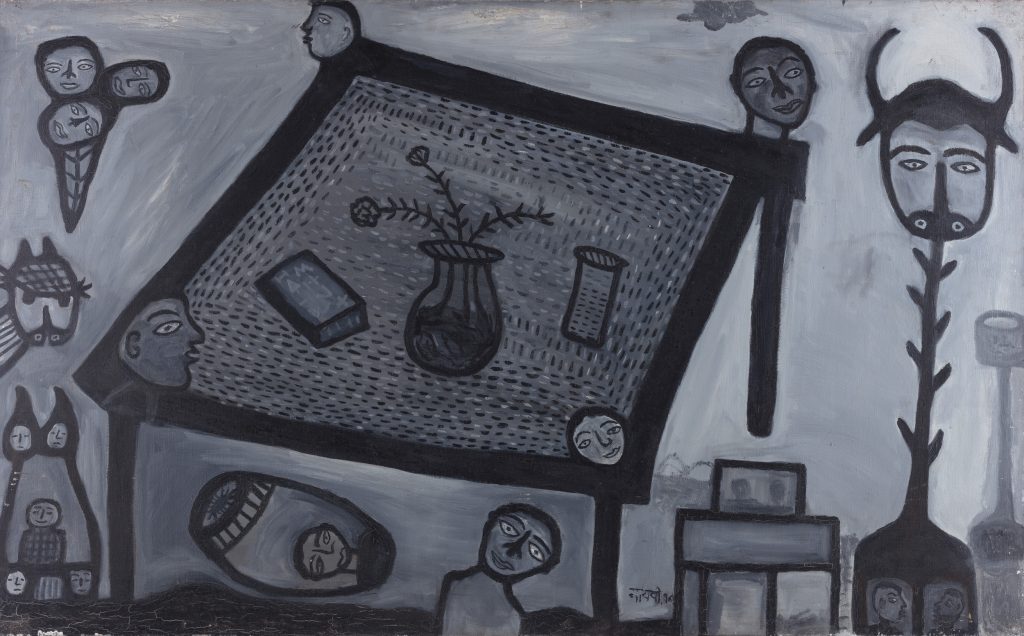
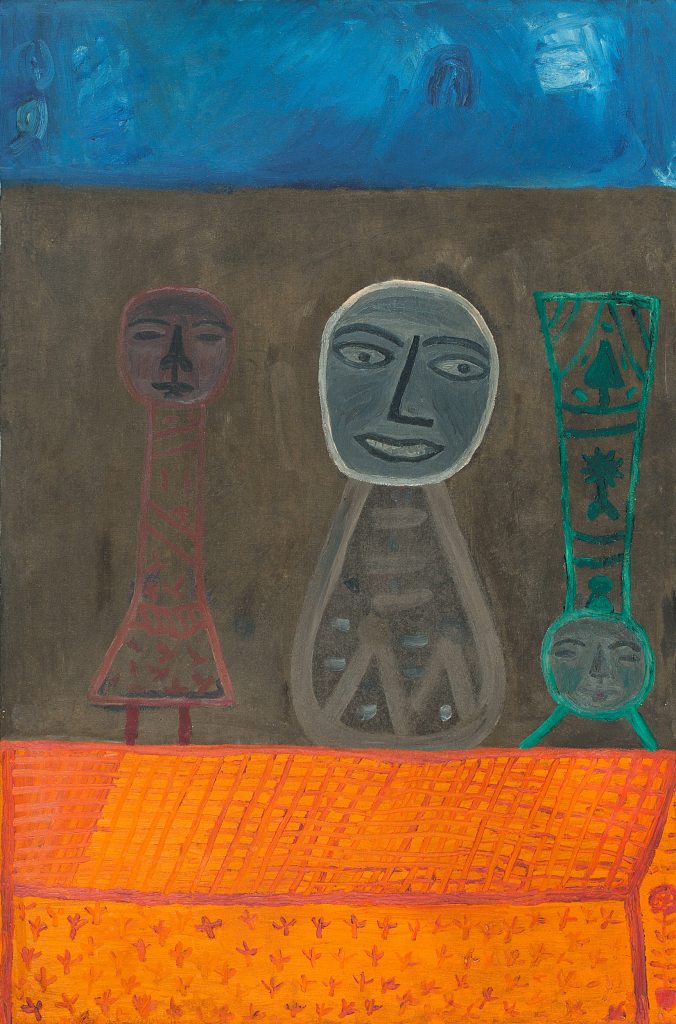
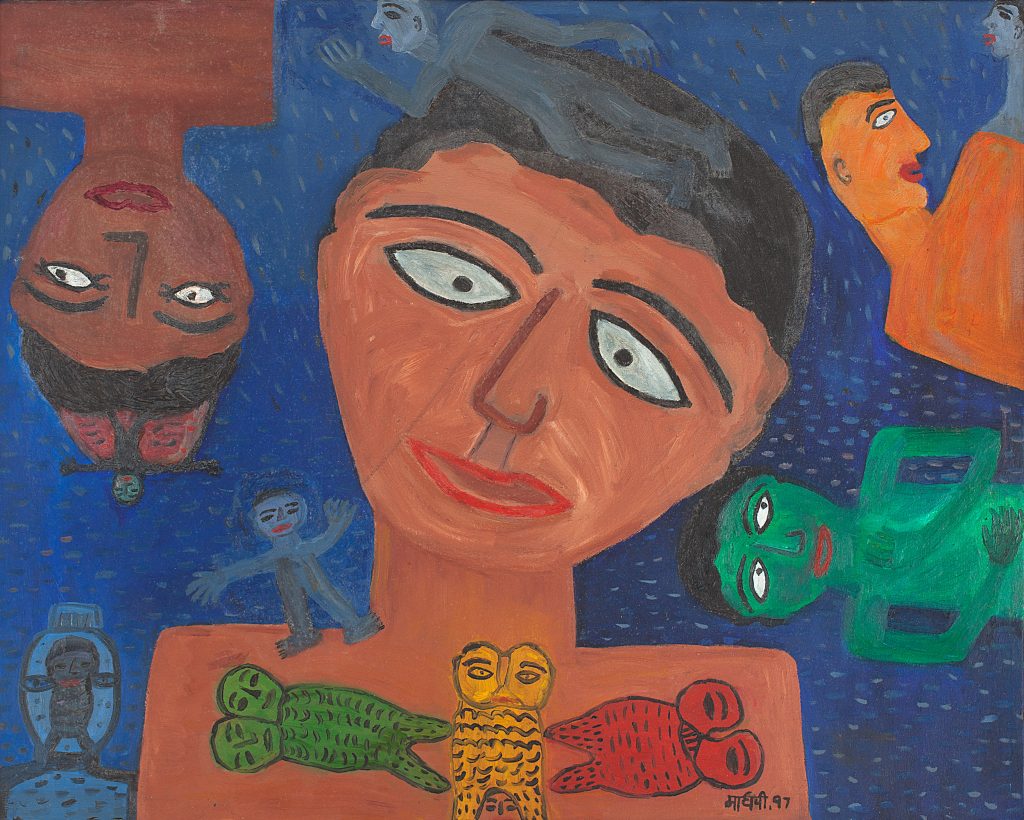
A self-taught artist, Madhvi took her first lessons from the Swiss-German artist Paul Klee’s Pedagogical Sketchbook introduced to her by her artist husband Manu Parekh. The couple spent a few years in Kolkata where Madhvi held her first solo exhibition at the Chemould Art Gallery. Her return to the city with a body of work spanning six decades is both significant and symbolic. For it is her memories of her early life that are served up on her canvas. They are revisited, reinvented and layered as she matured as an artist and an individual.
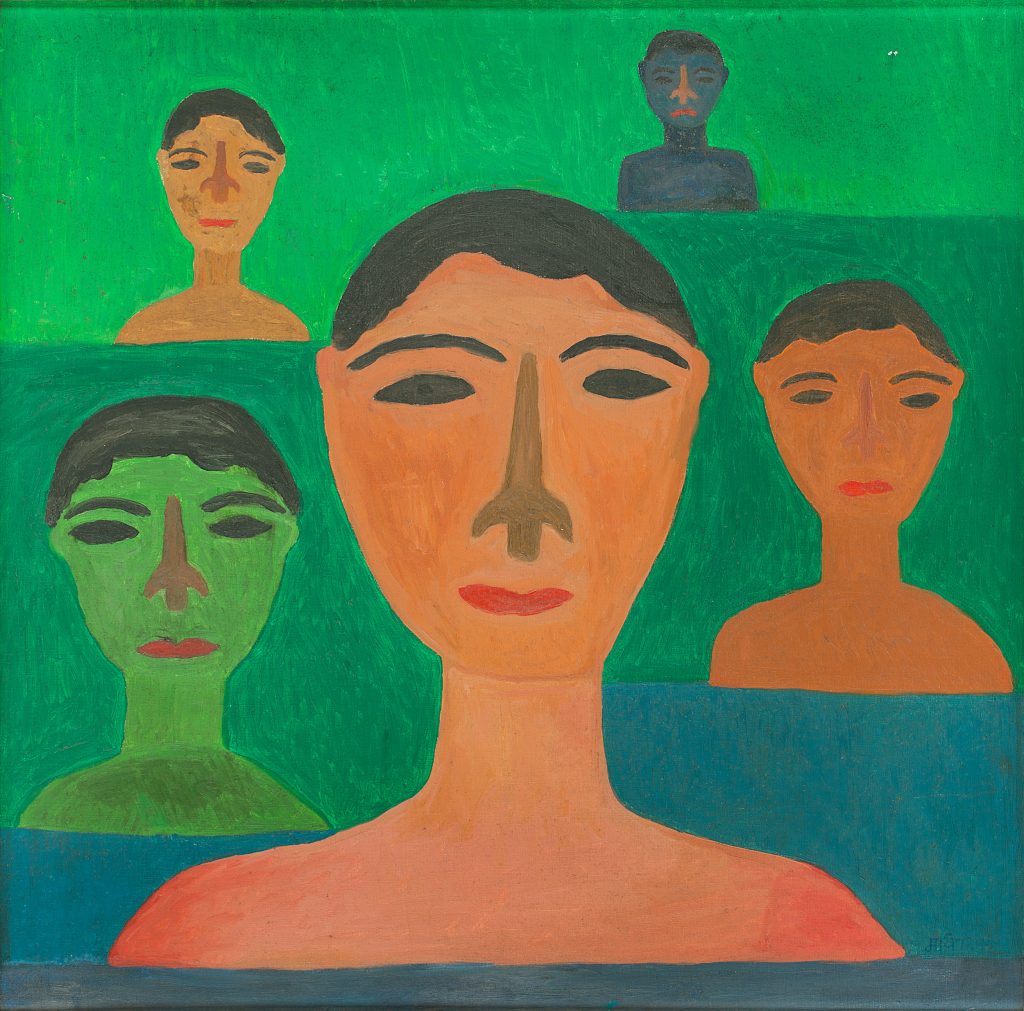
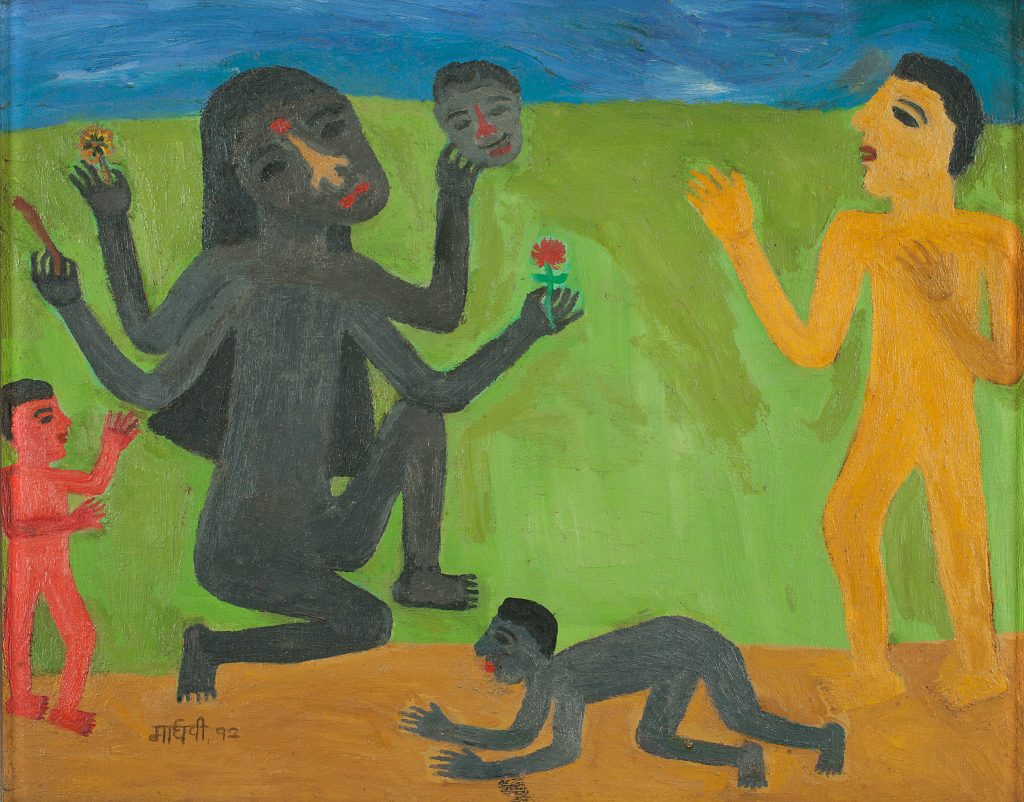
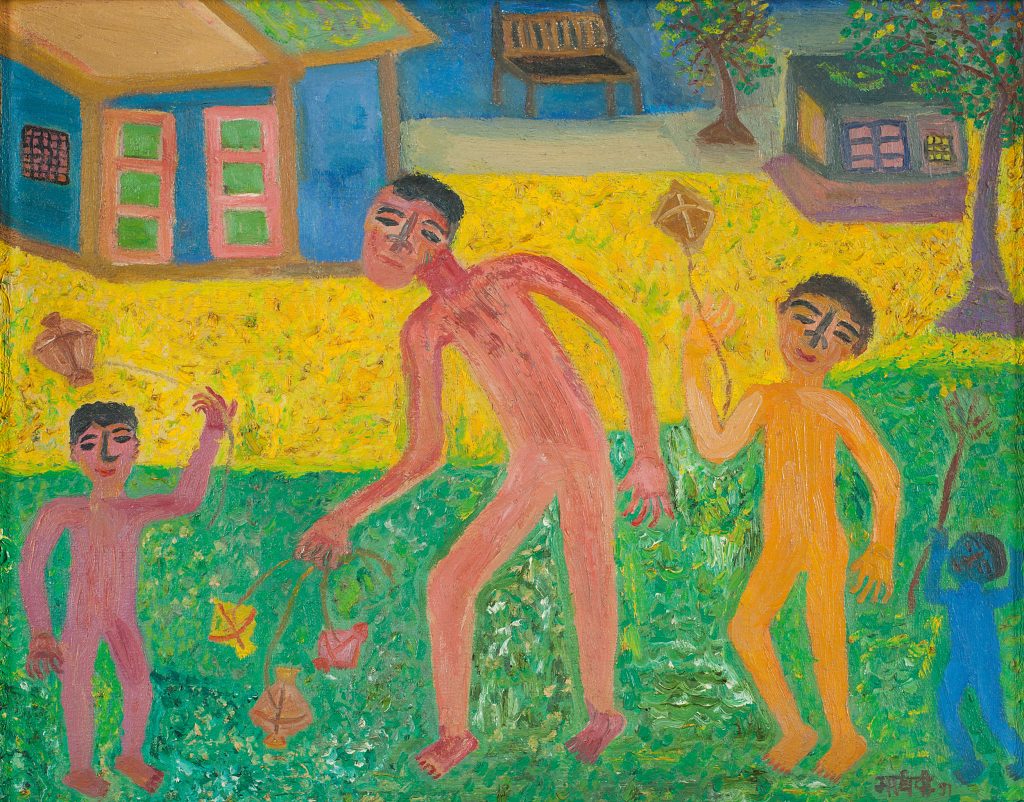
Figures, mythical beings, the animal kingdom, nature coalesce to tell stories from her childhood. A playfulness, child art and fantasy create a world in vibrant colours and crosshatches. Two black and white etchings stand out where one sees a peacock with its plume on a charpoy with a head perched right on its edge. Another has a four-legged creature with its intestine full of other creatures it seems to have devoured and yet the creature is surrounded by humans.
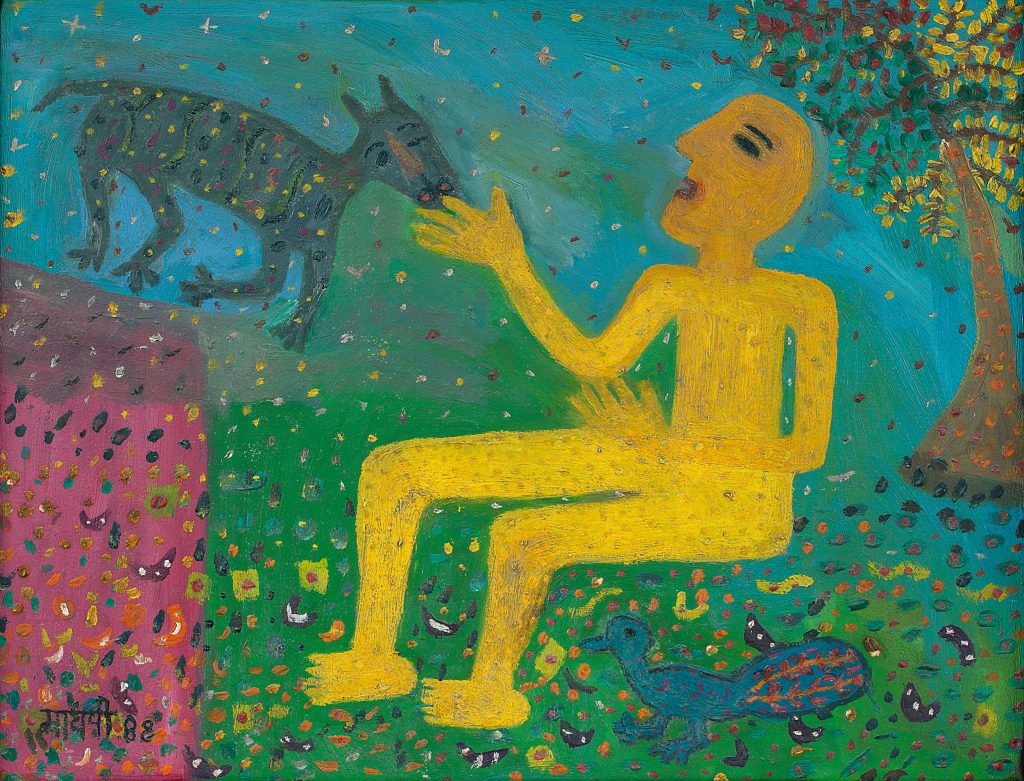
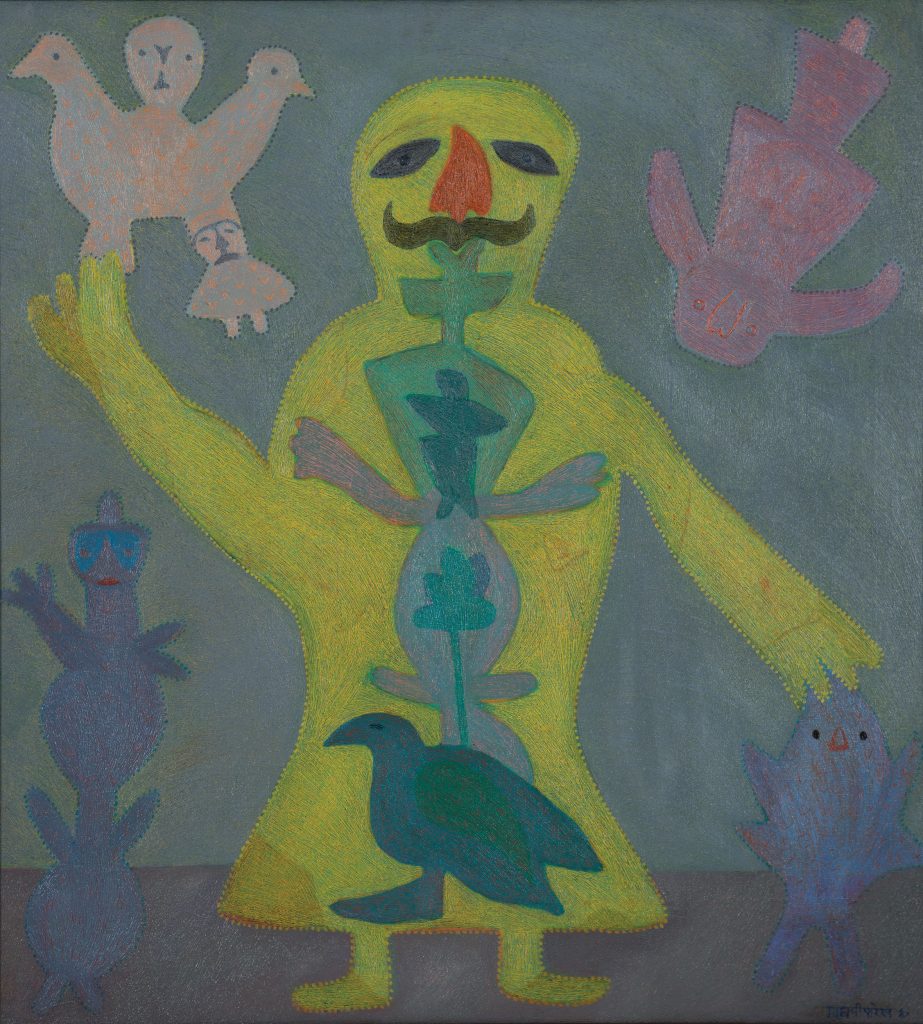
A triptych titled Travelling Circus in my Village is fascinating in the number of elements it displays along with the stories that each motif says. In King of the Puppet, the central figure in yellow is carrying all other beings inside itself, a recurrent leitmotif through Parekh’s oeuvre.
A remarkable painting of Christ in a boat with his crown of thorns and a cross on his head sailing on a river with two churches on the river bank shows Parekh’s adeptness in dealing with religion and its motifs. The boat on which Christ is sailing has paintings of people representing all faiths and colours.
A black and white painting of a beast, presumably a tiger in prowl, in an urban setting stands out from among the predominant rural scenes depicted in most of her works. The painting is Parekh’s narrative about the city and its characteristics.
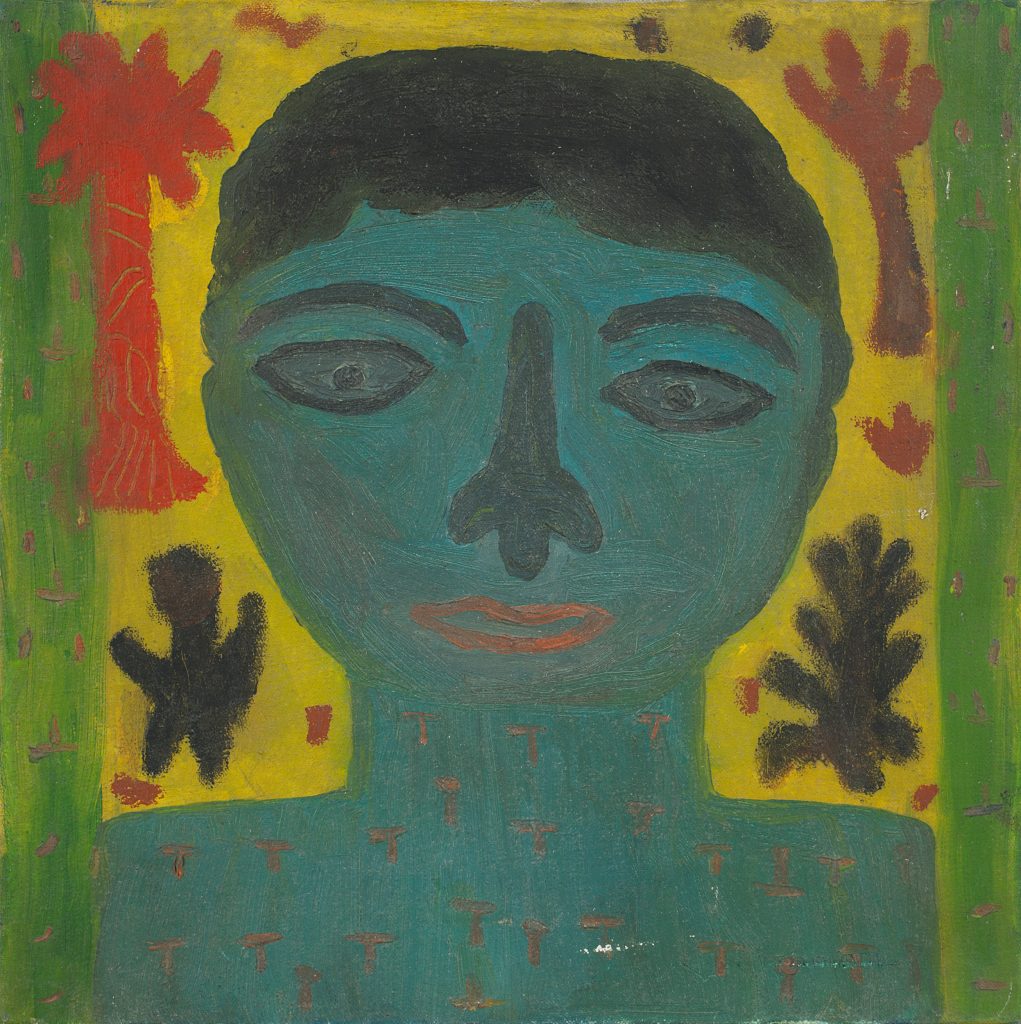
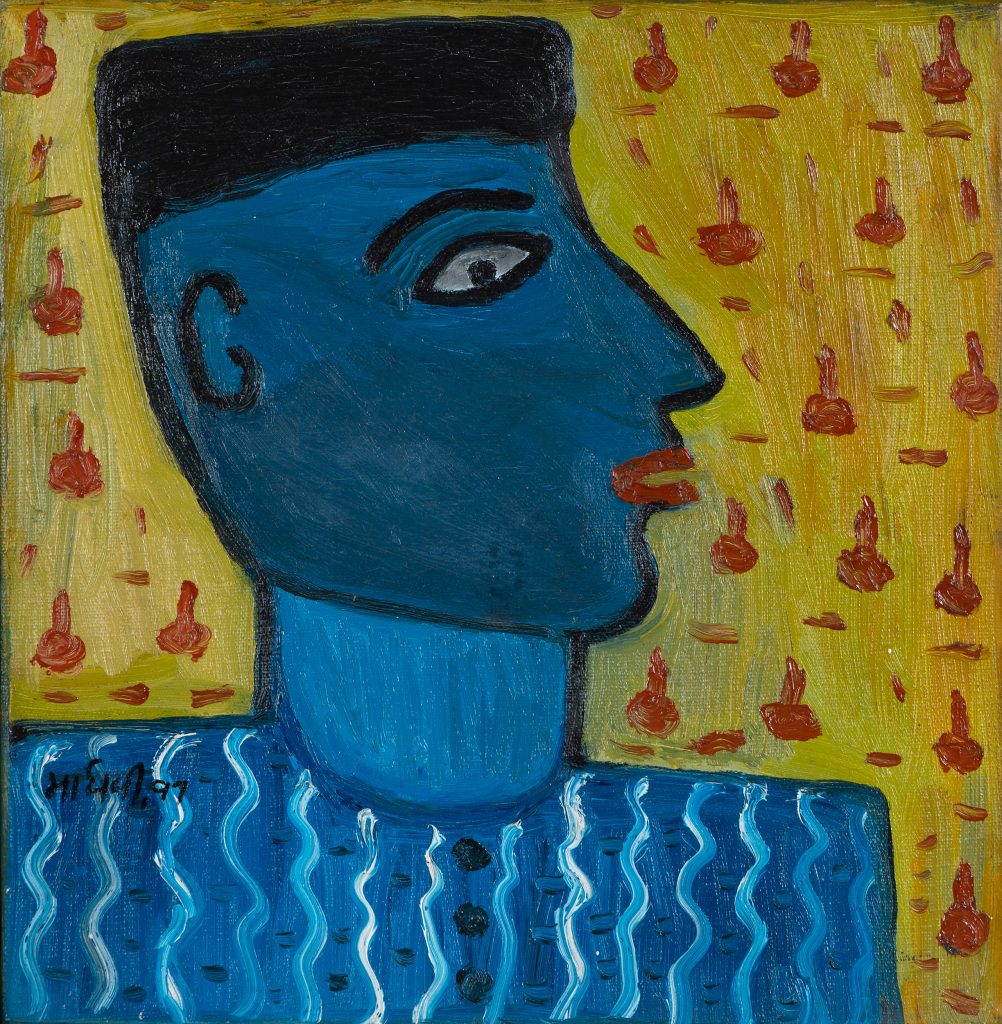
Most of her portraits are full frontal gaze of the face with its facial features exaggerated in folkstyle. Some have small motifs sprinkled all over, others are stark in its depiction of the facial features but all are in vibrant colours that lend character to the portrait in study.
Playing with Serpent, an ink on paper, shows a natural rhythm within the animal world with serpent as the central character in harmony with all other creatures. While the serpent in Indian folklore is a fearful creature that is worshipped to ward off evil, Parekh here depicts the reptile in a very benign and playful atmosphere.
Parekh’s Gandhi, a face among a sea of faces, is a work of deep reflection. Her father, being a Gandhian, had a profound effect on Parekh who drew the Father of the Nation in a canvas populated by images of the common people of all faiths.
The exhibition ends with a display of Parekh’s sketchbooks that offer a glimpse of the workings of her mind. Doodles, sketches, babies, creatures, birds, rangolis, grocery lists make up that fertile world that engages both in the domestic and the artistic and forms a vocabulary that is at once unique as it is universal.
The exhibition is on till August 2, 2026 at Alipore Museum, Kolkata.

Anasuya Basu is an independent writer based in Kolkata.