
✨ LATEST ISSUE •
From ULR
Issue 15 – REFUSE
Review: The Mumbai School for Murder
Beyond plot, this mystery's stakes lie in its meticulous dissection of elite Mumbai's social stratification and moral ambiguities, recalibrating perceptions of class and autonomy.
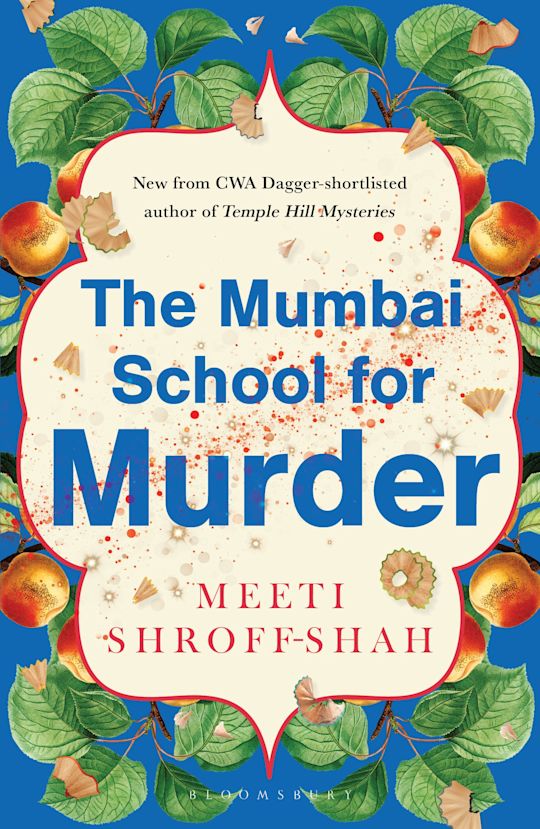
An elite Mumbai school, an elegant writer-detective and students who are seemingly up to no good. A recipe for a cozy mystery? You bet it is! As a follower of the contemporary Indian murder-mystery genre increasingly featuring the female detective, such as those by Sujata Massey, Harini Nagendra and Madhumita Bhattacharyya, I was taken by the promise of The Mumbai School for Murder by Meeti Shroff-Shah, which highlights the personal journey of the protagonist Radhika Zaveri, an upper-class Mumbaikar, along with her parallel foray into solving mysteries along the stretch of her premier locality of Temple Hill. This novel forms a trilogy with previous Temple Hill mysteries.
Set in the apparently pristine district, the book delves into Indian ‘co-ed’ school life in the busy, crowded city of Mumbai, in which the school in question, North Star, emerges as a sort of cross between an aspirational Hogwarts, with its signature green-and-gold logo, and a regular public school that includes all sorts of students. Except here, the students are mostly those from crème de la crème families of South Mumbai, most of whom are as ‘inflated with [their] own sense of self-importance’ as the school itself. The novel engages both new readers as well as those familiar with the series without relying on formulaic mystery structure, offering a peek instead into a socially stratified yet recognisable world.
The protagonist, Radhika Zaveri, is a ‘former bestselling author’ with her own income from her books as well ‘millions in her trust fund from her father’ and ‘properties . . . from her hotelier ex-husband’. Recently returned to her hometown, she is at a loose end, and an invitation from the English Department at North Star to conduct fiction writing classes for their students comes as a welcome way out of the heaviness in her mind. It is also worth noting that Radhi is a divorced woman, a detail that is neither sensationalised nor treated as a deficit. Instead, it informs her financial, professional and emotional autonomy and shapes how she moves through the social world of the novel. In a literary landscape where female protagonists are often defined in relation to marriage, this feels like a deliberate and refreshing choice. Little does she know that she is entering a maze of politics and intrigue. But this is precisely what she loves: ‘intelligent, tightly wrought’ puzzles like a good [Agatha] Christie. Soon into the novel, the award-winning teacher and head of the English Department, Ms Venus Pereira, is found murdered in the department office, which Radhi shares, along with Ms Savant, the other English teacher who reportedly joined the school via nepotism. While Ms Venus had been the students’ favourite, her outspoken, direct manner is at odds with the changed school management, who prefer a more subtle, diplomatic approach. She also apparently had some friction with a student’s father. Suspects for the crime thus abound. While the police are put on the case, Radhi uses her wits, her rapport with the students and her research experience reading and writing murder mysteries to decipher who the perpetrator might be. In the process, she clashes with management herself, reconnects with her former flame Hrishi, now the chief editor of a daily newspaper and therefore important to the case, and attempts to rebuild her life by pouring her energy into her family. Familiar as she is with different poisons from her murder-mystery research, she often finds herself at odds with the police inspector, who ultimately grudgingly accepts her help.
In parallel, what is satisfying about the novel is its close observation of the modern Indian school. Radhi marvels at the tech-savvy, air-conditioned classrooms and small class sizes as opposed to ‘the traditional blackboard with the perpetual cloud of chalk dust hanging over it’. It is ‘replaced by a smart board screen which came down with a smart woosh and a tray of colourful markers’. The novel also marks leaps in pedagogy and in parents’ attitudes, from lackadaisical to hyper-protective. Not only have schoolbags disappeared entirely from the picture, but the students are assigned ‘cubbies’ to store their books and stationery. With all these accoutrements, it is not surprising that discord occurs over seemingly minor behavioural matters and that smoking and the potential for drug abuse rise. The book acts as a sort of warning, then, for parents and students alike. Amidst this context, Radhi is written less as a thinking presence, someone whose responses are shaped by class position, professional identity and a certain emotional reserve. Her dual life as a writer and investigator is not dramatised through grand conflict but through quieter acts of observation and inference. The supporting cast is similarly drawn through social texture rather than overt description. Students are not reduced to types, even when they initially appear so; their anxieties, ambitions and small rebellions surface gradually in classroom exchanges and moments of friction. The characters are built through gesture, professional habit and small hierarchies of school life. Teachers, students and Radhi herself are defined by how they speak and respond under pressure. This restraint proves effective in a setting that is already socially coded, allowing motivations—criminal or romantic—to emerge gradually and lending the murder of Ms Venus, the award-winning English teacher, a hushed moral ambiguity. The shifting dynamics organically build suspicion, prompting the reader to reconsider first impressions.
The school, as a setting, sharpens these interactions. It functions as a contained, almost closed-off system, which naturally narrows the field of suspicion while intensifying scrutiny. Even minor gestures acquire significance, and the investigation unfolds as much through reading people as through assembling clues. This gives the plot a sense of inevitability without making it feel contrived. I did not, however, anticipate the murderer until a late turn in the novel. Even the prose mirrors this approach: clean, economical and attentive to sensory detail, with dialogue doing much of the narrative work.
What really brought the novel home for me, though, are Shroff-Shah’s sketches of food and clothes, which are woven gently and articulately into the skin of the narrative. Cotton shirts and khakis, distressed jeans, kurtas with ‘bell sleeves, Chinese collars and A-lines’ to be paired with ‘pleated dhotis and straight raw silk pants’, bright linens in lime and strawberry, ‘short dresses in tussar and pastel crepes’ all find a place within Radhi’s wardrobe. Rich in sensory detail, the novel burgeons too with recipes, literal ones, not just those for sinister purposes. Shroff-Shah’s description of making pumpkin sauce pasta, for instance, had me salivating.
She checked the refrigerator and was glad to find a large piece of pumpkin along with a hunk of fresh, homemade cottage cheese. She decided to make a pumpkin sauce pasta and began by boiling the spaghetti. As her hands got busy with grating ginger and cutting the pumpkin into cubes to stew in vegetable broth, her mind puzzled over . . .
The soothing act of creating—whether it be through food or writing—acts as a balm to Radhi’s nerves, allowing her to process her own emotions about the happenings in her immediate surroundings as well as work things out logically, detective-fashion. Vietnamese summer rolls with mango and avocado, mushroom and tofu dimsum, panipuri, khaman dhokla, medu vada, methi puri—the list of Mumbai-specific cuisines, both high-end and streetside, run a firm thread throughout the novel. These deviations into snacks and meals are particularly enjoyable as they occur seemingly organically within the text and employ the regular language that is used in Indian middle- and upper-middle-class circles: witness the ‘“Mmm . . . this is sooo good”’ and the ‘yum peanut sauce’ used to dip the bites into. Students in her creative-writing class, too, are taught to write evocatively about food. They read their work out to the class for critique, after which they dig ‘into the banana bread loaf which Radhi had brought from home’. Further in the novel, a student compliments her assignment on food, mentioning that the ‘writing was almost poetic’. Confounded as I was by the pumpkin pasta, a dish I had not heard about, as well as the prevalence of vegetarian eats, I took the liberty of requesting a conversation with the author. My doubts were rapidly put to rest when I was informed that her focus was on Mumbai Gujarati cuisine throughout the Temple Hill series and that pumpkin purée is helpful for feeding young children their vegetables. Generously, she shared the recipe with me so I will have the privilege of following the novel’s food trail and making one of the dishes that dot it!
In conclusion, what distinguishes The Mumbai School for Murder is not the complexity of its plot so much as the assurance of its telling. Shroff-Shah writes with a clear sense of her world—its class textures, its social codes, its tensions—and allows these to explain both character and mystery. The novel remains attentive to small, telling details, through which Radhi’s method of observation comes into focus. If the resolution carries an element of surprise, it is because the narrative has trained the reader to look closely but not always correctly. That, finally, is the pleasure of the book: it draws the reader in without ever surrendering control.
~
Purchase the book here.
~

Pallavi Narayan
Pallavi Narayan’s book reviews have been published in Quarterly Literary Review Singapore, Kitaab, The Book Review, Hindustan Times, The Indian Express, Commonwealth Business News. She is the author of Pamuk’s Istanbul: The Self and the City (2022) and editor of Singapore at Home: Life Across Lines (2021).