
✨ LATEST ISSUE •
From
Matchbox – September’26
Review: A New World Romance
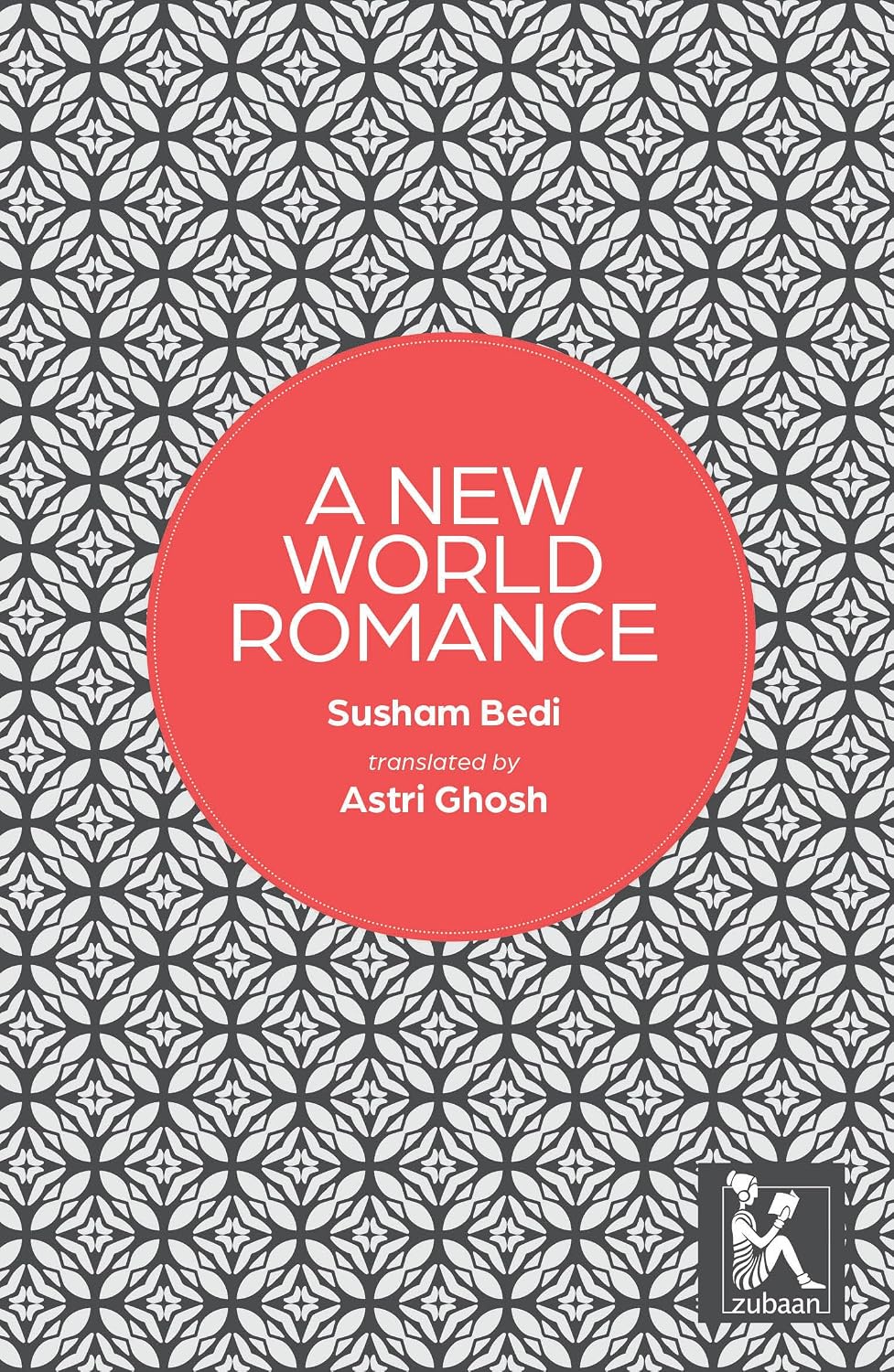
Bedi’s Navabhum ki Ras Katha, “is a story of two people.” It was initially published in Hindi, in the year 2002 and has stayed continuously in print and popular over two decades. Astri Ghosh’s English translation of the same work, A New World Romance has arrived now. Published after a gap of over two decades this work is a period piece which has been made contemporary again. At the beginning you are told by the sootradhar/narrator that it is a story of two people, and that is exactly how you experience it. Anchored in academia, the work follows the traditional rules its asked of – it follows the journey of two protagonists who are professors and meet each other at seminars. They bond over their respective works and have already had partners before, so none of them is actually new to the words ‘love’ and ‘romance.’
Every novel makes the reader a promise in the early pages, and A New World Romance makes an unusually explicit one. The narrator, its sootradhar, addressing the reader directly in the novel’s opening pages tells us what kind of story this will be, and what kind of man our protagonist Aditya is: a “postcolonial hero,” capable of loving without being blinded by the possessiveness of the world he comes from. This turns out to be the same gesture made twice – first as a claim about the story, then as a claim about the man at its centre in both of them the narrator creating a base for what to expect. How consistently the novel fails to keep the promise and how deliberate that failure seems to be is exactly what makes Bedi’s novel worth reading closely. This is not merely a novel about a New World Romance, it is about the gap between what people, and narrators, say about themselves and what they turn out to be.
Stylistic and Sincerity Traps
Bedi’s prose as it survives into Astri Ghosh’s English translation works in registers of directness – characters state their feelings plainly and the narrator addresses the readers without irony. The earnestness of the novel is its method instead of being its flaw. The style’s sincerity allows the eventual unravelling of protagonist Aditya to land as betrayal rather than plot twist. We are given no ironic distance from his early self-presentation, and no narratorial wink suggests you to distrust him. The prose asks us to take people at their word, and that trust is precisely what the plot goes on to punish.
Sootradhar and inheritance of Sanskrit dramaturgy
The narrator’s choice of addressing the reader directly is an inheritance from Sanskrit drama, where the sootradhar appears before the action begins and establishes the mood the audience should bring to what follows. Classically, the sootradhar’s prologue exists to prepare the rasa, the aesthetic emotion the drama intends to evoke even before a single scene has occurred. Bedi’s usage of this figure to open a twentieth century prose novel is a genuine act of formal transplantation wherein she is a asking a device built for the stage to do the same work in fiction. Its purpose is to tell us, in advance, what emotional register to expect. The postcolonial hero Aditya turning out to be unreliable is therefore, a formal irony.
The Four Stage Ras Katha
The novel organizes its plot around the four traditional movements of a ras katha, purvarag, the dawning of love before the lovers have met or spoken; ayog, the state of longing or partial union, love felt but not yet consummated; sanyog, union itself; and viyog, separation, which is where the deepest emotion is reached – viraha, the pain of separated lovers. This structure originates from the poetic and dramatic tradition principally concerned with shringara rasa, the aesthetic sentiment of romantic and erotic love. Bedi’s decision to house Ketaki and Aditya’s contemporary, diaspora romance inside this specific architecture is a claim, that a modern, secular, cross-continental love affair between two divorced academics can be read through the same emotional taxonomy used for Radha and Krishna. This implicit claim, is proved by her usage of quotes from Jayadeva’s Gita Govinda throughout the book.
The strain signifies the level of resolution, classical rasa theory is built for a progression that completes itself – viyog is painful, but it passes onto emotional totality. Bedi’s novel refuses that completion, ending in three simultaneous, mutually exclusive outcomes rather than settling into a single resolved rasa.
Characters who cannot be summarized
Bedi doesn’t introduce us to the characters so much as make us wait for them, the way one waits for an event. Ketaki is introduced, and repeatedly describes herself as a procrastinator, someone who delays love rather than seizing it. This is where the novel’s real achievement lies in refusing to let this self-description be corrected by the plot. Any other novel would have dissolved her hesitation by the right man’s certainty but Bedi vindicates it. Ketaki’s caution turns out to be an accurate read of Aditya, it is not shown as a flaw for him to fix. Contrary to Ketaki, Aditya is a more radical character study, because he begins as the novel’s confident character – one who is sure of what he wants, and knows it is love and not possession. His character is allowed to drift, without any dramatic turn or authorial punishment, into becoming in Ketaki’s own words, “even more suspicious and narrow-minded than my ex-husband” Neither character is stable across the book’s length, and that instability is the point: both are shown to be unreliable narrators of themselves.
Read this way, A New World Romance is not merely a novel about love and geography though that axis organizes its surface. It is a novel that borrows the full apparatus of classical Indian dramaturgy, in order to test whether that apparatus can still hold a thoroughly modern, disenchanted understanding of love. Love and its reception differ in Navabhum and Purabhum, in Navabhum it is natural and unencumbered, and unattached to caste, class, colour, carrying none of the weight of honour it would in Purabhum, even honour. The book talks about a love, one in which naming your intentions well does not make them true, and a woman’s refusal to be reassured is clear-eyed rather than damaged. It gets there impeccably yet, imperfectly: the opening is slow exactly where it needs momentum and the refusal to complete its own rasa with a single ending, while being consistent with the novel’s scepticism, will read to some as failure, but in reality, is the haunting truth we need to accept. Bedi’s work is the ambitious use of a two-thousand-year-old aesthetic tradition than a straightforward romance; a novel for love in order to ask whether that vocabulary that still tells the truth. Bedi’s work lingers, it stays, as reader you might often find yourself thinking of solutions for their malady, you will find yourself trying to converse with them and fix their relationship. The novel keeps you alive through their conversations and frustrations and reminds you that very often than not we are not we think, we believe and what we live by.
