
Review: Afterbody Body: Its Vastness And Victories
Deciphering the body's cryptic language, the collection navigates human existence through its corporeal axis, revealing inherent tensions and its profound extension into perceived external realities.
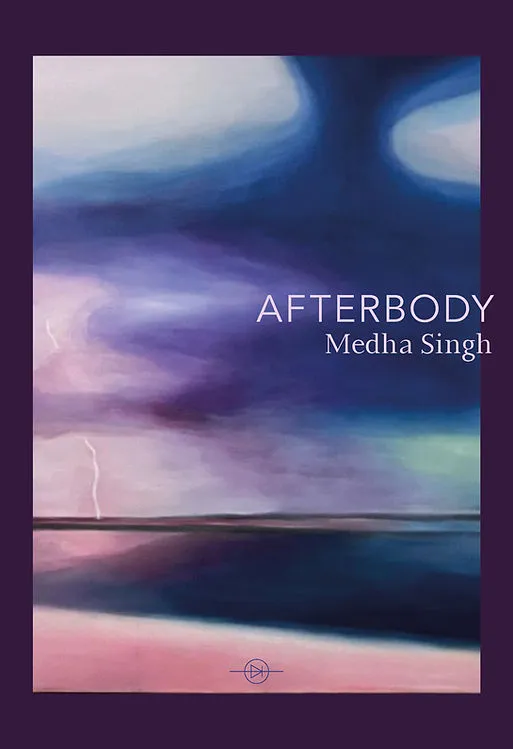
Our body resides in the conscious zone of human existence. It is our biggest foe and our greatest friend. Sometimes it betrays us, dispersing shame around it and labelling it with unfortunate titles. At other times, it helps us in overcoming the biggest troubles by identifying it as an associate of humankind. Our mind generates thoughts which battle with the body even though at the very core, they are in a symbiotic relationship with each other. Medha Singh’s Afterbody is a document where body takes several turns and absorbs and churns only to project the world as an extension of the body we possess.
In the book Nightbitch, Rachel Yoder brings before us a horror which is generated only when the protagonist changes into a dog. She activates her body to do everything a woman desires, but is not expected to do. The fourth wall of society feels a devious crack. Franz Kafka, in his book, Metamorphosis does the same since the possibility of accomplishing the dark and the divine lessens with a human body. Medha does not work on giving us similar thoughts through her poems, but her choice is to decipher the cryptic language of our body. The language comes out of pain, pleasure, principles and position. Body is a solid axis and it has ears to listen to our many realities.
Another Life is a poem that quietly plays the role of a representer. Here, the poet initially puts a statement on how under exhaustive conditions, love is written to stand with a bit of hope. As the poem progresses, Medha cleverly pinches the trigger points of toxic association. Vengeance and violence reside inside every human being. It always depends on whether these two agents are loud and chaotic for others, or simply, an outburst for our own self. The aftermath of outburst is compassion and, in such times, we forgive our foes and start understanding that even the wicked ones dream good. Amidst the noise of the town and hullabaloo of good times, Medha focuses on the outpour of love. It cannot be said or explained like other stuff since no one has the time to understand. What matters for her is to engulf it and stay content with whatever it is capable of offering.
“Evening over tarmac, evening
beneath lorries, where dogs huddle
for warmth, and for miles on end
the quiet noise of town.”
We are beings made of various kinds of memories. The primary being our individual body memory. With time, the outer being changes, but that first memory, keeps on sprinkling over every new one. Not because of the specialty of the first touch, but for how it is the switch, trigger and origin of our awakening. But the poet points how the loss of that first touch is like an invisible sorrow. It roams all over the body – to compare, to always seek for something better, to take it as a drive. It effectively manages to push us to watch what lies beyond our body in other bodies which are in many ways associated with us. The poet reminds us that at one point, the origin is going to make us feel satiated about the newness of other elements thriving around us. Touch is a poem where we find the strength of first touch and how it acts as a driving force to feel everything that’s required.
I have known all one could touch: tribal
song on another side of the forest. I knew by the way
it held me first. I walked away, still having had these hands
on the newness of the strange – cobblestones, new waters,
this rain.
In the poem The Meadows, Medha Singh documents an erotic instance balanced between longing and unison. Absence ignites longing and with time, this absence detonates inside us to break every wall that holds our emotions and desires. When we crave for someone, the existence intensifies the flow that takes us to places where our past instances and expectations of the future reside. In these times, everything else becomes incapable of making us feel a substitute emotion even though they may or may not have the same intensity. The passion colours all our versions and we turn into something we never dreamt of becoming. Here, the poet becomes a mendicant only to assure us that she gets passion in return. The image of her lover having a stone tongue is a reflection of her longing.
“God’s feints startle the rising moon,
they come for me as you leave, my cheeks
saline now that it’s clear the sun eats
only so much darkness, the dark sick
of itself, a mendicant praying for light.”
We always try to bridge the ecstasy and entropy of our lives. To dissociate from our ‘self’ is necessary to process joy and vigour by turning into a realistic observer. When we plan to bring variation in our life, a garden is nurtured inside us. The humankind penetrates dreams, their phases and reality become evident without any metaphor or humour. In the poem Rewilding, Medha brings a counternarrative of a monotonous and unrefined life before her readers. Her desire for a varied life in times of anxiety is an extreme craving where pain is not pain anymore. Rather, it is a part of life like happiness. Medha’s demand to take a stand for people who are lonely comes in the form of this image of a boy being cremated in snow and the poet befriending her death only to not let him pass away in loneliness. An effort most do not dare to provide in this terrorizing world.
All I want in the anxiety and aimlessness
of world and ecstasy is the courage of gardens
that endure the quiver of time. The kind
that could make me stand through
the cremation of a child in snow, where
there is none to attend
but a blanket flowing along my spine.
Places have a certain impact on our lives, especially those which have our childhood, bits of our adolescence and how we take them in our memory as adults. Aerie: Vignettes, Delhi, is divided into segments to elucidate the place with its own moments and how the poet observes them by associating them with a memory or changing time that’s constant with those who have been living in it. Intimacy blooms at a certain location and absurdity can be kept with clarity since both of them are nudged by familiarity. This particular long poem fits into a reader’s mind by allowing them to focus on two or more particular vignettes. A poetry that’s glorious, distinct and important.
She who sweeps up the nameless
the homeless, the parched, the dead
off the streets, every year in this chimeric city,
the annual heatwave claiming their blood, grabbing
their souls in its maw – what is her name?
Designation? Dante’s guide. Beatrice?
Medha Singh’s Afterbody is a thought-provoking collection of poems where the world is addressed with wind, water, and weeping eyes. They are touched with fingers, fear and frowning faces. The hours and minutes aren’t just components of time. They are cooked in these poems to prepare a meal which is served with visceral longing, unusual imageries and a definite idea of this existence.

Kabir Deb
Kabir Deb is an author/ poet based in Karimganj, Assam. He works in Punjab National Bank and has completed his Masters in Life Sciences from Assam University and is presently pursuing his MCW from Oxford University, London. He is the recipient of Social Journalism Award, 2017; Reuel International Award for Best Upcoming poet, 2019; and Nissim International Award, 2021 for Excellence in Literature for his book ‘Irrfan: His Life, Philosophy And Shades’. He runs a mental health library named ‘The Pandora’s box to a Society called Happiness’ in Barak Valley. He reviews books, many of which have been published in magazines like Outlook, Usawa Literary Review, The Financial Express, Cafe Dissensus, Sahitya Akademi etc