
Review: Kaayaa – A Novel
Corporeality emerges as a fraught terrain where patriarchal power, diasporic identity, and institutional authority converge, challenging the body's agency against systemic control.
The body is an archive that remembers without hierarchy. Touch and smell, reluctance and abandon, mess and glory, each is stored with the same fidelity, untouched by moral forging. From this sediment of memory, the body learns its grammar of love, hatred, and devotion, compelling these emotions to return again and again to the deepest chambers of consciousness. What we feel is rarely spontaneous; it is rehearsed by the body long before it is articulated by the mind.
Within the socio-political order, the body becomes a fraught and overdetermined site. It is burdened simultaneously with shame and seclusion, policed by norms that seek to discipline its visibility and silence its desires. Yet the body also harbours the possibility of liberation, most insistently through eros, that subterranean force embedded within the architecture of sensuality. This eros does not announce itself loudly; it resists doctrine and decorum, working quietly against structures that attempt to render the body inert, obedient, or invisible.
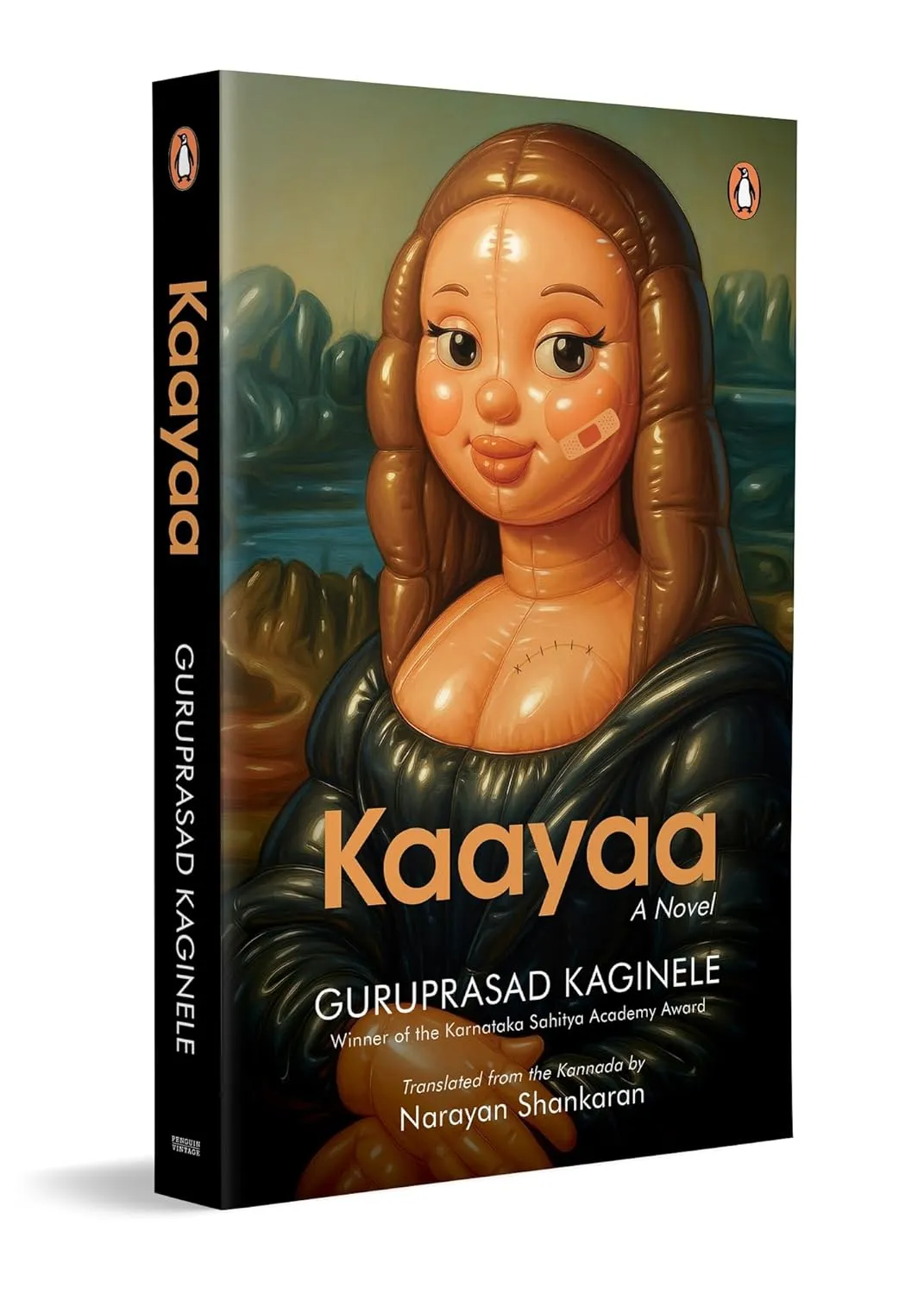
Guruprasad Kaginele’s Kaaya: A Novel, translated from Kannada by Narayan Shankaran, inhabits precisely this tense terrain. The novel confronts the body not as a metaphor alone but as a reality that is fragile, desiring, violated, and resistant. It examines the horror that arises when the body is reduced to an object within patriarchal centrality, even as it remains a deeply subjective and sentient presence. In doing so, it forces the reader to reckon with the body’s precarity and its quiet defiance, revealing how corporeality becomes both the site of oppression and the last refuge of truth.
In The Substance, written and directed by Coralie Fargeat, the narrative follows the relentless pursuit of Elisabeth, played by Demi Moore, to remain desirable, visible, and professionally relevant by subduing the most unforgivable transgression in the industry she inhabits, which is age. What unfolds is not merely a chase for youth but a slow erasure of selfhood. In attempting to preserve her future, Elisabeth forfeits her present, undoing a life that might otherwise have branched into alternative, unimagined possibilities. The film treats ambition as a corrosive force, revealing how systems of validation compel women to collaborate in their own disappearance.
A similar but differently inflected pursuit animates the novel under discussion, where the dream being chased is the endlessly deferred promise of American acknowledgment and reciprocity. For those rendered alien by nation and culture, this dream is not aspirational but existential, a demand to be seen, accepted, and legitimized. At the centre of this pursuit stands Bheem Malik, a celebrated plastic surgeon whose professional mastery grants him social stature while simultaneously positioning him at the most precarious intersection of power, intimacy, and trust. His life fractures when he is accused by a woman of inappropriate touch during surgery under the shadow of the MeToo movement, an accusation that transforms his vocation from a source of authority into the very grounds of his undoing. Something that is capable of dragging him to the very ground.
The repercussions radiate outward, implicating not only Malik’s personal and professional identity but also the political career of his mother-in-law, a sitting senator. The novel delicately navigates this convergence of class, gender, power, and institutional privilege, refusing the comfort of easy verdicts. Instead, it exposes how such situations accumulate weight unevenly, becoming unbearable precisely because they operate within structures that demand accountability while simultaneously distorting justice. What emerges is a portrait of aspiration curdling into crisis, where dreams of belonging, whether cinematic or literary, restore a devastating corporeal and moral cost from those who dare to chase them through the many kinds of inevitabilities.
Patriarchy, in the novel, is revealed through the male gaze trained upon a woman’s body and more crucially, through the refusal to recognize that body as an agency of resistance. The body is permitted visibility only as spectacle, never as speech. While the conflict is articulated through gender, it is inseparable from class and positional power, both of which operate as silent enforcers capable of reducing a woman’s presence to enforced muteness. Power here does not merely dominate. Rather, it also disciplines, teaching women when to be seen and when to disappear.
The sensuous texture of the narrative does not soften its critique; it intensifies it. Intimacy functions as an analytical instrument through which the behaviours of men and women are laid bare, revealing how proximity subtly reorganizes and empowers authority, how desire masks entitlement, and how vulnerability is persistently misread as consent. What appears personal is, in fact, deeply structural. These encounters do not exist in isolation. They are rehearsals of a social logic that disciplines bodies well before they penetrate into our private spaces, ensuring or solidifying the fact that power precedes touch and control anticipates intimacy.
Structurally, the novel resists linear confinement. Moving fluidly across time frames, it binds its characters through a shared corporeal fragment, the body as memory, as site, as an agency or evidence. Each temporal shift reinforces how control, desire, and oppression are never episodic but continuous, rehearsed across moments and relationships. In this continuum, the body becomes both the terrain upon which power is exercised and the only medium through which it can be contested, even when that contestation is forced into silence.
Guruprasad Kaginele extends this inquiry by tracing the diasporic pressures that seep into human relationships, pressures that can either bind individuals together or fracture them irreparably. Displacement sharpens ego, inviting disagreements and judgments that operate across emotional, cultural, and moral registers. The trajectory from a middle-class origin to professional success is never merely economic; it decisively shapes the ethical routes characters choose to follow, often determining who they become in the process of arriving.
Through his characters, Kaginele dismantles the delusion that the fragile bridge between comfort and audacity can be stabilized by wealth or power alone. Money promises insulation, authority promises legitimacy yet neither guarantees moral balance. Instead, the novel locates generosity and integrity among those who refuse this bargain, characters who step away from the seductive logic of accumulation and dominance. Their resistance is quiet but consequential, grounded in the pursuit of peace of mind and in the ethical relief of not becoming accomplices to patriarchy or capital, even when taking the step is not required or mandatory. In choosing inward coherence over outward success, they reclaim a form of dignity that neither status nor power can purchase.
Narayan Shankaran’s translation operates with a rare attentiveness to both body and context, seamlessly interlacing corporeal narratives with the social structures and conversations that surround them. Rather than creating interpretive gaps between the reader and the writer’s intent, his choices in diction and rhythm work to preserve psychological nuance, allowing the inner lives of the characters to remain legible even across linguistic boundaries. The emotional intelligence of the source language is not flattened but carefully carried over.
Where translations of regional literature often succumb to excessive stylization in an attempt to honour the target language, Shankaran resists ornamentation. His prose leans gently toward the poetic without becoming mannered, relying on clarity and restraint rather than linguistic display. By choosing simplicity over spectacle, he amplifies impact, ensuring that meaning arrives unencumbered, resonant, and faithful to the ethical and emotional gravity of the original.
In Kaaya: A Novel, Guruprasad Kaginele crafts a narrative that refuses simplification of bodies, of desire, of guilt or of power. The novel positions the body as both evidence and witness, a site where patriarchy, class, diaspora, and institutional authority converge and clash. Rather than offering resolution, Kaginele sustains unease, compelling the reader to confront how deeply social structures infiltrate intimacy, aspiration, and ethical choice. His characters move through ambition, accusation, silence, and resistance not as symbols but as vulnerable human agents shaped – and often distorted – by the systems they inhabit.

Kabir Deb
Kabir Deb is an author/ poet based in Karimganj, Assam. He works in Punjab National Bank and has completed his Masters in Life Sciences from Assam University and is presently pursuing his MCW from Oxford University, London. He is the recipient of Social Journalism Award, 2017; Reuel International Award for Best Upcoming poet, 2019; and Nissim International Award, 2021 for Excellence in Literature for his book ‘Irrfan: His Life, Philosophy And Shades’. He runs a mental health library named ‘The Pandora’s box to a Society called Happiness’ in Barak Valley. He reviews books, many of which have been published in magazines like Outlook, Usawa Literary Review, The Financial Express, Cafe Dissensus, Sahitya Akademi etc