
Review: Stories the Fire could not Burn
Hauzel's memoir confronts the existential stakes of home and identity, exposing how…
Read more →Anis's novel rigorously critiques cisnormativity and systemic violence, exposing complex transgender realities in Bangladesh while asserting profound claims to dignity and agency.
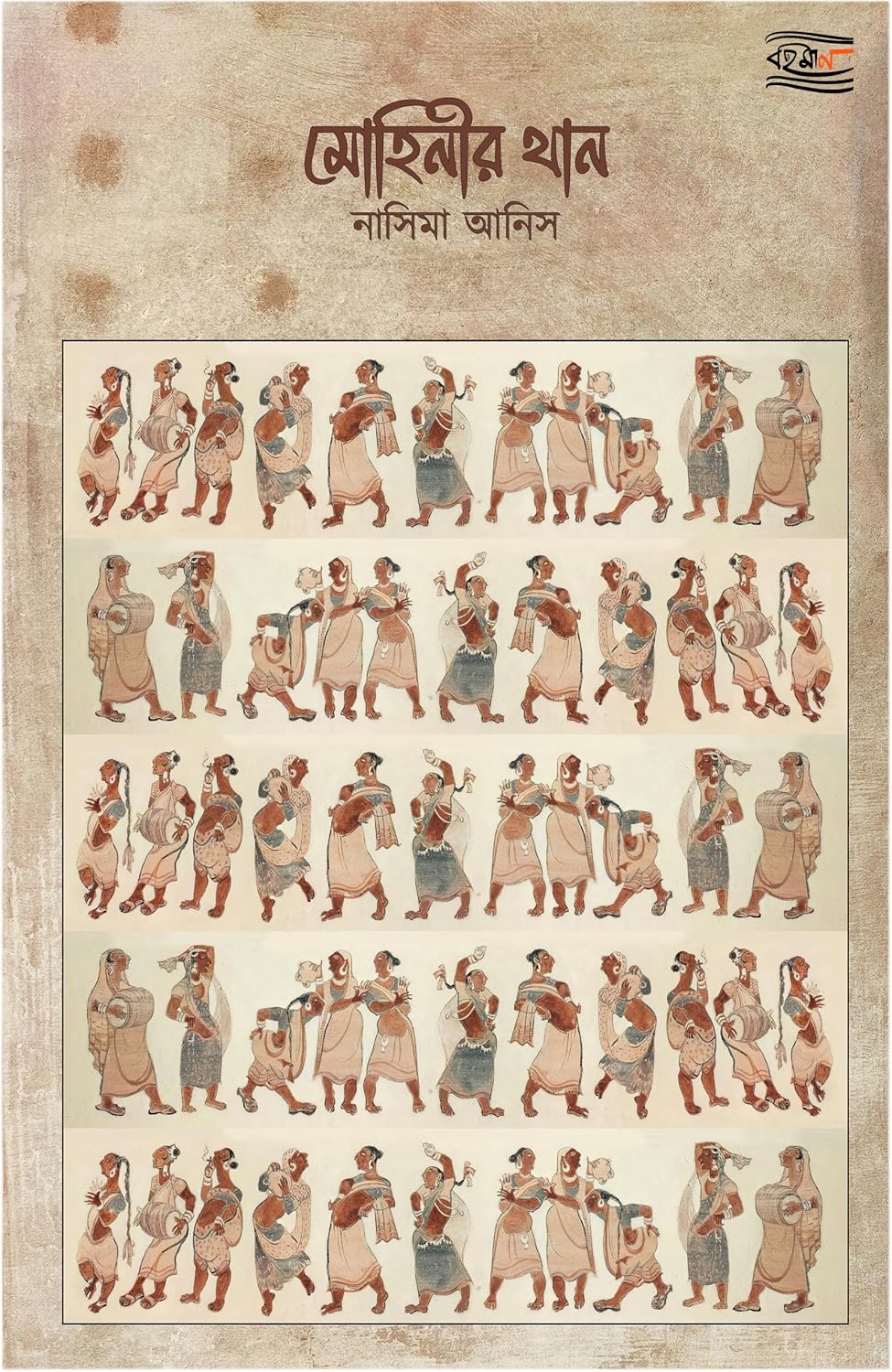
The first few pages of Nasima Anis’s novel reads like a documentary. A camera leading us to the setting where preparations for a marriage are under way. Raw detailing without mincing words. Anis’s novel Mohinir Thaan, translated as Mohini by Sarban Bandyopadhyay, is a no-nonsense, objective but disconcerting journey into the underexplored realities of transgender life in Bangladesh. Set in post-independence Bangladesh, within a community sanctuary known as thaan, the novella moves beyond a simple story of marginalisation to delve into the complexities of gender, subversive kinship, social and biopolitical resistance.
Nasima presents a raw, real, unsettling account of what it is to be living at the fringes of societal acceptance. She portrays, but without judgement or glorification. There is persistent harping on loneliness but no melodrama. The novel ultimately sings of evolving, of emerging triumphant. On one occasion, when the protagonist, in her younger days, contemplates suicide, she weighs her scale equally and then decides not to die:
Mohini did not die. She went abroad early in her efforts to overcome her constant struggles with inabilities, humiliation, and helplessness: Kolkata, West Midnapore, Delhi, and Ajmer. She was different when she returned after a year’s worth of travel. After this, she frequented the abode of the bard Lālan for a time in search of peace. Clad in a white dhoti and sari, she submerged herself in Lālan’s songs and sang from the depths of her heart:
Nasima records with precision and presents with strategy and Bandyopadhyay’s translation successfully walks this precarious tightrope of balance. Everyday events from the lives of the ostracised, oppressed inmates of the sanctuary are consciously chosen and a novel emerges that is concomitantly a radical critique of cisnormativity, gender violence, institutional apathy and pervasive exploitation.
Motherhood and maternal longing form the emotional crux of this novel. Mohini’s adoption of Disha, an abandoned girl-child, is simultaneously a reclamation of maternal agency and a violent condemnation of social hypocrisies. It is also a powerful reclamation of domesticity for a community which is denied it. Often, after a brief spell of domestic bliss, lovers eventually leave their transgender partners for a ‘complete’ woman, as did Osman. Thus, dysphoria with the biological body and the desire for a perfect female anatomy dominates the narrative. Sarban Bandyopadhyay, whose academic interest also lies in queer studies, deftly captures this poignancy.
Meanwhile, Osman roamed with the theater troupe. The troupe gained a new lead actress, and inevitably, Osman taught her how to dance. Along with dance came lessons in love—and eventually, even marriage. But Osman had truly wanted to keep Rupobhan. Still, it was as if someone pointed a finger at his inadequacy, mocking: “What dreams does a hijra woman have?” Out of her love for Osman, Rupobhan chose to step away voluntarily. Unlike Urvashi, who had cursed Arjun to remain impotent for the rest of his life, she didn’t curse him in a fit of rage.
As the community’s alternative mythology of Ma Aliya suggests, motherhood for the transgender is a chosen kinship, sometimes fatal, rather than being just a biological capacity.
The novel also addresses the legal invisibility of the community and systemic deprivation of property rights. Forced estrangement, combined with the dichotomy in families’ approach to a transgender’s inheritance rights, forms a formidable concoction for psychological disaster.
But they had preplanned the distribution. She was allotted the share of a daughter. “But why? My name is still Madhu, isn’t it? Isn’t it a boy’s name? Didn’t I shoulder all your household responsibilities for ten years after independence? Didn’t I bring up two of my brothers? Or bear household expenses?
Mohini’s forceful securing of her “son’s share” vis-à-vis Alomala’s tragic failure to claim her land creates a spectrum of social and economic dispossession. Dissociative fugue can be a diagnosis for Alomala’s “possession” by the Goddess Kaali and her ultimate death on the railway tracks.
Mohini virulently criticises institutional apathy and institutional exploitation as well. The protagonist’s scathing attack on a NGO’s endeavours to treat the mentor and her disciples as research “specimens” is an act of resistance to biopolitical control. She asserts the community’s dignity and decorum. They may live in poverty but not in depravity. Mohini refuses to allow their bodies to be clinicalised by outsiders who do not respect their lived reality.
Anis’s work does not seek sympathy for the Hijra community in Bangladesh, rather it is a study in resilience with a sharp focus on authentic delineation. It is a deep ethnographic study that is coterminous with gender, religious, legal and psychological issues. Sarban Bandyopadhyay’s prose mirrors the author’s stance and is descriptive but detached, restrained and quiet, echoing strength laced with loneliness and precarity. It is only towards the end, with news of Disha’s pregnancy, and during her childbirth, does the prose become ecstatic and at times clamorous as it celebrates the “miracle” of birth. Using such ethnographic transgender depiction as a lens to study everyday behaviour, one realises how the pleasures and privileges of life are often taken for granted by cisnormativity.

Averi Saha is an academic, translator and critic based in Kolkata. She specialises in Performance Studies and in studying non-canonical literature. She has published in Borderless Journal, Gitanjali and Beyond, Setu, Voices and Visions, the IPPL journal and in Routledge publications.