
From ULR
Issue 14 – WITNESS
Editorial: ULR Issue 14, Witness
A powerful reflection on literary witnessing through the voices of Afghan women writers, exploring how stories survive censorship, exile, silence, and fear.
Dear reader,
Witness is not only a theme for Usawa, but also an act of literary practice, an ethic of shared attention between the author, editor, and the reader. This issue could not have been otherwise.
For this issue, we stayed close to writing that refuses closure. We were drawn to work that remains messy, uneasy, and disconcerting by remaining faithful to lived experience; we looked for writing that neither tidies up nor turns away.
While this is a letter to you about the Winter 2026 issue, Witness, of the Usawa Literary Review, this is also the story of the editor learning to bear witness, and of being humbled by the very act of editing.
On the 11th of October, 2025, the Taliban leadership, visiting India, barred women journalists from attending their first press conference. It was a chilling reminder — in case we needed one — that the Taliban’s war on Afghan women had not abated.
A fortnight earlier, WE ARE HERE – Writings by Afghan Women had gone live as a special issue in Matchbox by Usawa amid an internet blackout. The sequence of events brought into sharp focus the stakes of literary witnessing.
Earlier last year, as we prepared to announce the special issue, I knew I was not the right editor. Shikha Sawhney Lamba was. A Hong Kong-based poet and editor, Shikha has spent years working closely with Afghan women poets and activists. She took on the editorship of the issue with the full weight of her knowledge and her relationships — and what followed was unlike any publishing process I have been part of.
Once submissions opened, the practical and ethical challenges arrived immediately. The basic online submission form kept crashing. Many contributors, the ones who lived inside Afghanistan, did not have reliable internet access. Some submitted through intermediaries. Some could only send voice notes.
An unsigned poem by a child in an orphanage read:
If I were to say where my books have taken me,
The men of this age would stone me mercilessly.
Usawa had never published children before, but silencing them would have meant accepting the very rules we were trying to defy.
Nigin, constantly on the move for speaking out against the Taliban, sent her work in fragments — broken emails, voice notes, WhatsApp messages that stopped mid-sentence. Her submission arrived in pieces, like a text trying to survive its own transmission.
Across submissions, the same words recurred like a mantra: ache, book, pen, dream, freedom. I stopped counting how many times the words ‘book’ and ‘pen’ appeared.
In her poem, contributor Shogofa Amini wrote:
Write and write — until you can’t cry anymore.
When your eyes are dry, your words shut down.
When the world is deaf to your voice and blind to see you,
grab the pen and write about yourself.
Muska, a journalist unemployed under the Taliban restrictions, loves to read Dostoevsky and Camus, searching for ways to think of life and humanity through literature. She wrote to us through a friend.
As we prepared to publish, contributors warned us of an imminent internet shutdown. They requested us to release early, before that happened. For three days, our small team worked without pause to bring the issue live in time.
Then the Internet went dark. Emails froze, as WhatsApp messages went undelivered. For days, there was silence.
When the connection flickered for a few minutes, a message from Nigin came through:
‘Before the blackout, at least we had the sense that we were still connected to the world. We could see what was happening beyond our borders — and the world could see us. Now, our networks, sources, and support systems vanished overnight. We couldn’t even send a message.’
— Nigin
Hours later, responding to Shikha’s frantic messages, she added:
‘There’s always a sense that the internet could be cut off again because the Taliban are not trustworthy. Whenever they feel threatened, especially after events that attract international attention, they impose restrictions.’
— Nigin
About her work, art and activism she wrote:
‘Do not normalise the Taliban. Do not call this peace. Share the voices of people inside Afghanistan, especially women who have no way to scream. We’re creating art in the dark — and we need the world to hold a light.’
— NiginWe understood that silence wasn’t absence; it was a wait, and it could be endless.
Many years ago, while editing Veils, Haloes and Shackles: International Poetry on the Oppression and Empowerment of Women (2016), we wanted to include Afghan poets — and could not find any. Not because there were none, but because there was no safe way to reach them.
Until recently, that blank page was the closest I had come to an Afghan woman’s voice — a poem forced into silence. That blank page has stayed with me as a literary haunt for years. WE ARE HERE was, in part, a response to that blank page.
In her essay, our guest editor Shikha quoted Khalyla Harito, founder of the Hope and Kindness Organization in Afghanistan, for whom the blackout wasn’t just about connectivity:
‘Our aid requests and updates depend on platforms like WhatsApp, Facebook, and X. Communication with the orphanages we support and our volunteers across regions became impossible. Families waiting for emergency help couldn’t be reached.’
— Khalyla Harito, Hope and Kindness Organization
Messages from contributors and other Afghan women still find their way into our inboxes, thankful simply for being heard and carried out into the world. Mina Sherzad, one of our contributors, wrote from the Netherlands, where she now lives in exile: ‘You have given us a platform and a voice. Thank you. This is all we need.’
In this issue, we documented a flicker of life and resistance from the heart of Afghanistan that refused to give in. This collaboration bears witness to light that cannot be extinguished — and to our own responsibility, as a literary journal, to carry it forward.
WE ARE HERE changed our editorial instincts. We learned that under danger, literature changes shape: it arrives in fragments, in gaps, in sudden silences that ask to be listened to as carefully as the words themselves.
With Witness, we carry that learning forward — to record what is vanishing, what is being erased, what cannot always be said in full.
‘My voice isn’t silenced — it has only learned to speak more quietly. And don’t only listen when we scream. Listen to our silence too. Sometimes, the deepest truths are carried in what we cannot say.’
— Nigin
Go on then, witness.
Yours,
Smita
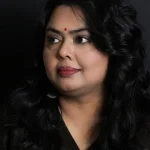
Smita Sahay
Smita Sahay served as Associate Editor for 'Veils, Halos & Shackles: International Poetry on the Oppression and Empowerment of Women'. Her works have appeared in national and international journals, newspapers and anthologies. She is the Editor-in-Chief of Usawa Literary Review, and the Poetry Editor for SPEAK, the Magazine. A visiting faculty of Creative Writing at Whistling Woods International, Mumbai, she is an ISB alumna, class of 2015. A survivor of C-PTSD, she is also the founder and Somatic therapist at Calm Space Healing, a trauma-informed therapy and healing practice.