
From ULR
Issue 14 – WITNESS
Editorial: Fiction – ULR Issue 14, Witness
Stories collectively unveil how tyranny and pervasive surveillance subtly deform individual lives, demonstrating that witnessing these oppressions bears a profound, enduring weight.
Stories of the Watched, the Vanished, the Dead
In “A Mouse’s Saga,” Agnibarathi narrates tyranny through the tiny, audacious world of mice, reminding us that violence often lives most viciously inside the smallness of domestic space. The story carries an echo of Art Spiegelman’s MAUS in its use of animal allegory: the non-human becomes a witness, with the permission to name what human language is trained to soften.
How much trouble can a dead woman still be? In “They Call You Trouble,” Fatima Okhuosami traces how a woman can be buried twice, once in the earth, and again in the stories told about her. Written in the second person, the piece refuses the comfort of distance. It asks: what are the morals of mourning?
Must vanishing be sudden and dramatic, or can someone disappear slowly, while still present? In “Machination,” Julia Jacob writes about the intimate terror of watching a loved one slowly drift out of reach. The story is built from the fragile architecture of everyday life—tape, ceilings, routines, childhood memory—small domestic things that feel both ordinary and unbearably breakable.
Brilliantly paced and written with restraint, “Of Jets and Oranges” by Nilanjana Dey trusts sensory detail—the scent of an orange, the darkness of a bunker, a child’s misreading of war—to hold its political and emotional weight. At its centre is tenderness: two boys placed inside violence, friendship surviving in the thin air between fear and loyalty.
In “The House With Too Many Eyes,” Umenyi Chisom Evelyn writes a world where surveillance is not an institution but a household condition. It traces how do scrutiny travels through family, religion, neighbours, before finally settling inside the self. This story reclaims what has been watched into silence.
Finally, “The Mirror Test” turns the salon into a site of witness, where beauty is never only beauty, and visibility always has a cost. Yomi Olusunle writes with social precision about the politics of appearance, publication, and the selves women are asked to edit to be received.
Across these stories, witness does not bring closure, but holds the weight of what must be, and is being, held. Each piece asks, in its own way: how many gazes are there, and how do the lives of those watched shape under them?
Smita Sahay
Editor-in-Chief, Usawa Literary Review
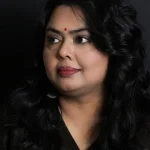
Smita Sahay
Smita Sahay served as Associate Editor for 'Veils, Halos & Shackles: International Poetry on the Oppression and Empowerment of Women'. Her works have appeared in national and international journals, newspapers and anthologies. She is the Editor-in-Chief of Usawa Literary Review, and the Poetry Editor for SPEAK, the Magazine. A visiting faculty of Creative Writing at Whistling Woods International, Mumbai, she is an ISB alumna, class of 2015. A survivor of C-PTSD, she is also the founder and Somatic therapist at Calm Space Healing, a trauma-informed therapy and healing practice.