
Morsels of Dissent
In a kitchen kingdom, shunned women grind defiance, feeding fury to men,…
Read more →From inherited mirrors, a beastly hunger offers ancestors a new feast of liberation.
They tell me that you are what you eat,
so,
I offer to make you a new menu.
In addition to the annual serving of
rice balls and jaggery,
mutely lined near riverbanks
that hold no obligations
to pay the debt of grief,
I offer you an understanding of hunger,
the memory of which gets stacked
rebirth after another for us
to carry along like the aftertaste
of our prayers.
I offer you my hunger,
which is as beastly
as the facilitators of your moksha:
the crows and the dogs,
the gluttonous exiles that, like water,
know the address of the dead.
I offer you my pirate’s treasures of childhood:
seeds of tamarind and wild berries,
and the time-worn scars from
the forbidden climbing of the trees.
I offer you a seat on vertigo’s carousel
to regurgitate the offenses of the past.
I offer you the reflections in our inherited mirrors
that still house the apparitions of women
who once blinked and nodded,
and had no friends
but now they speak to me,
and together we long for you.
We don’t wish you the terror of dusk,
nor the flipside of heaven,
but we would like you to disassemble
in splinters of repentance.
Having amassed all that I have,
I offer you a feast of forgiveness
on the folds of my belly,
then wait for a crow
to come peck at my liberation.
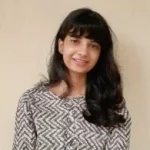
Pushpanjali is a poet, independent researcher, and student of English Literature from Jharkhand, India. Her poems have been featured in both print and online publications such as More than Melanin, ASAP | art, Gulmohur Quarterly, Narrow Road Journal, Nightingale & Sparrow, among others. Her research interests lie in feminist theory and literary studies, while her creative work primarily focuses on the intersection of themes including the body, environment, gender, and the enduring impressions of her own rural identity.