
Anjum Hasan in Conversation with Namrata Pathak
Literary expression is critically evaluated for its navigation of inherent tensions between…
Read more →The conversation critically examines how decoloniality challenges established Anglophone literary norms by centering indigenous trauma, linguistic identity, and child perspectives.
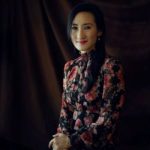
Avinuo Kire is a writer and teacher from Kohima, Nagaland. She has authored two short story collections, The Last Light of Glory Days (Speaking Tiger) and The Power to Forgive (Zubaan). She also writes poetry and has co-authored an anthology of oral narratives, Naga Heritage Centre: People Stories (PenThrill). Her latest book is a novel, Where the Cobbled Path Leads (Penguin Random House).
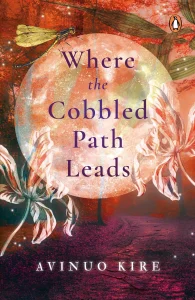
NP: Where the Cobbled Path Leads tells a story from an eleven years’ old child, Vime’s perspectives who is struggling to come to terms with the demise of her beloved mother. What is the prime reason behind choosing a child protagonist?
AK: I find it liberating as well as eye opening, telling a story through a child’s worldview. Children are untouched by prejudice and free from any sense of biasness that adults carry, and so their observations are their own- fresh, original and objective. Vime, the protagonist in my novel is 11 years old. I felt that perhaps 11 years seemed ideal- a threshold age when a child still retains the purity and innocence of childhood but can also be incredibly wise.
NP: There is an interesting linguistic play in the novel which comes from the use of Tenyidie words in the book. These words are scattered across the novel, but their meanings are not explained in footnotes, nor they are italicised. This creates a polyphonic blend, a cultural and linguistic mix, an amalgamation that is special and unique. What is the intention behind this act?
AK: Thank you for noticing this.
I think the greatest challenge of a non English writer writing in English is to seek and assert one’s own identity. An effective way to do this is by infusing local inflections and native colourings while narrating the story or creating dialogue and so in this particular book, led to the incorporation of Tenyidie, my native dialect. While going through the manuscript with my editor, I requested that the Tenyidie words should not be italicized because I wanted to allow the words to blend into the overall narration as opposed to being conspicuous italics. As for footnotes, I feel that unless absolutely essential, they are better done away with. I think we should not underestimate readers and that as long as the reader is engaged, he or she should be able to follow the story without unnecessary interruptions in the guise of footnotes or italics. These may seem little things perhaps but I think it helps to retain authenticity and are instrumental in creating a voice that is the writer’s own.
NP: In the subterranean layer, the novel runs a narrative of loss and hurt, violence and conflict at multiple levels in a Naga society. The Naga life, plump with rites and rituals, mores and values, cuisines and food habits—we come across the everyday life, the daily ongoing in a Naga household. Is there a motive to make the political personal?
AK: There wasn’t a conscious motive as such. But I do believe that the personal is political. I think we restrict politics when we confine it to an ideology, a creed or movement- It is of course, all these things but most importantly, politics is about people and at its core lies the personal. For an indigenous writer with an oral history, writing, more often than not, becomes a complex exercise as whether consciously or otherwise, we are blending the personal and political, individual as well community, private and shared experience.
NP: Coming to the deft switching of reality in your debut novel or rather the novel being a place where alternate realities jostle together, how did you infuse an indigenous Naga tale with an universal appeal, the local with the global?
AK: While writing this story, I drew much inspiration from my roots- particularly our folklore, myths, history, also nature and contemporary life, my everyday reality. Conflict also forms a backdrop to the story. In this sense, it is very much an indigenous Naga tale which places the Naga hills in the centre of the world. However, although the root of the story remains indigenous, the larger story is universal, one of love, loss and hope, about transformation. Ultimately, it is about the human experience. And so I would like to believe that this is a local tale with universal relativity.
NP: What are the advantages and pitfalls of writing from/about the North East of India? As writers, where does this tag of identity take us?
AK: I think an obvious advantage is our our huge repository of folklore, myths and legends to draw inspiration from. It’s wonderful that writings from the North East is fast evolving and is now recognized as an important sub genre of Indian literature. Our history, politics, culture and traditions, worldviews- our experiences are distinct from the rest of the country and hence, so are our concerns. This is powerfully reflected in our literature. At the same time, always confining our writings to the site of production, as writings from the North East, can also hold us back sometimes. Also, not every writer from the NE writes in a manner typically characteristic of writings from the region. I think this is quite marvelous.
NP: How would you define the process of writing? Can it be labeled as a craft that is meditative, strenuous, frustrating at times, fulfilling at times, epiphanic? Tell us more about your resplendent way with words, how do you mould and chisel them, colour them with your subjective moorings?
AK: You’ve defined it so very well. Writing is indeed all of the things you mentioned. As for my writing process, I really don’t have one. It’s actually quite a boring answer in that the process begins and ends with writing, with endless editing in between.
Dr. Namrata Pathak teaches in the department of English, North-Eastern Hill University, Meghalaya. She has an MPhil and PhD from English and Foreign Languages University (EFLU), Hyderabad. Her recent book titled Indira Goswami: Margins and Beyond (2022) is published by Routledge and is a part of the Writer in Context Series. She has been a recipient of FCT-Ford Foundation Fellowship and UGC-Associateship by IIAS, Shimla. Her debut collection of poems, That’s How Mirai Eats a Pomegranate, was brought out in 2018 by Red River. Her writings are included in Scroll.in, Outlook, Muse India, Kitaab, Bengaluru Review, Raiot, Vayavya, Setu, Café Dissensus, Setu etc. Her poems are included in the Sangam House Monsoon Issue: A Special on Poetry from North East, July, 2019 and anthologies forthcoming from Aleph, Zubaan and other publishing houses. Currently she is the Charles Wallace India Trust Fellow at SOAS-University of London. Her upcoming book, A Reader on Arun Sarma is going to be published by Sahitya Akademi.