
Excerpt: A Woman Of No Consequence
A spirited Tamil woman's lifelong reckoning with truth, tradition, and the quiet…
Read more →Sonchiriya confronts India's persistent caste order and gendered oppression, exposing how deeply entrenched systemic power structures perpetually thwart justice and national progress.
Discover the books that shape our times
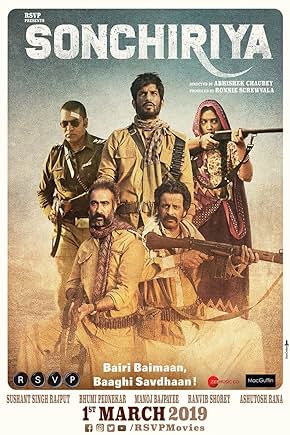
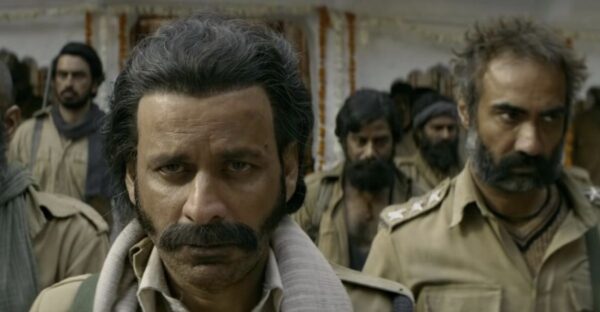
Disenfranchisement is a continual challenge. Prejudice is generational. Resistance is a journey. Sonchiriya is a kind of film that is made once every decade to show how far Indians have come. During peak liberalisation, Bandit Queen (1994) stripped down the caste to its horror. At the height of the reality television era, Paan Singh Tomar (2012) reminded us how “Rebels live in the Ravines, Dacoits Sit in Parliament.”
2019 was the last normal year before the COVID-19 pandemic. 2019 was also the year of the Indian General Elections to constitute the 17th Lok Sabha in India. The conservatism of 2014 has mutated into the supremacism of dominance. The ruling dispensation returned to power with the gradual rise of religious-based nationalism. The political development influenced generic elements and thus, there were a series of nationalistic films – Panipat (2019), Kesari (2019), Manikarnika (2019), Uri (2019), and The Kashmir Files (2022). These films were cleared by the paternalistic Central Board of Film Certification, or CBFC.
In a year where Siddharth Anand’s War was crowned as the highest-grossing Hindi film of the year, Sonchiriya was released on March 1, 2019. From the use of Urdu in Dedh Ishqiya to the full-on Punjabi in Udta Punjab, Abhishek didn’t shy away from making his characters speak Bundeli with hindi subtitles. Sonchiriya reminds me of the popular saying: “What Goes Around… Comes Around”, and a lot of themes could be conjoined by one dialogue:
Saanp khavega chuhe ko, saanp ko khavenge gidh Jehi niyam duniya ko, keh gaye sadu sidh
[Snakes shall eat the rats, vultures shall eat the snakes. That is the rule of the world, renowned sages have proclaimed.]
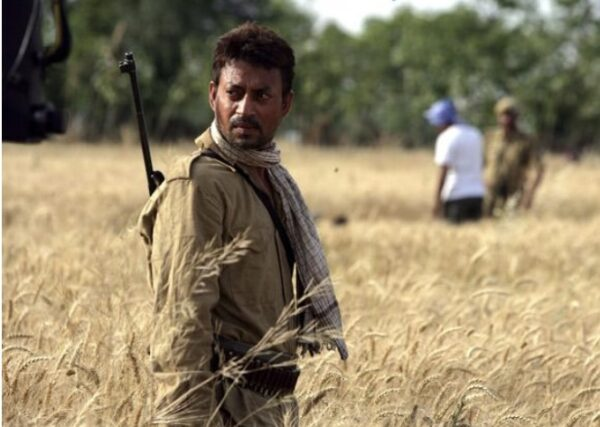
On one hand, Madhya Pradesh is in the middle of the Republic of India, and the Chambal remained far away from the Nehruvian development, remains a caste cauldron in present-day India. On another hand, the Mid-1970s marked a tumultuous epoch in the national memory of India as the state was under a nationwide Emergency in India. Embodying a difficult time and an even more difficult space, Sonchiriya traverses this landscape of caste-rigged ravines for justice, survival, and redemption in an era where the exact definition-making institutions were under influence.
In 1975, Maan Singh is informed of a robbery opportunity at a wedding reception. The heist offer turns out to be a trap staged by STF Inspector Virendra Singh Gujjar. The operation goes awry, and some of the bandits survive to fight another day. Sonchiriya deviates from the historical lineage of Curry Westerns when it refuses to leave the realities of the land where it is shot and where the story is located. Maan Singh’s death creates fissures. Lakhna opines to surrender to the Rajasthan Police, whereas Vakil Singh aims to follow the old code of “To Live and Die in the Ravines” and to “To protect his caste and his people”. Many of the gang hail Vakil Singh as the new leader.
Vakil’s new gang crosses paths with Indumati, a force to be reckoned with, as she aims to travel to the hospital with a small girl in pain. While pointing a rifle at Lakhna, Vakil affirms: “This is a gang of Thakurs (the priestly class), they respect women”. A hesitant Lakhna inquires: “Is Ravines a place to come for a woman?”. Indumati expresses her ordeal, and when asked about her caste, she replies: “Thakur”. Lakhna convinces Vakil about Indumati’s inclusion by remarking, “These are Thakur women,” and persuades him to serve the caste code (“Protecting our caste and our people, isn’t that our Dharma”) to achieve the Baaghi Dharma. Caste becomes a facilitating tool to be bent. It is used for association and inclusion to both get accepted and stand out.
It is also interesting to note that the caste revelation happens at the house of a doctor. One of the pillars of Nehruvian development, Doctors are powerful creatures who are often sought and left touched. Doctor Bhadoriya refuses to give an injection for the pain and lashes out at Vakil by saying, “How did you bring this girl into my house?”, to which Vakil replies, “What happened?”. The doctor picks up a cloth and then holds the girl’s elbow to show her tattoo bearing her full name. The doctor reveals that “The girl is of Jhirsa Caste”. The doctor later explains that he could have sent this affected girl to the clinic, or his assistant Gopal, would have checked her. Bringing a lower caste untouchable girl to the doctor’s home is where the doctor draws the line. This case has remained the same in Modern-day India, where patients belonging to the marginalised community in rural North India are the victims of the poor healthcare system. Lower caste women are especially ignored and victimised to this date.
Be it Batla House (2019), which pushes the pro-police agenda or Mardaani 2 (2019), which features a top cop as the end-all, the film space was creating an audience to be comfortable in the backseat, with the front row seat reserved for the stressed-out cop. Sonchiriya and its portrayal of the police came as a breath of fresh air. Just at the cusp of a police encounter, Inspector Virendra Singh Gujjar orders his constables to “Get 10-15 men from the village nearby”, to which the constable replies, “I don’t understand, sir”. Virendra comes back, “If you did, you would’ve been an inspector”. The Indian Penal Code, a colonial-era criminal code that defines the extent and definitions of offences and punishments, has been a topic of discussion. It also included the Criminal Tribes Act of 1871, which gave police an institutional authority to victimise and legitimise. The inspector’s call for local support is rooted in the power of language, where certain communities were considered below others. Virendra Singh Gujjar reinforces this criminal stereotype again when he conducts searches in neighbourhoods populated by the boatmen community. He pronounces a command to the entire Mallah community: “We know that despite our warnings, you help the bandits cross the river. If you get any information about Man Singh’s gang, then report it to the nearest police station; if anyone fails to do so, then the consequences will be suffered by the entire community.”
Caste creates the group identity of several gangs in the dacoit-filled ravines of Sonchiriya. The women, however, face dual marginalisation. A Dalit woman is subjected to both patriarchal oppression and caste discrimination. It is highlighted during an exchange between Phuliya and Indumati.
Phuliya: You’ve learnt how to kill sinners. You’re already a rebel.
Indu: This is Mallah Gang. And I’m a Thakur by caste.
Phuliya: You don’t get it, do you? Brahmins, Thakurs, Baniyas, Shudras. These castes are to categorise the men. Women are a different caste altogether. Different from all. Beneath them all.
Sonchiriya presents a myriad of realities and dishes out all the facades holding together the Republic. The fabric that stitches the cloth, which hides the identity marker, has a story to tell. What matters is how we see and when we see it, and what we do about it. Abhishek Chaubey looks at caste with thought and mindfulness. The social, the political, and the cultural get a retelling. The question is, will you see?

Arts Community Worker. Event Volunteer. Writer. Keshab Ray likes to juggle. When the sun is out, he works as a Community Engagement Associate at TRI Art and Culture, a Kolkata-based multidisciplinary arts space. When the sun sets, he runs to catch the latest film release. He received his B.A. in History from the Bhawanipur Education Society College and his M.A. in Film Studies from Jadavpur University. He began his tryst with the arts as an event volunteer for the Goethe Institut/ Max Mueller Bhawan, Kolkata and the People’s Film Collective, Kolkata. In addition to festival volunteering, he also finds time to write. He has contributed to Enroute Indian History’s Heritage Research Blog and High on Films. He currently resides in Kolkata and can be contacted at officialkeshabray@gmail.com.