
Review: That’s a Fire Ant Right There
Khadeer Babu's work delineates a transitioning Indian small town's complex social realities,…
Read more →London's parks breathe with ghosts; Woolf's echoes, a mother's fading voice. The writer walks, maps in mind, seeking Daisy, finding spring's cruel
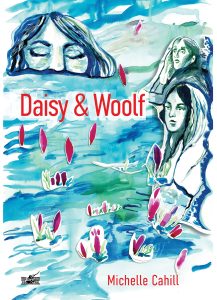
Mina, a writer, is navigating her place in the world, balancing creativity, academia, her sexuality and the expectation that a wife and mother abandons herself for others. For her, like so many women of mixed ancestry, it is too easy to be erased. But her fire and intellect refuse to bow. She discovers ‘the dark, adorable’ Eurasian woman Daisy Simmons, whom Peter Walsh plans to marry in Virginia Woolf’s Mrs Dalloway. Daisy disappeared from Woolf’s pages, her story unfinished – never given a voice in the novel, nor a footnote in any of the admiring Woolf scholarship that followed. While dealing with the remains of another life, Mina decides to write Daisy’s story. Travelling from Australia to England, India and China, freelancing and researching, she has to navigate cultural and race barriers, trying hard not to look back or flinch at the personal cost. Like Woolf, her writing both sustains and overwhelms her. But in releasing Daisy from her fictional destiny, Mina finds the stubbornness and strength to also break free.
33 Tavistock Square
London
22 March 2017
I have been making preliminary notes about the novel. How does one get to the crux of race in a character like Daisy Simmons? What was it like to be Eurasian? Does Daisy live near the synagogue in the grey zone, or the white zone? And only a decade after the end of indentured labour. I try to picture Garden Reach. I check the maps. I imagine its dockyard warehouses, empty where once it had been over-crowded with recruits, waiting for their departure to the Caribbean or to Fiji.
Yesterday, I walked to Westminster, retracing Clarissa’s steps from Mulberry’s, the florist in Bond Street. I took a turn through Green Park, the trees bare and bending, the grass tussocky, blown flat by a cold windstorm ripping through the meadows. My hair became strings to be pulled, summoned by the wind, my heart too. It was hardly ideal to be walking out here, though a group of men were cross-training and a man was running his dog. I felt the force of nature control me. I gave myself over to be pummelled by grief, my thoughts and feelings at the whim of weather and its vicissitudes. A thick branch may have snapped from its trunk and broken my neck; twigs might have flicked in the gust and scratched my eyes, my hands, a reminder to me that it was not without risk to be outdoors walking that morning. I took a selfie with my phone capturing the wind towing my hair and my scarf. Taking selfies has become a habit, a way of recording how I seem to be in the world. By taking a selfie, it is almost as if I might become what I see, or I may find in the image a mirror for my soul. It is not simply narcissism; it is therapy, the disturbed therapy of a writer.
I’ve read how Virginia Woolf also liked to photograph friends, and that she often wrote letters to them, requesting photographs. Her first camera was a box form magazine with a peculiar handle. In 1931 she bought a Zeiss, for twenty pounds. Her sister Vanessa and her great-aunt Julia Margaret Cameron were photographers, and the visual was always present in her writing.
After she lost her mother at the age of thirteen, Virginia began to hear Julia, her mother, speaking almost every day for more than thirty years, to the point that it became oppressive and she turned to fiction, raising Julia from the dead in To the Lighthouse. Writing is reviving, purging the past, and bewildering as our real lives. Only after writing this novel did the voices of her mother stop haunting Virginia. They came from different worlds but in some ways, Julia was like my mother. She was gracious, quietly brilliant, subdued, dutiful, sympathetic to others, an angel in the house dying quietly during the night, unobserved, not making a fuss, with no messy excretions or malodours. The smell of my mother was never acrid or fermented even when she was incontinent, when she had been sweating in her bed for hours and was too tired to sit straight for a shower, her head falling back, the greyness messy, like steel wire. She would lapse into moments of authority over her mind. I believe there is firmness in the angelic disposition, no matter how dominating a father may be. My mother hated discontent, she hated quarrels, and I remember her swiftly drawing the curtains, whispering, ‘Hush, what will the neighbours think?’ whenever there was a sign of discord.
Beholding her letter, reading between her lines, perhaps there was a residue of resentment that I had left her to die with my brother, selfishly, for the sake of my work. I had abandoned her for several months when my books were being published. I, also a mother, struggling to survive the daily grind with my son. My mother wasted, she stopped eating, she was tired sitting in the wheelchair, not really piecing together everything around her, but nonetheless calm and patient, trembling, frowning as the daylight spilled into the room and the fan droned and the movies that she watched replayed or the radio blared. And whenever we spoke over the telephone, her voice was like sunlight. Whenever I visited, her eyes would shine, and her face would light up.
Walking from The Mall towards the fountain in St James’s Park, I crossed into Birdcage Walk, the trees casting shadows variously in the afternoon sun. There was no Hugh Whitbread or Peter Walsh to detain me, there were no minor characters, no old beggar woman singing of eternal spring, no little girl in pink collecting pebbles, though there were plenty of richly attired Arabs and immigrants of all nationalities strolling with me. The palace and historic buildings invite appreciation. As always, London felt different to the rest of England; gritty and spirited, pulsing and prosperous. Young and old, from all walks of life, seemed to be enjoying a lull in the storm, the gusty winds having subsided to a cool breeze. A young couple wheeling a baby in a pram and one or two joggers. I thought of the drunks in Hyde Park, Sydney, who played chess with giant pawns and who slept on the benches in crumpled jackets, brown paper bags and an empty bottle spilling from their hands. And all the while I imagined what the parks of London would be like in summer; garden beds blooming with yellow, red and burgundy tulips, with geraniums and daisies, people reading newspapers in deckchairs by the lake, the pelicans on parade, the blue herons basking in the sun. I walked further along, past the Guards Museum and the military buildings to where the road was being widened and partly barricaded, on my way to St Anne’s Gate. At Westminster, I found a vantage point from where I could imagine Clarissa, setting out to buy the flowers for the party she planned to host that June evening. I was standing where she would have most likely passed, not long after leaving the house, because the day beckoned, and she had decided to buy the flowers herself. I took a photograph with my phone using a black-and-white filter and, though there were taxis and buses and pedestrians, Big Ben commanded the intersection now as it would have done in 1923. Later, I tweeted the photograph for modernist allies and Sydney followers who liked it. There had been no explosion in Bond Street, no mysterious VIP car, although there was an ascending aeroplane, leaving its cloud trail. And hemmed in the eaves and parapets of buildings, pigeons hovered and roosted.
Strange how in life there is always some catastrophe imminent. How was I to know that the very next day Khalid Masood would drive a car into pedestrians on the south side of Westminster Bridge? It spread over social media within moments: his eighty-second attack ending with him being shot dead at the gates to parliament, a policeman was fatally stabbed, four others died and fifty were wounded. There was conjecture about jihadi influence, about Brexit. He was born in Kent in 1964 to a British teenager not much older than my son. A decent chap and a footballer at school but convicted of shoplifting. He began hanging out with the wrong crowd, taking drugs. Had spent time in prison for assaults; had three children. His body, large, dead and sagging, seems vulnerable in the photographs.
And all this would happen within the space of a day and a night, while birds sang and scattered, and branches swayed, and purple crocuses bloomed through tissues of frost, after dark and cold, rain and snow the buds of spring leaves exploded like my mother’s words in my mind, and her no longer being able to hear my reply. (So it persisted unspoken.) ‘I hope you find in London the inspiration, time and distance you need for your writing.’
But standing where I was, by the statue of Abraham Lincoln in Parliament Square, imagining Clarissa setting off to buy the flowers, there was no sign or premonition of the impending catastrophe.
Excerpted with permission from Daisy & Woolf by Michelle Cahill published by Red River 2025

Michelle Cahill is an Indian Australian author of prize-winning fiction and three collections of poetry. She was awarded the KWS Hilary Mantel International Short Story Prize judged by Hilary Mantel. Her debut fiction, Letter to Pessoa won the UTS Glenda Adams Award for New Writing. Vishvarūpa was shortlisted in the Victorian Premier’s Literary Awards. She has been awarded residencies at Sangam House in Bangalore, Sanskriti Kendra, New Delhi, a Hawthornden Castle Fellowship and the Hedberg Residency at the University of Tasmania.