
All is One Here and 2 other poems
Where being pours into another, patriarchy and contested borders divide unyielding hunger…
Read more →From Kanchenjunga's peaks to archives, the Lepcha homeland unfolds. Poems search for identity amid lost language, echoing in blood-words and a silenced
I come from the land of Kanchenjunga
Snowy peaks
And a river that speaks
I come from the Queen of Hills,
And chilblains
We have tea, we have timber, we even have our train
I come from the nest of spies,
But I tell no lies
We have cheese, we have noodles, we even have some peace
I come from Mayel Lyang
The land of eternal paradise
With our Holy Land, Dzongu
But how can I tell you what we have?
How can I draw
Maps of the mind
Maps of the heart
Maps of the soul?
To show you
My heartland,
Mayel Lyang.
***
Someone, a poet, is looking for me
I’m looking for me too.
I look for myself in the library
tiptoeing about the dusty shelves
looking for books that tell me how to be.
The Lepchas are docile, shy…
They don’t speak, they whisper…
Did these words become my flesh?
I find that I agree
and then, I don’t
because I can’t.
Still these ghosts that speak to me of mine
haunt me.
I look for myself in the hallowed archives
where knowledge is bundled up in boxes only a few can touch,
looking for what I must know about myself.
The Lepchas know the flora and fauna of their land so well…
I could easily be dead
after eating a mushroom I should have known not to.
I look for myself in the museum:
pieces, artefacts, stones, displays.
I feel preserved, taken care of, special even.
I could as well crawl in there and pose,
then, I grow cold, like the objects staring back at me.
I feel endangered.
I look for myself in history.
I learn of the mighty warrior Panu Gebu Achuk,
of how he was killed by a wily enemy
as he and his people ate and drank.
I look for glory,
I find it fading.
And then I realise
I’m looking in the wrong place.
Perhaps, I’m looking in all the wrong places.
I am still looking for myself
in a snatch of conversation,
in an expert’s comments,
in an official document,
in my people.
I am still looking for myself
in a story,
in a song,
in a poem.
***
I understand you’re trying to resist
buying an apartment in the city
or forgetting the story of your people,
resisting the muffling of memory
or the bleeding of memory
into shapeless ghosts,
apparitions,
agents of amnesia.
My land is on the brink of official oblivion too.
My tongue dripping blood-words
nobody understands anymore,
blood-words that seep through these
pages that are strewn
across the paths
my body floats through.
Ghost words.
Ghost body.
Ghost land.
Where nobody speaks
and nobody is spoken to.
In my land
without a place
or a tongue
or a map.
***
They came, they saw, they misheard,
the cadences of my tongue,
the nuances,
the music,
the magic.
They thought it was wrong,
my Rong tongue,
uncultured, unrefined, undefined —
primitive.
Perhaps they were afraid
of what they did not know.
Perhaps they were saving themselves
as they saved me
from my wrong tongue,
as they saved me
from my Rong tongue.
Perhaps they thought it was too singsong,
my Rong tongue.
That it was no longer convenient
my Rong tongue.
That the masses would not like it,
my Rong tongue.
That I too would not benefit
from my wrong tongue.
And so,
they petted it,
curated it.
Steeped it in convenience,
and then,
they steeped it in silence.
They packed it into their books,
they hemmed my Rong tongue in
to grace dictionaries
and libraries,
put up there, on a pedestal,
for all to see,
but not to speak
for all to hear,
but not to revere
my Rong Tongue.
Perhaps they were afraid
of what they did not know.
Perhaps they were saving themselves
as they saved me
from my wrong tongue
though I never asked to be saved
from my Rong tongue.
The Lepcha language is also referred to as Rongring. The term ‘Rong’ here is the general term for Rongring used by the Lepcha community.
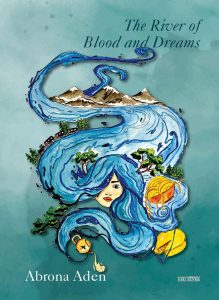
Excerpted with permission from The River of Blood and Dreams by Abrona Aden published by Red River 2026
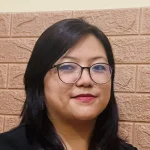
Abrona Lee Pandi Aden is an Assistant Professor at the Department of English, Sikkim University, India. Her short stories and poems have appeared in Muse India, Mekong Review, Sapiens Anthropology Magazine, The Bangalore Review, among others. She translates from Nepali to English. She is a recipient of the ICM Global South Translation Fellowship awarded by the Institute of Comparative Modernities, Cornell University, in 2022. She has been the Charles Wallace India Trust Creative Writing Fellow at the University of Kent, Canterbury, UK during their Spring Term, 2024.