
From ULR
Issue 14 – WITNESS
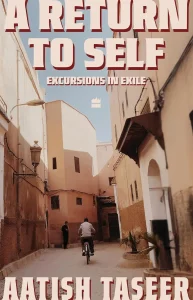
Aatish Taseer on ‘A Return to Self: Excursions in Exile’ in conversation with Kabir Deb
Taseer examines how India's conception of belonging has contracted under contemporary politics, transforming constitutional capaciousness into ethnic exclusion. His forced exile becomes a lens for interrogating historical fault lines and the privilege of self-discovery amid statelessness.
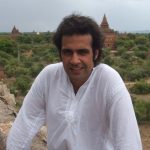
Aatish Taseer
Aatish Taseer was born in 1980 and educated at Amherst College in Massachusetts. He worked as a reporter at Time magazine and has written frequently for Time, The Sunday Times, and Prospect Magazine. He speaks five languages and currently lives between London (England) and New Delhi.
KD: Hello Aatish! It is a pleasure and honour to have you onboard. Your books have always shown a mirror to the society. The purpose has always been to see a better India that respects its Constitution. What is mainly wrong with the current political climate of the nation? Why is revoking citizenships (in the form of NRC/CAA or for an article) so normal in today’s time?
AT: The Indian attitude to belonging has changed. It used to be that India honoured all the layers of its history, stretching back into pre-history. Now the Hindu past is all that matters. On one end, it’s a thousand years of slavery. On the other, the Hindus emerged as if out of the soil of India. Which is why even something like the coming of Aryans – dating as far back as 1800 BC – causes discomfort. Every modern nation is an imperfect articulation of a civilization. The Indian idea, under our founders, was very capacious. It’s been made very narrow under Shah and Modi. Almost everything about the messiness of India’s joyfully heterodox history makes them scream in pain.
KD: It is interesting to see that after the revocation of your citizenship, which is a direct attack on identity, you move around to find yourself. Most of us who are questioned for following an ideology or lifestyle often think about reacting to the situation. But, in your case, you stood to give a response. Why did you choose this method? Did you find any alteration in your identity in the process? Also, how should people with minimum income, and no basic means to explore places to look for their true ‘self’ which is being questioned?
AT: It was an immense privilege. At the very moment, when I was robbed of my most intrinsic sense of self, literally the place I grew up in, I was forced out into the world, on assignment after foreign assignment. These were not news stories. These were journeys of historical and cultural reportage. They required me to ask questions about the inner tension of the societies I was travelling to. These questions, mutatis mutandis, were not unlike questions we ask in India too. What is ours, what came from outside? What is it about certain fault lines in our history that still shape our modern politics? And, during this travel, asking these questions, I came to myself, as it were. I realized I was never more truly the person I am than when I was cast out into the world beyond.
KD: Nehru used to criticize his own policies by writing with a pseudonym. Today, when the Prime Minister is being criticized, he says that criticism is the pillar of democracy, but at the same time, he subscribes to the action of his followers. Your article on Narendra Modi in the Time magazine led to a collective anger against not only you, but even your known ones. These actions are symptoms of their vulnerability. How would you like to address the entire chaos? Why are they successful in hijacking minds even in their vulnerable state?
AT: We should be careful not to mistake the fact that their politics is an emanation of insecurity with vulnerability. I don’t think they are so vulnerable. All my early books deal with the precarity of the English-speaking classes in India. The remote at which they lived at; the loss of culture and language; the inability to communicate, not to mention their disdain, and their own feeling of invulnerability. That is all still true. All that has changed is that they retain little to no political power. The problems of India are not political; they are cultural and historical. And, until a new politics can emerge which understands why the old politics of the Congress-Left failed, we will not really have an advantage. That new politics must be embodied in the form of a new kind of person. It cannot be Rahul Gandhi. His education may seem like a marvel to elite Left-wing Indians – he had so much to learn after all! – but Indian politics is not his private university. He keeps launching andolan after andolan, but we’re not trying to get rid of the British anymore. In a democracy, you have to win elections, or leave the stage.
KD: In the book, it is evident that diversity has an effect on a person’s firm belief of inclusivity. Today, when we see that Indian politicians are afraid of what has this civilization nurtured from its inception – diversity and inclusivity – we are reminded that the dystopian future of the past belongs to the present time. What changed in these years which led to the downfall of this civilization’s basic values? Also, you travel from one country to another soothed the chaos in your mind. Could you briefly shine some light on the process?
This business of repurposing the past for political ends is a good example. Autocrats love the past. They need it, as fire needs oxygen
AT: I don’t travel in this personal way, seeking, as you say, to “soothe the chaos” in my mind. My mind is not chaotic. It is mostly very clear and organized. What I do is use the personal to dramatize parts of myself that are of public importance. This business of repurposing the past for political ends is a good example. Autocrats love the past. They need it, as fire needs oxygen. I’m just back from Istanbul and I was disturbed, in the Aya Sofia, to see visitors in that old Greek church now confined to an upper gallery, while the believers pray below. This is something familiar to us from Ayodhya. Once again, we have to ask ourselves what we did wrong? How did we cede this ground? What was it about our version of history that stopped resonating with people’s lived experience, with their most intimate ideas of who and what they are? The question hardly needs answering, but it is important to remember that if you turn your history into the locus of political victimization, it won’t be long before someone comes along and turns it into a majoritarian fantasy.
KD: After you wrote the article, your past was questioned, and even though you have lived most of your life in India, producing books on the country, they chose to see your religion above everything. What makes them so particular about their point of attack? How does exile transform an individual’s life?
AT: India has no avenue to recognize the oblique yet profound ways in which people have become part of its collective experience. Muslims, Parsis, Adivasis, even Sikhs…the list is endless. At bottom, the primary Indian citizen, regardless of what the law says, is an Upper Caste Hindu Male. It is an unshakeable prejudice. So much so, that the Prime Minister and his social media minions have even tried to drive a wedge between my mother and me. In their eyes, she is Indian. I am not. When the cancellation of the OCI happened, senior diplomats quite brazenly asked why I had not kept the name “Singh,” because that would have changed the character of my relationship to India in their eyes. So we have this situation where all the years I lived there, my contribution to Indian letters, my Indian family—all of it is immaterial in comparison to my failure to be that primary citizen. Which, by the way, I would still be, even if I had never set foot in India. That is why Modi loves the Hindu diaspora so much, because so long as you belong to this one paramount background, you are considered part of the fold. It’s like Hitler’s idea of a greater Germany. It is also why so many people in India who don’t fit this criterion live in a state of inner exile. As for the very real physical exile I have experienced, now for six years, I don’t know yet if it will be sterile, or arid.
KD: Sometimes people choose to introspect to get calm and find their being. You, on the other hand, decided to take a ride to the external world. How did this idea germinate in your mind? As a person, who writes mostly about the intimate and sensitive scenarios of life, how has the journey affected your literature? Zarathustra used a similar method to find liberation. What was your objective? Liberation or to have the faith that you also ‘belong’?
AT: I can’t stress enough that these journeys are not personal in the sense that you are suggesting. I don’t want to be liberated from anything. I’m not searching for peace. I’m trying to live with (and dramatize) complexity. To be in sympathy with the people one travels among is important to me, but even this is an intellectual goal, not a personal one. I love the world in all its variety, richness, and hybridity. I love its inner tensions. I’m fascinated by how people form ideas of themselves, and how these ideas come into conflict with the encircling gaze of those more powerful. This is all I seek, but I believe that in discovering what Octavio Paz calls the “inner controversy” of a society, it is possible to gain a glimpse of the human heart. Malice, cruelty, tenderness and sympathy—these are my themes.
KD: The army of Hindutva is made of straight, upper-caste male, and they cannot tolerate something they do not understand or comprehend. In India, even after the abrogation of Article 377, gay marriage is still illegal and queer relationships are not identified as normal. Do you really think that with cis-het politicians, judges and intellectuals in the forefront, India is ever going to comfort the LGBTQ+ community? Also, what should be done to magnify the issues which queer people face under a Hindutva-dominated political regime?
“India will go on” – kuchh baat hai ki hasti miTti nahin hamari – and yet sometimes one wishes ardently that India’s continuities were not quite so rigid
AT: Wow. You anticipated me! Well, exactly. It’s what makes India so suffocating. No matter how progressive the laws of the modern state might be – and, in some respects, especially related to women, they can be admirable – the miring cultural riptide of the traditional Hindu society seems always to prevail. In some respects, it can be a source of strength, but there is no denying that it is also a force for stasis and unchangeability. “India will go on” – kuchh baat hai ki hasti miTti nahin hamari – and yet sometimes one wishes ardently that India’s continuities were not quite so rigid.
KD: In the book, you have highlighted how various ideologies rise and dissolve in every nation. Do you feel that a population that has been digitally, economically and educationally polarized is ever going to shed the ideology which gives them power and its dopamine? India, being the oldest civilization, has given something to many other civilizations. Do you still have hope on the ethics and values that India once used to follow?
AT: The problem runs deeper than that. My fear is that India doesn’t believe in ideas as the solution to its problems. It believes only in the “dopamine” of a false pride. The other day, leaving the Ashokan pillar at Lumbini in Nepal, I heard some boys, who had come across the border, yell, “Bharat Mata ki Jai. Jai Shree Ram!” It was such a galling moment. The highly civilized Nepali gentleman I was with went up to them, in their shiny brightly-coloured shirts, and said that this was a site of Buddhist reverence, and that if they wished to say Bharat Mata ki Jai, they should wait to cross back across the border to do so. This lumpen element, with nothing in hand save their foolish pride, is the Modi electorate. He has filled them with empty hope. They have nothing but their slogans. We live in debased times and a certain politics-as-fashion, where people are radicalized by social media, prevails everywhere, but there is nothing sadder to see what it has done to India, where people had so little to begin with.
KD: Amidst censorship, a veiled dictatorship and seminal suppression of voice, what do you see is India going to be in the next ten years?
AT: I fear we’re heading into the territory of “India is the country of the future—and always will be.” It may be time to reckon seriously with the fact that, at least within the borders of India, we are an unserious trivial people, prone to boastfulness and oversensitivity.
KD: Could you kindly recommend five books which you think have inspired your works, ideas and lifestyle?
AT: In Light of India by Octavio Paz
Black Lamb and Grey Falcon by Rebecca West
Jesting Pilate by Aldous Huxley
Notes of a Native Son by James Baldwin
Defying Hitler by Sebastian Haffner

Kabir Deb
Kabir Deb is an author/ poet based in Karimganj, Assam. He works in Punjab National Bank and has completed his Masters in Life Sciences from Assam University and is presently pursuing his MCW from Oxford University, London. He is the recipient of Social Journalism Award, 2017; Reuel International Award for Best Upcoming poet, 2019; and Nissim International Award, 2021 for Excellence in Literature for his book ‘Irrfan: His Life, Philosophy And Shades’. He runs a mental health library named ‘The Pandora’s box to a Society called Happiness’ in Barak Valley. He reviews books, many of which have been published in magazines like Outlook, Usawa Literary Review, The Financial Express, Cafe Dissensus, Sahitya Akademi etc