
Editorial: Reviews – ULR Issue 14, Witness
Readers are invited to witness diverse realities—global conflicts, political decay, historical narratives,…
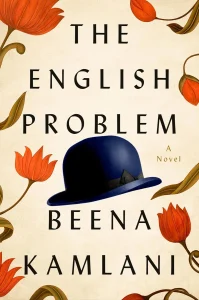
Read more →Kamlani's debut novel reimagines an uncle selected by Gandhi as a future leader, tracing his struggle to negotiate belonging in 1920s England. The work examines how colonial education and class ritual shape individual agency and national service.

Beena Kamlani is a Pushcart Prize-winning fiction writer whose work has appeared in Virginia Quarterly Review, Ploughshares, Identity Lessons: Learning to Be American, eds. Gillan (1999), Growing Up Ethnic in America, eds. Gillan (1999), The Lifted Brow (2008), World Literature Today and other publications. She received the Yeovil Fiction Award (Somerset, England), for a novel in progress in 2017. She has been awarded fellowships at Yaddo, MacDowell, Ledig House/Writers Omi, Hawthornden Castle, Jentel Arts, and Hedgebrook. In her years as senior editor at Viking Penguin, she worked closely with literary luminaries like Saul Bellow and Robert Fagles; bestselling writers like Kim Edwards, Terry McMillan, Jacqueline Mitchard, and Natalie Baszile; literary fiction writers like Ruth Ozeki and Paul Beatty; biographers like Diane Middlebrook and Blanche Wiesen Cook; and translations of works by Jiang Rong, Mo Yan, and Reinaldo Arenas. She taught book editing at New York University for nearly two decades and earned an award for teaching excellence. Her first novel, The English Problem, was published in January 2025.
“Reading is yoga for the brain! Give yourself the permission to get lost in a book. It’s one of the greatest pleasures in life.” – Beena Kamlani
We congratulate editor and writer, Beena Kamlani, on the publication of her acclaimed debut novel, The English Problem. One of our editors, Ankush Banerjee, happened to meet Beena during a reading in Kochi. In this interview, he speaks to her about the book.
AB: Dear Beena, thank you for consenting to do this interview with us. Our compliments on the recent publication of your novel, The English Problem. Your book talk at MyLibrary, Kochi was very thought-provoking. Can you tell our readers a little more about the book – its plot, what it’s about, and your inspirations?
BK: The novel was inspired by the story of an uncle who was selected by Mahatma Gandhi as a future young leader of an independent India, finally freed from British rule. I had heard about him growing up—he qualified as a barrister in England, suffered ill health from a fall, and was brought back to India in the care of a British doctor and nurse. He died while he was still in his thirties. There was little else anyone could tell me about him. But I was intrigued enough to reimagine his life through the lens of life in England for young men like him, who, in the 1920s and thirties, were sent to England for their education and returned home to serve the country.
From the moment Shiv Advani arrives in England, he knows it’s going to be a struggle to find his own place in a society so controlled by ritual and affiliations to class and creed. The English Problem is a deep dive into his world, his effort to find his own place in life, to know what he wants, to serve both his country and himself without compromising either.
AB: Migration has been one of those staple phenomena that the Indian English novel has explored from various perspectives and lenses. May I know what your intention was while choosing this theme, and secondly, following from this, what do you hope the reader will see or read differently in your work?
BK: I didn’t really set out to center my work around a theme—there were situations that Shiv had to face and work out within himself, and the life of the story is in seeing the many choices that present themselves, the ones he picks, or the ones he is picked by, and how they determine his course of action. Migration is a universal condition—whether it’s a farmer leaving his fields to find work in the city or a young man or woman leaving their country to earn their education in a foreign land. Most people live their adult lives far from where they were born. Every writer brings her own understanding to what it involves, and that’s what makes all these stories so interesting.
AB: You have been an editor at Penguin for 30+ years. While working on your own manuscript, how did you reconcile your editorial eye and authorial voice?
BK: You have to resist the urge to edit your work as you’re writing it. They are two different functions. When you write, you let everything crowd the page—thoughts, impressions, sensory details. You don’t pay that much attention to the writing itself because you know you’re going to be editing. I knew this from working on writers’ first or second drafts. I knew it from my own writing, seeing the refining process take place from draft to draft. Sometimes, I edit what I’ve written the previous night the very next morning because I’m impatient to see how it will finally sit on the page and within context. But they are two separate things. The overlap is in the love of words. Both editors and writers love words and mine them for meaning, though they may approach them differently.
AB: The English Problem explores the Spivakian double-bind that most migrants face: they feel estranged from their native lands, yet are expected to assimilate into the new culture. But such assimilation only intensifies their sense of estrangement from their native culture and the new culture they are trying to assimilate into. According to you, what is preferable – the uncertain double-bind of identity crisis which accompanies migration, or the surety of one’s own identity which comes from ascribing to hyper-nationalist politics we are seeing around the world?
BK: I don’t see “the uncertain double-bind of identity crisis” as a crisis. To grow is to change—and change occurs when we expose ourselves to unfamiliar situations and places. The comfort of the familiar and the discomfort of what we do not know and must learn to navigate are the most ancient stories ever told. A man leaves home…his story begins. It’s Homer’s Odyssey told over and over again. It’s Ram and Sita in the forest, learning how to adapt to their new and strange environment. It’s Shiv, arriving as a stranger in the greatest city in the world and recognising two emotions at once—his sense of intimidation, of being dwarfed by everything he sees, and his need for deep connection.
AB: There is a lot of advice going around on how to hone one’s writing skills. But we would love to hear from you how you hone your editorial skills, especially when it’s one’s own draft(s) one is working with (some of our readers have been very curious to know)?
BK: Editing begins with words, as does writing. But when you edit, your antennas are out to sense where there’s repetition, the use of lazy words, too much explanation, an excessively elaborate plot, and the existence of too many characters and subplots. You look for sentences and paragraphs to cut because less is more. Cutting often highlights what is already there. And sometimes, you need more—what is invisible on the page, known only to the author, needs to be in the story for the reader to understand what’s happening. To be honest, that kind of editing is honed through reading. We’re asking all sorts of questions when we read, from matters of plot and characterization to analysing our own responses to what we’re reading. Why is this not working for me, you ask. And your answer will present you with something to watch out for when editing your own work.
AB: One piece of advice you’d want to give to inspiring writers and editors?
BK: Read. Read as much as you can. Start with fifteen minutes a day and gradually increase it to an hour. Reading is yoga for the brain! Give yourself the permission to get lost in a book. It’s one of the greatest pleasures in life.
The English Problem (Beena Kamlani, The Bombay Circle Press, 2025) can be purchased here.

Ankush Banerjee (he/his), poet, Culture Studies PhD research scholar and serving Naval Officer, is the author of An Essence of Eternity (2016). He has been recipient of the 2019 All India Poetry Prize, as well as the United Services Institution of India Gold Medals in 2013, 2017 and 2022, for his essays on Military Ethics and Leadership. His poetry, reviews and essays appear in Eclectica, Cha, The Bombay Literary Magazine, The Tupelo Quarterly, Kitaab and The Indian Express, among others. His work has also appeared in the anthologies, Yearbook of Indian Poetry 2020 and 2021, Best of Asian Poetry 2021, and Converse: Contemporary English Poetry by Indians. He is currently stationed at New Delhi.