
Excerpt: A Woman Of No Consequence
A spirited Tamil woman's lifelong reckoning with truth, tradition, and the quiet…
Read more →Cross-dressing male performers embody female suffering in Launda Naach, a Bhojpuri folk tradition shadowed by questions of gendered representation, sexualization, and social stigma since its eleventh-century origins in Purvanchal.
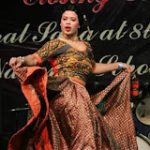
Mr. Rakesh Kumar, is an alumnus of the National School of Drama, Delhi.

A female’s agony, a male’s presentation. “Launda Naach,” a dance-drama folk tradition, belonging to the Purvanchal region of the country, is an integral part of the culture, even today. Popular in the bhojpuri-speaking regions of modern-day Bihar and Uttar Pradesh, the earliest mentions date back to the eleventh century, popularized in the twentieth century by Bhikhari Thakur. He revolutionized the performances by effectively brining in the caste-class aspects, covering the contemporary issues. Launda Naach involves cross-dressing by male performers and usage of songs and lores to entertain the audience. Beginning to cater to the needs of low-income groups who could not afford classical dancers or the “Baijis” in the region, it soon took to stage and professional theatre.
The tradition has been in question since its inception, for its use of male performers and associated nuances in terms of gendered representation and repression, sexualization of performers and performances, popularization and audience.
For this interview, I have chosen Mr. Rakesh Kumar, who is an alumnus of the National School of Drama, Delhi. While researching on the topic of Launda Naach. I came across his videos on YouTube, and then I followed his work on his other social media platform. Him openly performing and accepting his identity as a performer seemed inspiring because it is difficult to shed the negative image that comes along with the very name of this folk tradition. Moreover, he seemed quite professional and proficient in his performance, and hence I approached him through his mail in order to talk about the suffering, the perceptions and the evolution related to this folk tradition of Bihar.
SG: Sir, I have been familiar with the Launda Naach performers since a very long time, but the complexities remain unexplored, thus, your insights hold immense importance. I want to begin by asking, that, since how long have you been in this profession?
RK: Let me tell you from the very beginning. I have been interested in Naach since the beginning. I had been doing it since a really small age in my village, around 5th-6th class. I didn’t join a proper dance troupe during this time because I had studies and my parents wanted me to complete them, and joining a troupe required full-time commitment. However, “shuru se wo ek andar se tha,” I used to perform whenever I got the opportunity to.
I used to perform in school, in functions. There were dance troupes in my village as well, so I used to perform with them as well sometimes.
This is around 1999-2000.
I went to Patna and joined theatre after this. There is this theatre, Nirman Kala Manch, a Mr. Sanjay Upadhyaya ji is there. I took training under him. Training mainly in the sense that Bhikhari Thakur’s plays, such as, Bidesiya, were performed by the Launda Nach troupe there, and I used to join them. I also continued performing at my village functions.
I realized, owing to this, that I want to pursue theatre and dance in a proper sense, thus, did dramatics course from Bhartendu Natya Academy, in Lucknow. Post that, there is this Shri Ram Centre (probably Shri Ram Centre for Performing Arts), I worked as an actor/performer there. Then I joined NSD (National School of Drama). However, launda Nach was still there with me, during this entire theatre journey. I also used to perform it at NSD itself, and I am still performing it.
Toh yeh daur raha hai…
SG: When you started performing, how did the people perceive it? Were your parents comfortable with it?
RK: What is there to say about the people, but this form, and this work,
“Koi bhi maa baap nahi chahta hai ki ladka naach me jakar bharti ho jaaye”
It was not expected of the ward.
“Nachaniya bann gaya,
Naach me bharti ho gaya,
Launda naach karta hai”
The society also didn’t consider it good. But they are artists, this is an art, and it is feeding them. So, they are not wrong at all, but the society has always been on an opposing end. Even if you go right now, you will see how differently the Naach-party people are treated.
SG: Yeah, the gender binary comes in between as dressing up, dancing, putting on makeup, are highly feminine, but this blurs the uniqueness and eloquence of this art form. It is so much more, it requires multi-dimensional efforts, from posture, to singing, to dancing. A narrow outlook does not do it justice.
RK: Exactly. This is our tradition, our culture. It was and still is relevant. All the plays of Bhikhari Thakur are inspired from the society. Things that were actually happening around us, and still are.
For example, take Bidesiya, how a man marries, then migrates for work, and marries another woman, whereas his first wife is crying in the village where he left her. This is about relationships and these situations are still breathing around you and me.
There is also Beti Bechwa, which was very popular during its initial days among the audience, because it was connected to the reality of the existence of our society, how daughters were sold for money, even to the most aged men!
SG: What has been the role of caste in this dance form?
RK: Caste has this role of selective association, where the upper caste people did not perform, because for them this was a source of huge complaints.
“Bade jaat ke log hain, naach me ghus gaye”
More people, thus, from dalit sections, SCs, STs, OBCs performed. The ideology of dominating these marginalised classes, especially, exploiting their economic deprivation, remained pertinent throughout.
SG: We were talking about gender binary and social expectations. This cross-dressing would have invited sexualisation, since the audience was a heterogeneous group with a variety of opinions. Did this lead to molestation or harassment?
RK: The male dancers were not spared.
“Gaon ke jo dabang type ke log hote the, wo taang ke lekar chale jaate the”
They were raped, and forced. This was mostly when the programmes are taking place outside the villages, late at night, and there is a ‘sundar launda’. Someone might get attracted. This increased severely when girls came in through orchestra groups. The assaulters used to deal with the owner of the orchestra.
SG: It is sort of a personal question, but I just wanted to ask that did you face any harassment when you were a part of the troupe? In terms of caste, gender, or sexual, because we were talking about sexual exploitation earlier.
RK: Yes, I have faced a lot of such situations, mainly in terms of sexual/gender based. Whenever I used to get ready, people would come around and verbally harass. I got used to it. It became common. “Karenge hi karenge.”
I will tell you this instance of just two years back. I went to Champaran for a show. We were given a room in a school. I was all alone; my partners were on the stage. I was doing my make up, and I got immediately surrounded by a lot of men. They started molesting me. I somehow ran towards the stage for my life.
“Chedhna toh nahi rukne wala hai, wo toh karte hi karte hai wo log.”
Earlier, they used to bring huge guns to watch the programme, and used to kidnap the performers. They used to take them to the corn fields where they assaulted them. A lot of my old folks talk about this.
“Ab toh chichorapanti zyada hota hai iss time”
SG: My grandmother told how Baiji performers were given police protection when invited to dance. How things worked for the launda performers, especially in terms of safety and law and order?
RK: In the present, there are a lot of ways to fulfill oneself, in the sense of desires. However, earlier this was not the case. Dances and these performers were the only source for their contentment, hence, it was pretty common.
Although, not all the audiences were of this type. Some were genuinely appreciative of the dance form. The elderly used to enjoy a lot. They gave huge amount of respect and admiration to the artists.
About law and order, who would raise their voice? If the dance company owner dare say something, he was murdered. They used lathis and guns. A lot of owners got so severely injured, they required stitching. The police also didn’t come. No one was there to save us. Thus, coping with it became a part of our habit.
SG: Was it this reason that parents didn’t allow their child? The safety issue, since the environment was not appropriate in terms of societal conceptions of dignity.
RK: No, it was not exactly like that. The one who wanted to go, did go. People didn’t earn well, and didn’t possess the capacity to educate their children, so why not make them make money.
SG: So, the economic angle was strong?
RK: It was the strongest actually.
SG: Do you still perform in Bihar? What change in audience and the performing arena do you see right now? Because number of performances have reduced quite a lot. Even my grandmother was saying, how girls have entered the scene of entertainment, moving the launda dancers aside, so dance is happening, but the characters have changed.
RK: Yes I do perform in Bihar. I do wherever I can. I performed last year in Gorakhpur. I also did a serial recently.
I think mainly the taste has changed. They want something different now. They want more recordings now. The music preference has evolved. Performing a part and playing it has changed. There is more of an induction of vulgarity and films.
“Ek daur tha jab nach partiyon ka bol-bala hua karta tha”
Later, orchestra came in. It involved playing vulgar bhojpuri music, using girl dancers, dressed in short clothes, as props. This created a preference among the youth for girl dancers only. I am connecting it to the natural male attraction towards the girls. This was not the case with launda dancers as they were male. The latter started compromising in the wake of reduced bookings. The vulgarity of the bhojpuri songs pushed the traditional folk music, such as purvi, kajri, dadra, and jhoomar, into the background, and ultimately their demise. The entire culture was ruined. The artists didn’t get adequate jobs, which led to their scattering from their original troupes.
The interview was taken on voice call. It was conducted in a spoken Hindi medium. The interview has references from conversations with the interviewer’s grandmother who lives in Bihar and thus, was helpful in creating a familiar and comfortable environment for the interview to flow.

The interviewer, Shivangi Gupta, aged 21, has completed their Graduation from Miranda House College, University of Delhi, in 2025, June, in History Honours. They are based in New Delhi, and have completed their schooling in Delhi itself. They are originally from Bihar, and hence, the intrigue in this subject. They are a trained classical dancer (Kathak), and have held cultural and content-writing posts during their college.