
Editor’s Note – North East Special
After a 16-month pause, The Little Journal of Northeast India returns with…
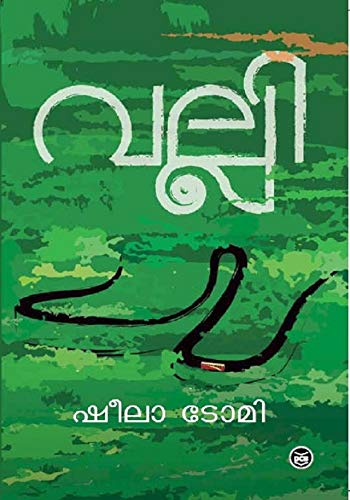
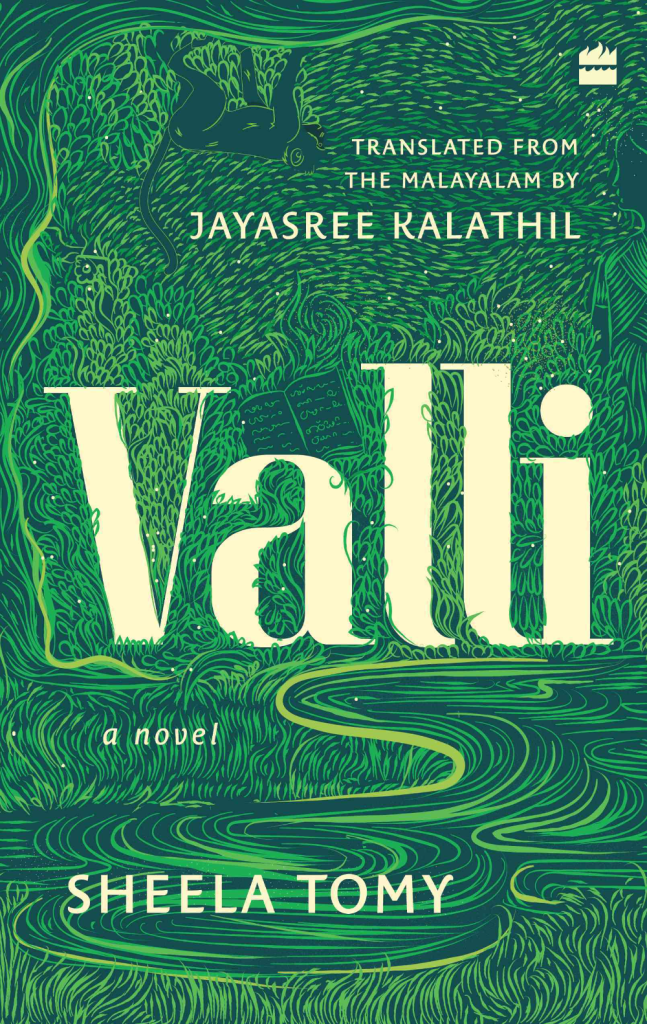
Read more →P: In your novel Valli, you have used the Paniya language, a language with no scripts. Was this a deliberate act and also a kind of refusal to the Sanskritisation of Malayalam?
ST: I believe that it was a deliberate act. The plot demanded the use of colloquial language as well as Paniya language. Valli tells the story of the marginalized people of Wayanad, the aboriginals and the Christian migrants, who were struggling to survive and prove their identity. This is a novel dedicated for languages without scripts and for the voiceless. The characters from the Paniya community speak in their own language. This is a conscious political choice. Paniya language, which is part of the South Dravidian languages, has no script. Usually, we use Malayalam script to write Paniya bhasha; but using their own words and slang, helps the reader to get an idea of their culture. Before the arrival of feudalism and modernity, Wayanad had a rich tribal history and culture.
P: Across your works, memory plays an important role, be it personal memory, memory of a place, or collective memory. Often the dominant narratives become the memory of the powerful, and remembering the suppressed voices becomes the only way to resist. How do you think writing about memories fights historical amnesia?
ST: In a post-truth era, fiction can be seen as a more reliable repository of truth than history itself. If history is the story of the powerful, and dominant; fiction is a collection of the memories of ordinary people, the marginalized, and the defeated. Therefore, fiction is an act of resistance. Fiction gathers and preserves memories, places, cultures, languages, and ecological knowledge that are neglected or refused or slowly fading away. Often neglected and deliberately forgotten, it is erased from history. For this reason, I believe that writing fiction should become a form of alternative history-making; it should be a way of documenting and preserving the lives, experiences, and worlds that dominant histories leave behind.
P: True stories begin when a writer picks up the narratives that are often cast aside by the dominant system. While writing, have you made a conscious decision to explore the stories that have been neglected, and how do you find your way to them?
ST: Certainly, writing is the act of discovering what lies hidden. A writer’s mind should be attuned to grace, love, and compassion. It is because of this very reason that when a writer speaks of a land, it is inevitable to travel to its periphery and margins. When they speak of conflicts between nations, the pen naturally refuses the occupier. These choices emerge naturally, organically, as a reflection and extension of the writer’s sensibility and ethical imagination.
P: In this fast-paced world, everything is reduced to numbers and quickness. Do you think slowness itself becomes a political act? How do you think literature helps to refuse this speed of capitalism?
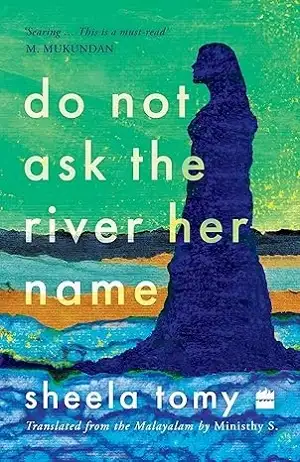
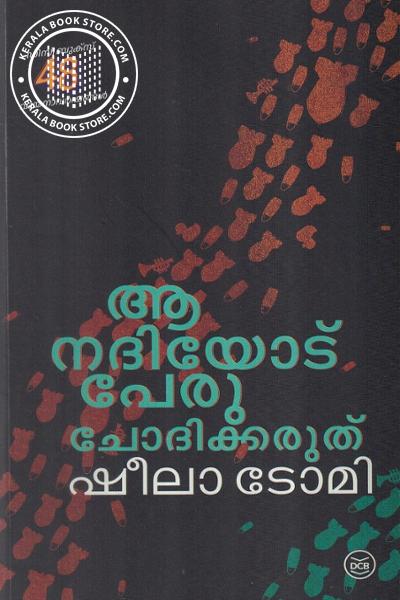
ST: We live in an age when capitalism and technology are operating at their highest speed. The faster this pace becomes, the further human beings drift away from one another, and from nature. The consequences of this can be seen in the form of growing social evils, climate change, and countless other crises. To slow down a little, to spare a moment to look and listen at the person standing beside us; now such acts have become moral acts. Reading, writing and arts demand the attention and time. Fiction leads readers to memories, landscapes, and inner conflicts as it represents human emotions at its best. For a while, at least, we become connected once again to the people and the environment around us. A reader reading Valli finds himself/herself, for some time, inside a forest. They come to realize how insignificant they are before the immeasurable and boundless power of nature. While reading Do Not Ask the River Her Name, those of us who live freely in lands untouched by war, slowly make our way into the lives of people who have lost everything to conflicts, people who no longer have a homeland they can call their own. Isn’t this not how books must resist speed, market, mechanization, imperialism, and power!
P: Do you consider the act of writing a text as your personal way of resistance?
ST: Writing is my personal way of resistance, be it a novel or an article.
When I began writing my first novel, it was with an intention of telling the story of a land. And when a land starts speaking, its history, myths, superstitions, nature, truths, lies, everything becomes a part of its story. And I, a writer arrives there very organically.
Valli was born from everything that had shaped me. It was the place that I was born and raised, the people who made me who I am- the forests, rivers, farms and the world that runs in my blood, in my veins. So, characters, landscapes, and events, all of it finds their way to me. My only effort while writing the novel was to follow the path of my heart and conscience, and it led me to the art of storytelling with honesty.
P: Translation creates new interpretations, and eventually new readers. It crosses boundaries, stereotypes, and time. Your works have been translated into English. How does it feel to give your voice and agency to another person, (Jayasree Kalathil for Valli, Ministhy S for Do Not Ask the River Her Name), who translates your story?
ST: A translator is also, I believe, the finest kind of reader. They are the people who have read my words with utmost care, studied them closely, and made the effort to understand. Both of my novels were fortunate to find their way into the hands of two brilliant translators. The translator of Valli, Jayasree Kalathil, and the translator of Do Not Ask the River Her Name, Ministhy S. I.A.S., have done complete justice to my writing.
More than their command of language, they both shared a similar sensibility in thoughts which resonated with mine. I knew that my work would be safe in their hands. They not only understood my words, but inherited the world which those words had tried to convey. They approached it in a way of meditation, ensuring that the beauty, texture, and spirit of the language were not diminished in the sojourn from one language to another.
P: Do you feel that translation is a way of refusing the hierarchy and power? Or do you think that it is a way of conforming to the importance or superiority of English?
ST: When works written in regional languages are translated into English and other languages, they discover new worlds. They carry our small regions, and cultures to distant places and different readers. I believe that translation erases borders. And when borders begin to dissolve, the chains of power weaken. I do not see translation into English as an acceptance of the supremacy of English. Rather, I see it as an expansion of our horizons, a way of making our sky wider by reaching readers in another language. Moreover, when works from our language are translated into English, they gain access to newer forms of editorial engagement, critical study and readership analysis which are often unavailable within our own literary ecosystem. These encounters do not diminish the original language; instead, such acts enrich it.
P: In the book Do Not Ask the River Her Name, you have written, “‘Gaza’… A word as heavy as the earth”. How does it feel to write about a place that the world is constantly trying to erase?
ST: The novel emerged from the shock of learning, through my Palestinian colleagues, about the tragedies which the Palestinian people have endured for more than a century. When I wrote the line which you have quoted, Gaza had not yet been devastated in the way the world is witnessing it today. Yet the image of a land and a people standing on the brink of annihilation weighed heavily on my mind. It was from that helplessness that the story of Sahal, a Palestinian poet, and Asher, a young Jewish man, was born.
In the years that followed, I found myself witnessing before my eyes the very horrors which I had imagined while writing the novel. The book was my humble attempt to participate, through literature, in the struggle and resistance of those people. Misconceptions about Palestine have long been widespread among ordinary people through social media, and other platforms. I hope that my writing has helped to reveal the truth of a people whose existence, history, and future are being steadily erased.
This is where writing becomes a weapon of resistance, not through violence, but through memory, truth, and solidarity.
P: You write about the marginalised people, and question the power structures and hierarchies around you. As a writer, how do you try to build a sense of empathy and solidarity among your readers?
ST: Will those who read Do Not Ask the River Her Name fail to stand with Sahal, a victim of brutal colonizing forces, and with his people who have lost everything which they once called their own? Will they look away from children standing in queues for hours for a piece of bread, or from people struggling and dying without medicine or oxygen? Will those who read Valli not feel a stirring within themselves for nature? Will they fail to see those who are still campaigning for a small piece of land? Will they not pause to think about the lives of the farmers, our food-providers, who are exploited?
I believe that writing has the ability to connect people, weave them with a single thread of love, compassion and solidarity. This is what I aspire and hope to do with my words.
