A luminous exploration of the disrupted landscape of belonging, navigating deep currents of loss and resilience, reclaiming vital narratives from systemic erasure.
In the old days,
every novel carried the same plots and characters—
you could open any page
and read it as a love letter.
In those novels, you found yourself,
paused between time and history.
Once, I walked into my father’s attic.
Novels in my language—oddly shaped, stained—
lay scattered on the floor.
There were stories—only stories—
the slow burn of my mother’s arthritic silence,
and unmarried girls eloping with thieves and thugs.
I gathered some of his favorite books into a pile
and rolled over them out of sheer joy.
The next day I found a young woman’s red shoelaces in my locker.
These days people read only graphic novels,
but I have rediscovered children’s stories—
strange, and alive.
Bombay Sandwich (for Ranvir Shah) Read Single →
Snow-white, thick-sliced,
rimmed by a light crust of rainbow ripples—
the lilting bread melts in his mouth
like a small, edible city of joy.
Born in blue daylight,
he sees his mother’s reflection in the pomegranate sky;
his youth turns outrageously buttery,
seeping into everything—
over homework margins,
over afternoons of secret Lego worlds.
Raw carrot, cucumber,
Siberian lettuce—an unfamiliar lover—
layered with longing, a delayed taste,
luring his hunger to rise like the sleeping seashore.
The night shivers like soft violin tears—
she has returned from a moonlit ride;
he whispers into her eyes,
a tide waiting for him on the Marina beach.
Yes, tomorrow is not such a long time.
One day, I too will taste his Bombay sandwich
Early morning, my father went to the river
searching for shining stones in the water—
memories of my mother trapped beneath the folds of time.
The river glittered briefly and closed its palm.
He did not return.
Since then, morning arrives with a yellow face.
Tell me, my country—were you always this colour,
or is this how summer fades
when no one is left to remember?
The rebels rot in sugar mills,
their bodies learning the language of sweetness;
it is impossible to escape
the lingering smell of their prickly sorrows.
I see giant green clouds mating
like languishing sailors.
Everything slowly disappears—
islands, jellyfish, even my own shadows.
Seasonal Fantasies at Kasar Devi Temple Read Single →
I am lost in her aging cavities of desire—
donut-shaped, fragrant suns blossom in my flesh.
I see D. H. Lawrence singing “every grain of sand.”
Suddenly the quartz cave collapses.
A cholera outbreak—sorrow bleeds
like rotten plums in packed suitcases of exiles.
Hyenas and foxes
stroke each other with violin strings.
Horses scream for their daily meal—
I lick the wounds of my starving father,
handcuffed and shivering.
A monk meditates under a solitary bulb.
I kiss her again—inhale the bitterness of her lips;
a lingering fantasy of sin,
as we learn a new grammar of submission.
Is the world a fake geography,
larger than my pharmacy shop in the basement?
Tired of dazzling, curfewed nights,
I slowly return to the steps of Kasar Devi,
and find cranes practising the weather forecast.
Kasar Devi Temple in Almora (Uttarakhand) is known for its rare geomagnetic field and its appeal to seekers like Swami Vivekananda and D. H. Lawrence.
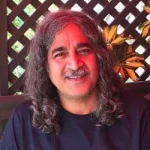
Ashwani Kumar is a poet, political scientist, and professor whose work has been widely published, anthologized, and translated into several languages. His poetry collections include My Grandfather’s Imaginary Typewriter, Banaras and Other Poems, and Map of Memories, and he is also the author of the acclaimed non-fiction work Community Warriors. He has edited major poetry anthologies, including Rivers Going Home, Scent of Rain, and River of Songs, co-founded the Indian Novels Collective, and edits the Hummingbirds Poetry Series in partnership with Red River. He was also a chief editor of Global Civil Society at the London School of Economics. He has held visiting appointments at leading international institutions, including Heidelberg University, the Korea Development Institute (KDI), and the German Development Institute (DIE). He also writes for publications such as The Indian Express, The Hindu, Financial Express, Outlook India, Scroll, and The Print. He lives in Mukteshwar and Mumbai.