
From ULR
Issue 14 – WITNESS
Poems from Lalla Romano, Poesie, Einaudi, Torino 2001
This translated passage explores intense emotional bonds, shared sorrow, and the pain of separation, ultimately defining faith as a profound, immersive merging of selves.
Original Language: Italian
Silence
Forgive me if so often to your silence,
I know no reply but my own silence.
I see your sorrow flowing like a sad river,
and I make myself like you, a wordless current,
and I accompany you along your weary,
laborious course.
The Call
Out of my sorrow, is this song now born
that rises in the slumbering afternoon,
more desolate than mourn?
I held my mourning secretly inside,
and it returns, a vaster, slower tide.
Transformed into an open lament now,
the jealous bitterness my weeping held:
and in it, I feel the deep call, and how
it answers in the weeping I withheld.
I Am In You
I am in you
as the beloved scent of skin,
as the eye’s own liquid,
the sweet saliva.
I am inside you
in that mysterious way
life is dissolved in blood
and mingled with the breath.
Severance
Does the flower suffer, wrenched from the cluster?
The severed stems must feel the agony;
it no longer looks up, blissful, to the sun,
its lovely crown now bending wearily.
And that affliction is not unknown to me;
I too know the throbbing in every vein,
since I untwined those trembling wrists of mine
that held your neck embraced, my love, my loss.
Faith
Faith is not knowing
another exists;
it is to live
inside him—
to be the warmth
flooding his veins,
to be the dream
weaving through his thoughts.
To walk in sleep
through his world,
and in him
find waking.
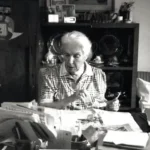
Lalla (Graziella) Romano
Lalla (Graziella) Romano, born in Demonte (Cuneo, Italy) in 1906, graduated from the University of Turin in 1928 with a thesis on the Stilnovo. She worked as a librarian and teacher in Cuneo and Turin. Her literary debut, the poetry collection Fiore, was published in 1941 after a positive review from Eugenio Montale. During the war, she sought refuge with her mother, participated in Cuneo partisan activities with the “Giustizia e Libertà” brigades, and joined the Action Party. In 1943, a translation of Flaubert, Tre racconti di Flaubert, commissioned by Pavese, was published. After the war, she moved to Milan and published numerous works, including Le metamorfosi (1951), Maria (1953), and L’uomo che parlava solo (1961). In 1969, she won the Strega Prize for Le parole tra noi leggere. Her later works include Nei mari estremi (1987) and Un sogno del Nord (1989). She died in Milan in 2001.
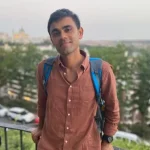
Harjot Banga
Harjot Banga (he/him/his) is a poet, writer and PhD candidate in Anglophone Postcolonial Literature, currently living between Punjab, London and Turin. His work explores memory, displacement, marginalisation, caste, gender, and the sensual body across languages and cultures. His poetry has appeared in the magazine Cronica Regia (2011–2013), the bilingual anthology Scrittori sotto i riflettori (2019), The Red River Book of Poets of Dissent (2021), The Hooghly Review Poetry Special (2025), and Majlis Mag (Issue 01: Uprising) (2026). He is the author of the Punjabi collection Gaman of Kishti (2019) and the self-published Melodia di un’interiorità infranta (2017), which won the “Ossi di Seppia” award for best foreign author (2018). In 2020, he received a Diploma of Excellence in the Scrittori sotto i riflettori award. His work was also featured by the Partition Museum in Amritsar on World Museum Day 2020.