
From
Matchbox – June ’24
Election results, the Indian voter, and the Indian citizen
India's celebrated electoral processes confront a critical challenge: the persistent, systemic marginalization of women, questioning whose citizenship and well-being democracy truly prioritizes.
The 2024 general elections were full of excitement on all sides. These were the second longest general elections ever in India. After seven phases of voting from the 19th of April to the 1st of June, the results on the 4thof June took everyone by surprise – the incumbent supporters went into shocked mourning because the BJP did not win by complete majority let alone sweep 400 seats; the INDIA bloc supporters celebrated because they came much closer to their target defying most expectations. And in a surprising twist there emerged two kingmakers who would define the Indian Parliament for the next five years, Chandrababu Naidu, TDP, and Nitish Kumar, JD(U).
Explore the Usawa Bookshelf
Discover the books that shape our times
The afternoon of 4th of June, 2024 witnessed high drama as INC MP Jairam Ramesh advised PM Modi to, “take your bag and head to the Himalayas”; Axis My India CEO Pradeep Gupta burst into copious tears on live TV as it became clear that his ‘400 seats for BJP’ forecast had proven wrong by a huge margin; Sensex dropped drastically by 4,380 points; PM Modi won a historic third term.
Much excitement either way. A historic election followed by historic election day results. Much excitement indeed.
After a fortnight now that we are back to business as usual I request you to close your eyes and picture the Indian voter. Whose face comes to mind? And if you really would humor me, close your eyes once more and picture the Indian citizen whose well-being depends on the policies implemented by the government which will be formed by the winning coalition.
Here are some more details from the 2024 elections:
Women comprised of only 9.6% candidates who contested elections, and 11% candidates who contested elections on a party ticket. There are only 73 women MPs in the 18th Lok Sabha, a mere 13.5% representation. This abysmal proportion after 77 years of independence is even lower than the 14.4% women representation in the last Lok Sabha. Out of these 73 women, 12 are Dalit and 6 are Adivasi women. There are no transgender MPs.
The world average of women MPs is 27.6%, and the regional average in Asia is 21%. India ranks 140th in this list of 183 countries. Among our neighboring countries, Pakistan has 19% women MPs, Nepal 37.3%, and Bhutan 12%. (Source: data.ipu.org)
On top of the low women participation, out of the 8,360 total contesting candidates in the last elections, 197 were accused of crimes against women. And of the 543 elected candidates 15 are accused of crimes against women. 10 of them belong to BJP, and one each from INC, SP and RJD. (Source: Behan Box)
These numbers are especially abysmal given that 2024 saw the first elections after the historic Women’s Reservation Bill was passed, near unanimously, last year. The obvious roadblocks to the implementation of this Bill remain the next census and the subsequently planned delimitation. However, it is impossible not to wonder whether this seemingly major Bill is all hype and no real improvement given that its passing did not see an optimism or general sentiment in favor of improved inclusion even at the stage of the contesting of elections let alone converting that morale into improved representation in the Parliament.
Taking a step back to take a look at the manifestos for 2024 of the major political parties one might notice that their agendas do not prioritize gender violence, gender parity and gender intersecting with caste with the expected sense of urgency in the face of India ranking very poorly on women related indices – 128th out of the 177 participating countries in the Women’s Peace and Security Index (source: giwps.georgetown.edu). India has emerged as the worst performing country in South Asia on the index of Son bias (number of boys born per 100 girls), and also ranks seventh in the world on incidents of political violence targeting women, thus in fact, faring even worse than conflict ridden countries such as Syria, Afghanistan and Ukraine. The GWIPS report goes on to explain that while in South Asia state forces are the largest source of political violence targeting women at 32%, within the region India recorded the highest number of incidents, many of which targeted women leaders in panchayats.
In spite of such bleak realities, it was impossible to not celebrate in unmitigated joy with Sanjana Jatav (Bharatpur) as she danced her graceful dance of victory; she was also three of the youngest MPs elected along with the 25 years old Dalit women Priya Saroj (Machhlishahr) and Shabhavi (Samastipur). Geniben Thakor won from Banaskantha, marking the first non-BJP victory in Gujarat in a decade. Mitali Bag, Dalit grassroots leader, an Anganwadi worker and teacher won from Arambagh, while Iqra Choudhry won from Kairana. Mahua Moitra, who was expelled from the Lok Sabha last year won from West Bengal’s Krishnanagar, actor turned politician, Kangana Ranaut won from Mandi. (Source: Behan Box)
The World Economic Forum has announced that it will take 136 years to close the global gender gap. Given that the world average Gender Development Index (GDI) was 0.951 in 2022, while that of India was 0.838 (source: hdr.undp.org), how long do you think it would take to close the gender gap in India?
Now let’s go back to the faces of the Indian voter and the Indian citizen you saw in your mind’s eye. Do any of those faces belong to women? How many? Is the Indian voter and the Indian citizen always assumed to be a man? Shouldn’t the party manifestos be more focused on ensuring the safety and inclusion of half of India’s population? Should an Indian woman contest election against or alongside male candidates convicted of sexual violence against women? How should the female, Dalit, and transgender citizen of India vote? How should she aspire to become the beneficiary of the election results?
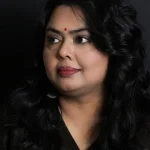
Smita Sahay
Smita Sahay served as Associate Editor for 'Veils, Halos & Shackles: International Poetry on the Oppression and Empowerment of Women'. Her works have appeared in national and international journals, newspapers and anthologies. She is the Editor-in-Chief of Usawa Literary Review, and the Poetry Editor for SPEAK, the Magazine. A visiting faculty of Creative Writing at Whistling Woods International, Mumbai, she is an ISB alumna, class of 2015. A survivor of C-PTSD, she is also the founder and Somatic therapist at Calm Space Healing, a trauma-informed therapy and healing practice.