
Review: Stories the Fire could not Burn
Hauzel's memoir confronts the existential stakes of home and identity, exposing how…
Read more →A translated passage from 'Year's Best Bengali Short Stories 2025' explores how names, places, and cultural identities transform in contemporary suburban Bengal.

(First published in Galpabiswa, march 2024)
Just like physical objects, which succumb to wear and tear through repeated use, a person’s name can also undergo abbreviation and truncation over time. Anirban becomes Ani, Satyabrata morphs into Satu, and Swaraj gradually gets reduced to Raj. Similarly, Sadik has transformed into Saked. If you ask someone in the suburban town of Nimta if they know Sadik Ali, they’ll likely give you a puzzled look. But if you enquire about Saked, they’ll nod in instant recognition.
Time has a way of altering names and identities. Take a stroll from Belgharia Station along Mahesh Mukherjee Feeder Road, cross the flyover, and head toward Nimta. You’ll spot a massive shopping mall on the left, bearing the rather cumbersome name, Janardan Das Memorial Multi Shop. The English signboard only adds to the confusion, as many people struggle to decipher it. The name suggests that the mall is in memory of someone, likely a long-time resident from another state. It is not unusual for individuals from other states, particularly those engaged in business, to make this place their permanent home.
Typically, well-organized malls sport catchier names, often tied to big corporate brands or trendy labels, like Cosmic, Spar, Rangoli, or Sky/Star/Smart Bazaar. In today’s world, it’s quite normal to hear Bengalis bestowing names like Aliya, Ivan, Pinki, Kigan, or Harry upon their children. Just the other day, you overheard someone calling a familiar young boy from the new flat in your neighborhood “Tom.” It struck you that, back in your childhood, that name was typically reserved for beloved pet dogs! Times are indeed changing, and many aspects of life are undergoing a transformation.
You recall when teenagers used to passionately discuss football or cricket, their conversations filled with excitement and camaraderie. Nowadays, their discussions revolve around social media likes and comments. Might you have imagined such a thing in your prime? The local market has also undergone a significant metamorphosis. The once-thriving rows of grocery and spice shops have dwindled to just one or two, and even those are struggling to stay afloat, their future uncertain. Ujir Ali’s shop is holding on, thanks to some financial backing. Not everyone is fortunate enough to survive like this. You’re sure to know Ujir Saheb, a member of one of the most aristocratic lineages in the area. His father, Sattar (locally known as Chhattar Ali), owned vast ancestral lands, including paddy fields, coconut groves, and sprawling wetlands.
Legend has it that during Mir Qasim’s brief reign as Nawab of Bengal, one of Ujir Ali’s ancestors became a close confidant and was effectively granted ownership of this area, a legacy that continues to shape the community today.
Ujir Ali’s grocery and general store once thrived, and the ancestral home, known locally as the “zamindar’s house,” has been renovated into a modern two-storey building that blends old and new styles. As you pause in front of a modern shopping mall, you can’t help but think that even suburbs are undergoing a makeover, with their identities evolving over time. The mall’s name still carries a hint of old suburban grit, a reminder that a changing suburb leaves its mark on the heart of the city. It’s akin to the old adage: you can take the boy out of the village, but you can’t take the village out of the boy. Even though the walls of an old house are painted a glossy finish, the damp stains remain visible, bearing witness to the enduring power of heritage. Similarly, despite wearing modern clothing, some people still have a packet of Sattyen or Maqbool bidis in their pockets, reflecting the persistence of tradition amid change.
You may not know what’s good or bad, but in this area, beneath the city’s shaky veneer, you can sense the underlying presence of the village or suburb. Amid the hum of air conditioners and the gleaming facade of a three-story shopping mall, meticulously arranged and dazzling in its polish, lies a sight hard to miss. Barely fifty meters from the mall, Ujir Ali’s shop commands attention. If you are of a contemplative disposition, the shop’s appearance might evoke the image of a serene village maiden from rural Bengal, overly adorned with snow powder and lipstick. To some, this ostentation may feel slightly jarring, though not everyone will share this sentiment. After all, when the aim is to attract customers, it is only natural to cater to the preferences of the majority. Much like aging courtesans who, with rouge smeared on their cheeks and excess makeup, stand in line to entice patrons, the display is a desperate struggle to make ends meet—a visceral effort to survive.
Excerpted with permission from The Year’s Best 25, a collection of short stories Translated from the Bengali to English edited by Daradi Patar and Nadia Imam published by The Antonym Collections 2025
Basab Dasgupta, born on December 31, 1938, was a prominent Bengali novelist and short-story writer associated with the Hungry generation movement in Bengali literature. His family migrated to India as refugees following the partition of Bengal in 1947. Basab Dasgupta graduated with an honours in Bengali literature from the Scottish Church College in 1961 and later pursued a degree in education. He taught in a school until his retirement in 1999. His literary contributions spanned from the early 1960s to the mid-1980s, with notable works including "Randhanshala" (1965), "Kheladhula" (1981), and "Durbin" (1983). Basab Dasgupta's work is characterized by its avant-garde style and has been influential in shaping Bengali literature.
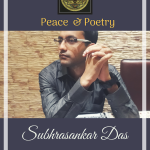
Subhrasankar Das, born on 1st May 1986, hails from Tripura, India. He is one of the most vibrant figures of contemporary Indian literature. He is a bilingual poet, a postgraduate teacher by profession and a translator of distinct repute.His poems are admired for their subtlety, spontaneity, satire, symbolism and brevity.